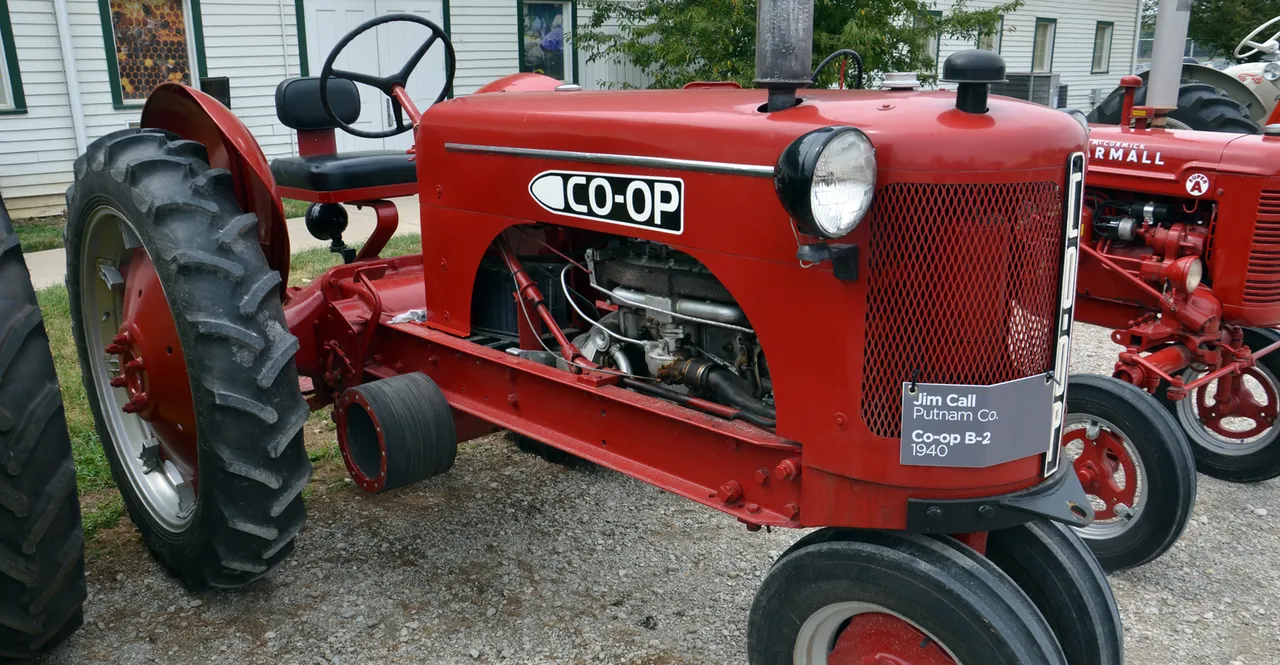
CO-OP Farm Tractors emerged in the 1930s as a bold initiative by American farmers to reduce machinery costs through cooperative manufacturing. Spearheaded by designer Dent Parrett, the early tractors were built in Michigan using components from Chrysler. These tractors represented a spirit of innovation and self-reliance within the agricultural community.
Production eventually moved to Indiana in 1938, and Cletrac briefly contributed some designs. After World War II, CO-OP formed a partnership with Cockshutt, leading to the popular E-Series of tractors. These models were essentially rebranded versions of Canadian-built Cockshutt tractors.
Despite their practicality and cooperative roots, CO-OP tractors faced declining sales, leading to the brand’s discontinuation in 1952 when Cockshutt took over the facilities.
CO-OP Tractor Models and Specifications
| Model | Horsepower | Years of Production |
|---|---|---|
| 1 | Unknown | 1937 – 1938 |
| 2 | 35 hp [P] | 1936 – 1946 |
| 3 | 41 hp [P] | 1936 – 1950 |
| 3S | Unknown | 1948 – 1951 |
| B1 | 20 hp [B] | 1941 – 1942 |
| B2 Jr. | 37 hp [P] | Unknown |
| B2 | Unknown | 1939 – 1941 |
| B3 | Unknown | Unknown |
| C | Unknown | 1944 |
| D3 | Unknown | 1945 |
| E2 | 33 hp [P] | 1952 – 1953 |
| E3 | 31 hp [P] | 1946 – 1957 |
| E4 | 47 hp [P] | 1949 – 1958 |
| E5 | 54 hp [B] | 1953 – 1957 |
| G | 20 hp [B] | 1939 – 1941 |
CO-OP Farm Tractors may no longer be in production, but their legacy lives on in the spirit of agricultural innovation. These tractors stand as a historical example of how collective effort can bring lasting change to farming communities.