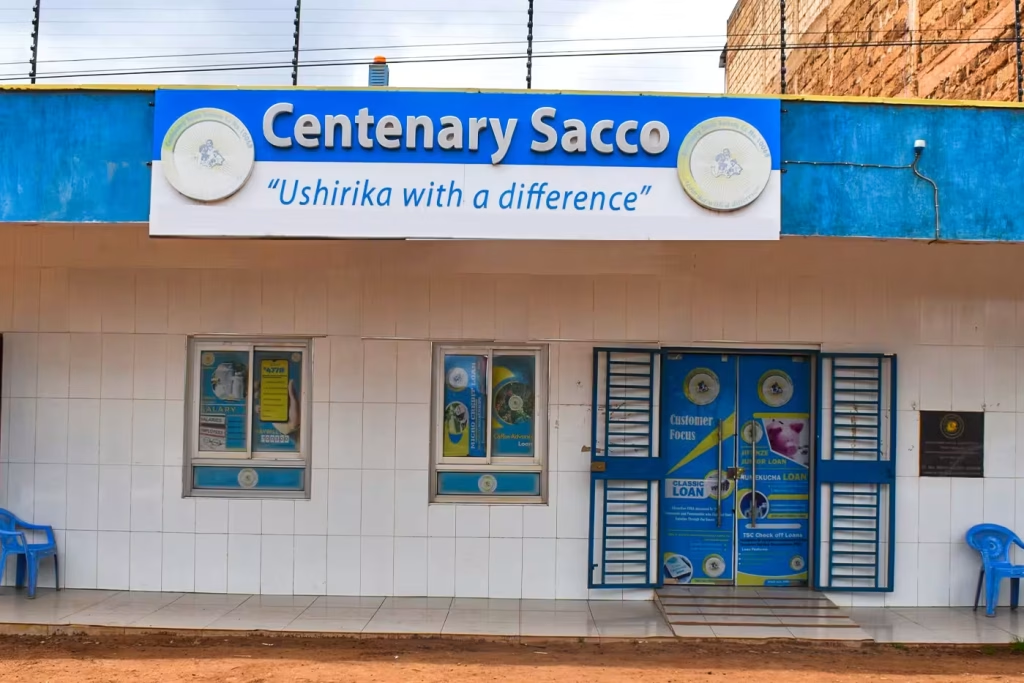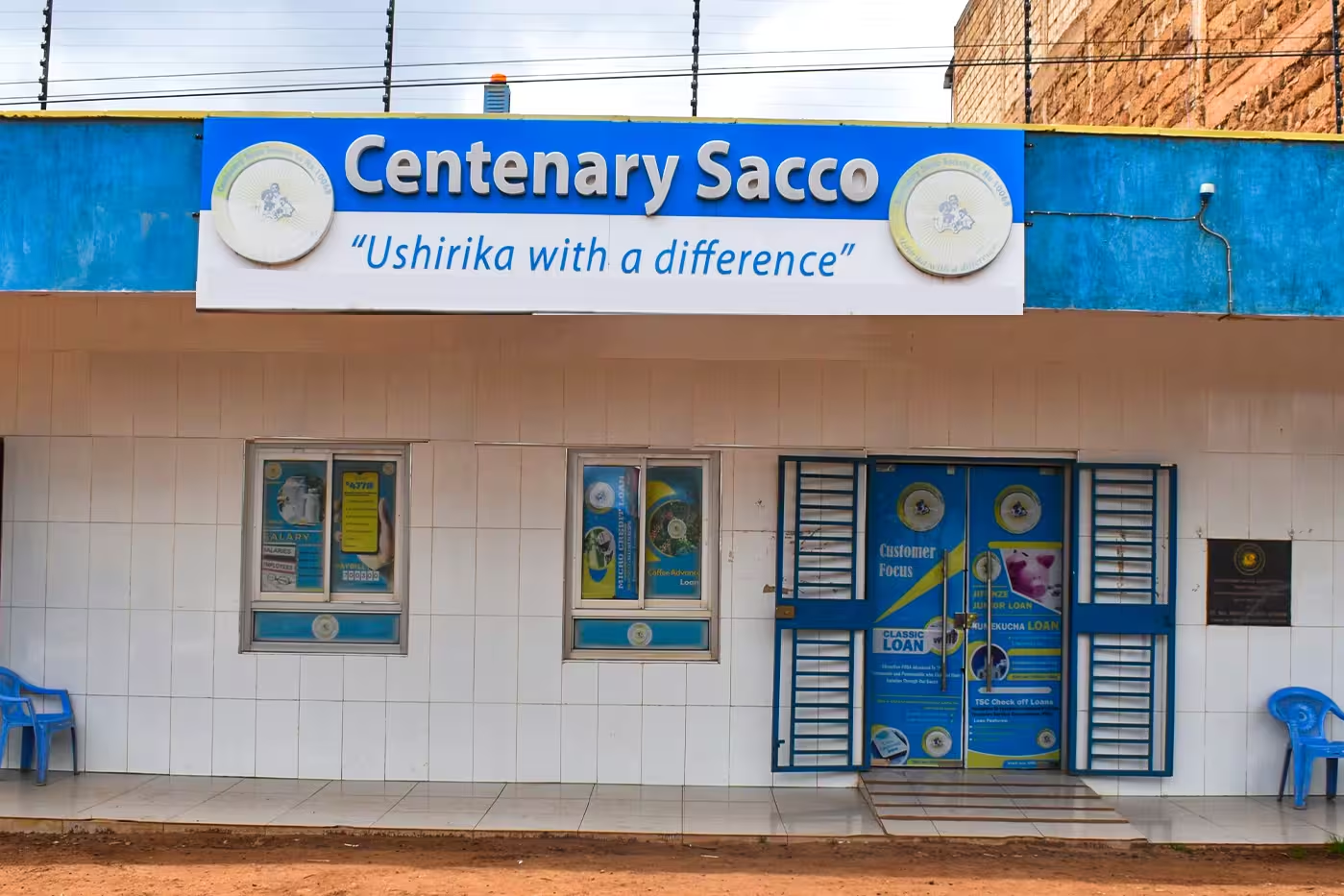
Centenary Sacco has grown into one of the most prominent regional savings and credit cooperatives in Kenya. Since its registration in 2003, Centenary Sacco has expanded rapidly, reflecting the strong demand for affordable credit among small traders, farmers and salaried workers.
The idea behind Centenary Sacco emerged in 1999, driven by the need for convenient and efficient financial services. With support from church leadership and the Ministry of Co-operative Development, the SACCO officially registered on 18 March 2003. Today, it serves more than 30,000 members, a sharp rise from about 800 members in 2008.
Centenary Sacco Background and Growth
Centenary Sacco operates as an open-bond savings and credit society. Unlike some SACCOs that restrict membership to specific professions, Centenary Sacco welcomes people across economic backgrounds.
Members include employees, small-scale entrepreneurs, farmers, traders, casual workers and retirees. This broad membership base supports a diversified loan portfolio. As a result, the SACCO spreads risk across multiple economic sectors.
In 2009, Centenary Sacco opened its first FOSA office in Meru town along the Meru-Nanyuki road at Intercity Centre. Since then, it has expanded operations to towns such as Chuka, Kinoro, Mutuati and Marimanti. This regional expansion aligns with Kenya’s broader push to strengthen rural and peri-urban financial inclusion.
Centenary Sacco Loans and Credit Services
Centenary Sacco aims to provide affordable credit facilities and financial literacy to its members. SACCO lending typically relies on member deposits and shares, which form the base for loan qualification.
While specific loan products vary, SACCO loans generally support:
• Business expansion
• Agriculture financing
• School fees
• Emergency needs
• Asset acquisition
Unlike commercial banks, SACCOs often offer lower interest rates and flexible repayment structures. However, loan limits depend on member savings and guarantor support.
As Kenya’s economy evolves, SACCO lending continues to play a vital role in supporting informal sector growth. In counties like Meru and Tharaka-Nithi, access to cooperative credit can determine whether small businesses scale or stall.
Centenary Sacco Paybill and Mobile Banking
Centenary Sacco integrates mobile money to improve convenience. Members can deposit funds using the following Paybill numbers:
Centenary Sacco Society: 700301
Centenary Sacco Society Ltd: 700300
Mobile banking channels allow members to deposit savings, repay loans and conduct basic transactions without visiting branches. This integration reflects Kenya’s broader digital finance landscape, where M-PESA and mobile banking dominate everyday transactions.
Digital adoption also strengthens SACCO competitiveness. As fintech firms expand across Africa, traditional cooperatives must modernize to retain members.
Centenary Sacco Branch Network
Centenary Sacco operates several branches across the Meru region and surrounding towns.
Meru Branch
Intercity Centre
Next to Meru Museum
Meru-Nanyuki Road
P.O. Box 1207 – 60200
Meru, Kenya
Phone: 064-3 132 236
Mobile: 0715 467 290
Other Branches
• Chuka Branch
• Kinoro Branch
• Mutuati Branch
• Marimanti Branch
This branch network strengthens access in Eastern Kenya, where cooperative finance remains deeply embedded in community structures.
Centenary Sacco in Kenya’s Cooperative Economy
Kenya hosts one of Africa’s largest SACCO sectors. Cooperative savings mobilize billions of shillings annually and support housing, agribusiness and SME development.
Historically, SACCOs emerged to fill credit gaps left by commercial banks. Today, that role remains relevant, especially in counties where formal banking penetration remains moderate.
Centenary Sacco’s membership growth mirrors this national trend. As rural economies digitize and youth entrepreneurship rises, SACCOs face both opportunity and competition.
Regulatory Environment
The Sacco Societies Regulatory Authority oversees deposit-taking SACCOs in Kenya. Therefore, governance, transparency and capital adequacy remain critical for member confidence.
Centenary Sacco operates within this regulatory framework, which aims to protect member deposits and strengthen financial stability.
Why This Matters
Affordable credit directly influences local economic growth. When small traders and farmers access low-cost loans, they reinvest in productivity.
Centenary Sacco’s regional expansion shows how cooperative finance supports grassroots development. In emerging markets, such localized financial systems often complement national banking networks.
What Happens Next
Centenary Sacco will likely deepen its digital channels and expand services to new towns. As competition intensifies, member service quality and dividend performance will remain key differentiators.
For current and prospective members, understanding savings requirements, loan terms and governance structures will remain essential before committing funds.