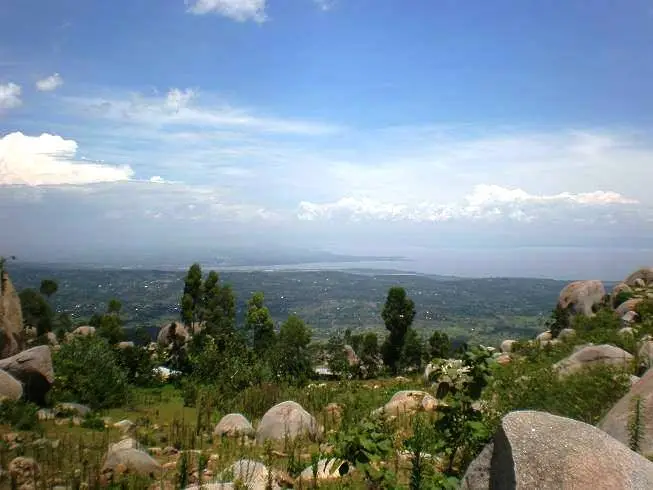
Stretching gracefully along the B1 Kisumu–Busia Road, about 5 kilometers past Luanda town, the Bunyore Hills rise as a captivating sequence of forested peaks and granite-strewn ridges that define the boundary between Vihiga and Kisumu counties. Running approximately 30 kilometers in length, these hills are not only a natural marvel but also a cultural and spiritual landmark for the Banyore (Anyole) people, one of the notable Luhya subtribes of Western Kenya.
The Bunyore Hills are steeped in legend and reverence. Oral traditions hold that the deities and descendants of Anyole made these hills their sacred home, transforming the hilltops into hallowed shrines that remain respected to this day. Beyond their spiritual importance, the hills are ecologically vital — they form the headwaters of River Nasibi, which flows westward to meet River Etsaaba, eventually joining River Yala, one of Kenya’s key western waterways. The region’s rivers and forested slopes create a landscape rich in biodiversity, medicinal plants, and natural beauty.
Historically, the Bunyore and Maragoli Hills — which merge toward the east — served as strategic watchtowers during tribal conflicts, offering commanding views of the plains below. Over time, they have gained fame for their mystical aura, particularly as sites for ancestral ceremonies, ghost-casting rites, and traditional healing practices. Adventurers and hikers are drawn to Ebuhando Hill, the highest point in the range, which rewards climbers with panoramic views of Western Kenya’s rolling countryside.
Among the highlights surrounding the Bunyore Hills are Kima Rocks, the scenic Stone Hill Resort (built atop massive granite outcrops), and the historic Kima Church of God, one of the oldest religious landmarks in the region. Each of these sites complements the hills’ cultural and natural allure, making Bunyore a rewarding destination for spiritual tourism, nature photography, and exploration.
With their blend of cultural depth, geological wonder, and natural serenity, the Bunyore Hills stand as an enduring emblem of Vihiga County’s identity — a place where Kenya’s landscapes and legends meet in perfect harmony.