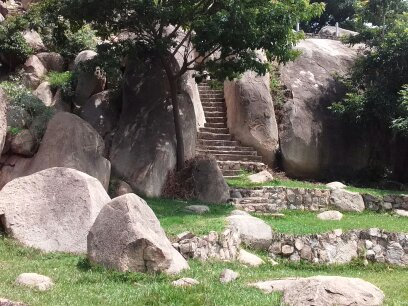
Scattered across Bukusu lands once stood grand fortified settlements—chingoba—that echoed the vibrant life of a united people. Though many of these fortresses have faded into obscurity, erased by time and neglect, they remain a cornerstone of the Babukusu’s rich cultural heritage. These forts were more than just defenses; they were the heart of community, security, and social harmony. Fort Sites of East Bukusu, Kenya
Guardians of the Past
Oral tradition speaks of how fortified villages protected Babukusu ancestors from enemy raids. These strongholds weren’t easily breached. It is said that the renowned Fort of Chetambe took dozens of skilled warriors four days to break through. Lumboka and Chetambe may be the most documented due to their resistance against colonial invasion in the late 19th century, but they are not alone. The Bukusu tradition of fortification predates colonial contact, originating from the era of migration when clans moved in bands and sought protection from hostile groups.
The Bukusu faced persistent threats from enemy tribes such as the Bakwabi (Maasai), Barwa Balaku, Bakinisu, Bakisila, Bakamulyungu, Bakoloyonjo (Kalenjin raiders), and even the Bamia Bapala, Bakhumana, and Bamatola (Iteso groups). In response, the Babukusu built their villages like fortresses—protected, organized, and thriving.
More Than Walls
These forts were more than defense structures. They symbolized cohesion and communal life. Within the walls, people herded livestock together, shared resources, and formed strong inter-clan bonds through intermarriages and trade. The outer meadows (chikewa) were for communal grazing, and livestock were brought back to the safety of the fort at night.
Trade flourished within the forts: buffalo hides, grain, livestock, and iron tools exchanged hands in a system of barter. Social and political life thrived under the guidance of a headman, and the layout of the fort often mirrored clan clusters (chibololi), with specific clans occupying different sections—like the Bayemba to the west and Babuulo to the north.
Architecture of Defense
These chingoba were no small homesteads. Large forts, like Mayeku in Mabanga, had diameters up to 120 meters. Muliro Fort, near the Kimilili-Lugulu road, featured ditches indicating a 250-meter diameter. Smaller forts such as Wachana (Kibabii), Namawanga (Myanga), and Kulumbana (Nambuyusi) measured between 50 to 80 meters.
Walls, often made of stone and murram, ranged from 0.25 to 1.5 meters in thickness and stood up to 3 meters high. Surrounding them were dry defensive ditches, at least 2.5 meters deep and 4 meters wide. Entry was restricted to a single, fortified gate, guarded by warriors ready to defend at a moment’s notice. Fort walls featured small holes (biibili) for shooting arrows or monitoring invaders. In times of attack, beehives hung strategically to pour bees on unsuspecting enemies breaching the walls.
Documented Fort Sites by Region
1. Kibabii–Mayanja Forts
- Namawanga Fort – Located 2 km north of Kibabii Mission, overlooking the Namawanga River. Led by Wachana and Nabutola.
- Kalaba Fort – 85 meters in diameter, remnants still visible in the northeastern wall.
- Nabutola II Fort – Nabutola’s second fort, around 70 meters wide, situated 1.5 km from Myanga.
2. Bokoli–Kimilili Forts
- Songai, Masaakha, Makheti Forts – Headed by Nambu (Omukwangwa).
- Lukamula Fort – Led by Wanambuko (Omusamba).
- Kabachanga, Wambaloba, Nato Forts – Belonged to Barefu, Babuuya, and Sipeto (Omukembe) respectively.
- Kitayi Fort – Destroyed by Maasai Morans; current site partially occupied by a coffee factory.
- Temba & Muliro Forts – Near Misikhu Primary, associated with Baliuli and Bakokho clans.
- Nalondo & Siuna Forts – Additional significant sites.
3. Bungoma–Mabanga Forts
- Wayong’o & Wanyongo-Nadende Forts – Located north of Mabanga Agricultural School.
- Lukala Fort – Massive 200-meter diameter fort near Lwanda Primary School.
- Mayeku Fort – A large fortified community center in Mabanga.
- Nambuyusi Fort – Led by Wayong’o.
- Chetambe Fort – Led by the legendary Omuyumbu warrior, Chetambe.
- Lumboka Fort – Known for fierce resistance led by Mukisu Wakoli, father of filmmaker Pascal Nabwana. In 1959, Nabwana received the OBE for his political contributions.
4. Kuywa–Lukhome Forts
- Kilui & Mamisi Forts – Linked to the Babasaba clan.
- Bukekhe & Wangili Forts – Belonged to Basonge; Wangili was led by Siranjofu Omulunda.
- Sirengo & Masungo Forts – Associated with the Batukwiika clan.
5. Kimalewa–Teremi Forts
- Mukhono & Khafwafwa Forts – Occupied by the Bameme clan.
- Kapchanga & Wanasi Forts – Belonged to the Barefu.
- Munyole, Chambuni, Kasile, Kulabusia Forts – Linked to Bakwangwa, Bamalicha, Barefu, Babuuya, and Bakibeti.
- Sikuche Fort – Led by Namwikholo (Omukhoone).
6. Other Forts
- Wangusi & Bokoli Forts – Historical sites no longer located in present-day Bokoli.
- Wekhobale, Babuya & Walusaka Forts – Lesser-known but culturally significant.
Uncovering the Forgotten
These forts pre-date 1900, and many sites today lie hidden beneath cultivated land or forgotten place names. Yet, their legacy remains. Names like Lumboka, Nalondo, and Namawanga bear testimony to this rich history. Delving into the origin of your village name might just uncover a chapter of Bukusu heritage long buried.
A story is only good… until another is told.
Let this be an invitation to rediscover, document, and preserve the heritage of Bukusu forts—our pride of yesterday’s life.