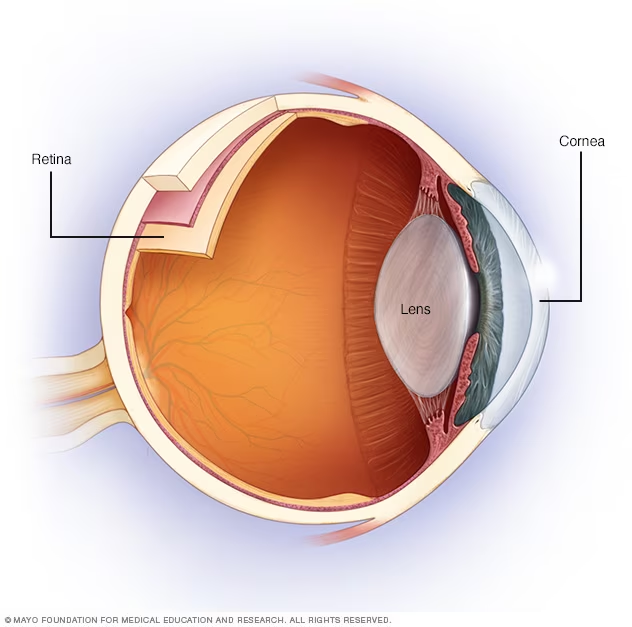
Astigmatism is a common refractive error of the eye where the cornea or lens has an irregular curvature. Instead of a smooth, round shape, the surface is shaped more like an egg, causing light to focus unevenly on the retina. This imperfection leads to blurred or distorted vision at all distances.
Symptoms of Astigmatism
Signs of astigmatism may include:
- Blurred or distorted vision.
- Eyestrain or discomfort.
- Headaches.
- Difficulty seeing clearly at night.
- Frequent squinting to improve focus.
These symptoms can vary in severity depending on the degree of astigmatism.
When to See a Doctor
- Adults: Visit an eye doctor if vision problems interfere with daily activities or quality of life.
- Children: Regular eye screenings are essential, as children may not realize their vision is impaired. Screenings are recommended:
- During the newborn period.
- At regular intervals during well-child visits until school age.
- Every 1–2 years during school years.
Causes of Astigmatism
Astigmatism occurs due to mismatched curves in either:
- The cornea: Known as corneal astigmatism.
- The lens: Known as lenticular astigmatism.
In a healthy eye, these structures have smooth, spherical curvatures that refract light evenly. In astigmatism, uneven curvature leads to light focusing in multiple points on the retina, causing blurred vision.
Factors contributing to astigmatism include:
- Congenital factors: Most people are born with the condition.
- Eye injury or surgery: Trauma or surgical procedures can alter the eye’s curvature.
- Eye disease: Certain conditions may impact corneal or lens shape.
Astigmatism is not caused or worsened by reading in poor light, sitting too close to a screen, or squinting.
Astigmatism and Other Refractive Errors
Astigmatism often occurs alongside:
- Nearsightedness (Myopia): The eye is longer than normal, causing light to focus in front of the retina and making distant objects appear blurry.
- Farsightedness (Hyperopia): The eye is shorter than normal, causing light to focus behind the retina and making nearby objects appear blurry.
Diagnosis and Treatment
Diagnosis: Astigmatism is detected through a comprehensive eye exam, including:
- Visual acuity tests: Measuring how well you see at various distances.
- Refraction tests: Identifying the exact prescription for corrective lenses.
- Corneal topography: Mapping the surface curvature of the cornea.
Treatment options:
- Corrective Lenses:
- Eyeglasses: Lenses specially designed to correct uneven refraction.
- Contact lenses: Toric lenses can correct astigmatism for many people.
- Surgical Options:
- LASIK or PRK: Reshapes the cornea for improved light refraction.
- Limbal relaxing incisions (LRI): Adjusts corneal curvature for minor cases.
Living with Astigmatism
Most cases of astigmatism are mild and do not require treatment. When symptoms interfere with daily activities, corrective measures can significantly improve vision quality. Regular eye exams are essential to monitor changes and ensure optimal vision health.