
Nyongesa Sande
No Result
View All Result
  • News
    • World
    • Africa
  • Politics
  • Business
  • Tech
  • AI
  • Telecom
  • Sports
  • Opinion
  • Lifestyle
  • Live
  • World Cup 2026
    • World Cup 2026 Standings
    • World Cup 2026
Nyongesa Sande
  • About Us
    • Nyosake Designers
      • Nyosake Webmasters
      • Nyosake Investment
  • Contact Us
    • Newsroom Contact
  • Ownership Disclosure
  • Advertise
No Result
View All Result
Nyongesa Sande
No Result
View All Result
  • News
  • Politics
  • Business
  • Tech
  • AI
  • Telecom
  • Sports
  • Opinion
  • Lifestyle
  • Live
  • World Cup 2026
ADVERTISEMENT

Home » Asthma Attack

Asthma Attack

Understanding and Management

NyongesaSande News Desk by NyongesaSande News Desk
2 years ago
in Health
Reading Time: 6 mins read
A A
Asthma attack

Asthma attack

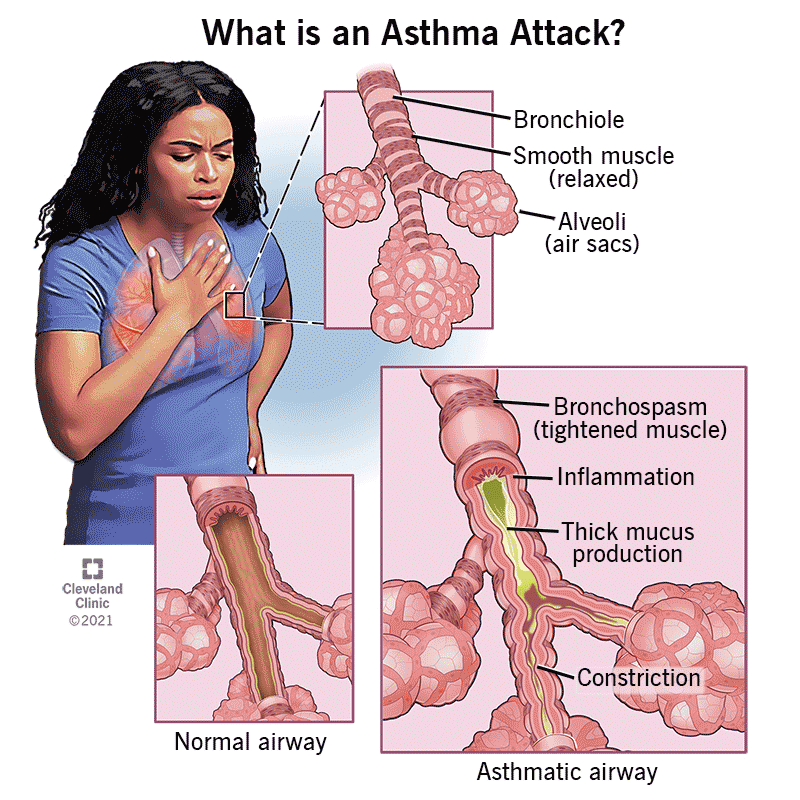
An asthma attack, also known as an asthma exacerbation or flare-up, is a sudden worsening of asthma symptoms caused by narrowed airways, inflammation, and increased mucus production. These episodes can range from mild to life-threatening and require prompt attention and management.

  • Symptoms
  • When to Seek Medical Attention
  • Causes
  • Risk Factors
  • Complications
  • Prevention and Management
  • Conclusion

Symptoms

The symptoms of an asthma attack vary in severity and may include:

  • Mild to Moderate Symptoms:
    • Shortness of breath.
    • Chest tightness or pain.
    • Wheezing (a whistling sound when breathing out).
    • Persistent coughing.
  • Severe Symptoms:
    • Gasping for air or struggling to breathe.
    • Inability to speak more than a few words due to shortness of breath.
    • Chest muscles straining to assist breathing.
    • Excessive sweating.
    • Worsening symptoms when lying down.

Peak Flow Meter:
A peak flow reading below 80% of your personal best may indicate an asthma attack. A reading below 50% is a medical emergency.

ADVERTISEMENT

When to Seek Medical Attention

  • Emergency Signs:
    • Symptoms worsening despite using a quick-relief inhaler.
    • Difficulty breathing or speaking.
    • Peak flow reading below 50%.
  • Routine Follow-Up:
    • If asthma attacks occur frequently.
    • If you’re using a quick-relief inhaler more than twice a week (outside of exercise-induced asthma).
    • To review or update your asthma action plan.

Causes

Asthma attacks occur when triggers cause the immune system to overreact, leading to airway inflammation and constriction. Common triggers include:

  • Allergens: Pollen, dust mites, mold, pet dander.
  • Irritants: Tobacco smoke, air pollution, strong odors.
  • Respiratory Infections: Colds, flu, sinus infections.
  • Weather Changes: Cold or dry air.
  • Physical Activity: Especially in cold air.
  • Medications: Aspirin, NSAIDs, or beta blockers.
  • Emotional Stress: Anxiety or depression.
  • GERD: Acid reflux irritating airways.

Risk Factors

Certain factors increase the likelihood of asthma attacks, including:

ADVERTISEMENT
  • Poorly controlled asthma or allergies.
  • Frequent exposure to triggers.
  • Inconsistent use of prescribed asthma medications.
  • Incorrect inhaler technique.
  • Underlying health conditions like diabetes or heart disease.

Complications

Frequent or severe asthma attacks can lead to:

  • Missed work or school days.
  • Interrupted sleep.
  • Restricted physical activity.
  • Emergency room visits or hospitalizations.
  • Life-threatening respiratory failure.

Prevention and Management

  1. Follow Your Asthma Action Plan:
    • Take long-term control medications daily as prescribed.
    • Use quick-relief inhalers as directed for sudden symptoms or before exercise.
    • Monitor peak flow readings to detect worsening symptoms early.
  2. Avoid Triggers:
    • Reduce exposure to allergens, such as using air purifiers or hypoallergenic covers.
    • Avoid outdoor activities during high pollen or poor air quality days.
    • Wear a scarf or mask in cold weather.
  3. Maintain Overall Health:
    • Stay up to date on vaccinations, including flu and COVID-19 shots.
    • Wash hands frequently to prevent infections.
    • Quit smoking and avoid secondhand smoke.
  4. Lifestyle Adjustments:
    • Manage stress and seek treatment for anxiety or depression.
    • Exercise regularly but consult your healthcare provider for safe activities.
    • Wear a mask while cleaning or in dusty environments.
  5. Regular Checkups:
    • Discuss the frequency of quick-relief inhaler use with your doctor.
    • Adjust medications or action plans as needed for better asthma control.

Conclusion

Asthma attacks are manageable with proactive care and adherence to an asthma action plan. Early recognition of symptoms, avoidance of triggers, and consistent communication with your healthcare provider can reduce the frequency and severity of attacks, improving overall quality of life.


Share2Tweet1SendShareScanSharePinShareShare
Google Add as a Preferred Source on Google
Previous Post

Asthma

Next Post

Astigmatism

NyongesaSande News Desk

NyongesaSande News Desk

Nyongesa Sande offers diverse content across news, technology, entertainment, and more, aiming to provide readers with a wide range of informative and engaging articles. NYONGESA SANDE's dedicated team provides our audience not only with the highly relevant news but also with outstanding interactive experience.

Related Posts

Kakamega Teaching and Referral Level 6 Hospital
Hospitals

Kakamega Level 6 Hospital Set for Completion by December 2026

5 hours ago
Sarah Ng’ang’a’s Journey Building Juja Modern Hospital
Hospitals

Sarah Ng’ang’a’s Journey Building Juja Modern Hospital

4 weeks ago
Accredited Rehabilitation Centres in Kenya: Full List, Contacts and Locations
Health

Accredited Rehabilitation Centres in Kenya: Full List, Contacts and Locations

4 weeks ago
Luhya Traditional Herbs and Indigenous Healing Practices in Western Kenya
Health

Luhya Traditional Herbs and Indigenous Healing Practices in Western Kenya

1 month ago
Enfield Royal Clinic Dubai Company Profile
Hospitals

Enfield Royal Clinic Dubai Company Profile

1 month ago
Hantavirus
Health

Hantavirus

2 months ago
Load More
Next Post
Astigmatism

Astigmatism

Astrocytoma

Astrocytoma

ADVERTISEMENT

Who We Are

Nyongesa Sande

NyongesaSande.com is a digital news and media platform covering breaking news, business, technology, AI, politics, sports, world affairs and African innovation.

News Sections

  • News
    • World
    • Africa
  • Politics
  • Business
  • Tech
  • AI
  • Telecom
  • Sports
  • Opinion
  • Lifestyle
  • Live
  • World Cup 2026
    • World Cup 2026 Standings
    • World Cup 2026

Editorial Standards

  • Editorial Policy
  • Fact Checking Policy
  • Corrections Policy
  • Ethics Policy
  • AI Usage Policy
  • News Tips
  • Submit Press Release

Legal

  • Privacy Policy
  • Terms of Use
  • Cookie Policy
  • Disclaimer
  • Risk Disclaimer
  • DMCA
  • Ad Choices

Our Company

  • About Us
    • Nyosake Designers
      • Nyosake Webmasters
      • Nyosake Investment
  • Contact Us
    • Newsroom Contact
  • Ownership Disclosure
  • Advertise
  • Privacy Policy
  • Terms of Use
  • Cookie Policy
  • Disclaimer
  • Risk Disclaimer
  • DMCA
  • Ad Choices

NyongesaSande.com is an independent digital news and media platform covering Africa, business, technology, AI, politics and global developments.

© 2026 NyongesaSande.com. All rights reserved.

No Result
View All Result
  • News
    • World
    • Africa
  • Politics
  • Business
  • Tech
  • AI
  • Telecom
  • Sports
  • Opinion
  • Lifestyle
  • Live
  • World Cup 2026
    • World Cup 2026 Standings
    • World Cup 2026

NyongesaSande.com is an independent digital news and media platform covering Africa, business, technology, AI, politics and global developments.

© 2026 NyongesaSande.com. All rights reserved.