


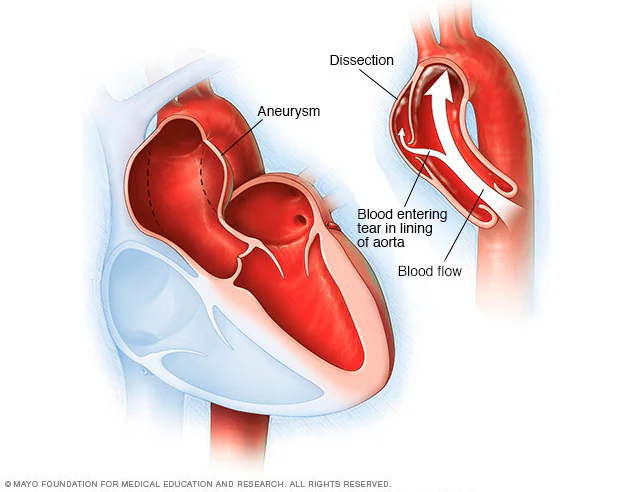
An aortic aneurysm is an abnormal bulge in the wall of the aorta, the major artery that carries blood from the heart to the rest of the body. It can develop in any part of the aorta and varies in shape and size. Aortic aneurysms are serious because they increase the risk of aortic dissection or rupture, which can be life-threatening.
Types of Aortic Aneurysms
- Abdominal Aortic Aneurysm (AAA)
- Occurs in the portion of the aorta that runs through the abdomen.
- Most common type of aortic aneurysm.
- Thoracic Aortic Aneurysm (TAA)
- Occurs in the portion of the aorta that runs through the chest cavity.
- Thoracoabdominal Aneurysm
- Involves both the thoracic and abdominal portions of the aorta.
Some individuals may have both abdominal and thoracic aortic aneurysms.
Causes and Risk Factors
Aortic aneurysms are caused by weakening of the aortic wall, which can result from:
- Atherosclerosis (hardening of the arteries): Plaque buildup damages the arterial wall.
- High blood pressure (hypertension): Increases stress on the aortic wall.
- Genetic factors: Conditions like Marfan syndrome, Ehlers-Danlos syndrome, and bicuspid aortic valve disease can increase risk.
- Infections: Rare, but syphilis or infections of the aortic wall (mycotic aneurysm) can lead to aneurysms.
- Trauma: Chest or abdominal injuries may weaken the aortic wall.
Risk Factors:
- Smoking.
- Advanced age (more common in people over 60).
- Male gender (higher prevalence).
- Family history of aortic aneurysms.
- Chronic obstructive pulmonary disease (COPD).
Symptoms
Many aortic aneurysms, especially small ones, are asymptomatic and discovered incidentally. When symptoms occur, they depend on the location and size of the aneurysm.
Abdominal Aortic Aneurysm Symptoms
- Deep, constant pain in the abdomen or back.
- Pulsating feeling near the belly button.
- Pain in the flank or groin.
Thoracic Aortic Aneurysm Symptoms
- Pain in the chest or back.
- Hoarseness.
- Shortness of breath or difficulty breathing.
- Difficulty swallowing.
Rupture or Dissection Symptoms (Emergency)
- Sudden, severe chest or back pain (tearing or ripping sensation).
- Loss of consciousness.
- Rapid heart rate.
- Low blood pressure or shock.
- Difficulty breathing.
Complications
- Aortic Dissection:
- A tear in the inner layer of the aorta wall causes blood to flow between the layers, which can lead to rupture.
- Symptoms: Severe pain, loss of consciousness, and rapid decline.
- Rupture:
- A life-threatening emergency causing massive internal bleeding.
- Symptoms: Sudden collapse, severe pain, and signs of shock.
Diagnosis
- Physical Examination:
- Pulsating mass in the abdomen (for AAA).
- Imaging Tests:
- Ultrasound: First-line test for AAA.
- CT Scan or MRI: Provides detailed imaging for both AAA and TAA.
- Echocardiography: Used to evaluate thoracic aneurysms.
- Screening:
- Recommended for men aged 65–75 who have ever smoked (abdominal ultrasound).
Treatment
Small Aneurysms
- Monitoring: Regular imaging and blood pressure control.
- Lifestyle changes: Quit smoking, healthy diet, and exercise.
Large or Symptomatic Aneurysms
- Surgery: Recommended when the risk of rupture exceeds the risk of surgery.
Surgical Options:
- Open Surgery:
- The damaged section of the aorta is replaced with a synthetic graft.
- Endovascular Aneurysm Repair (EVAR):
- A less invasive approach where a stent graft is placed inside the aorta to reinforce the wall.
Prevention
- Control Blood Pressure: Maintain a healthy blood pressure to reduce strain on the aorta.
- Quit Smoking: Smoking weakens the aortic wall and accelerates aneurysm growth.
- Regular Exercise: Improves overall cardiovascular health.
- Routine Screening: Especially for high-risk individuals.
- Manage Cholesterol: Follow a diet low in saturated fats and consider statin therapy if recommended.
When to Seek Medical Help
- Sudden, severe chest, back, or abdominal pain.
- Signs of shock, such as fainting, rapid heart rate, or low blood pressure.
- Persistent symptoms such as abdominal pulsation or unexplained chest discomfort.
Aortic aneurysms are manageable with early detection and proper care. Regular checkups and lifestyle changes can significantly reduce the risk of life-threatening complications.


