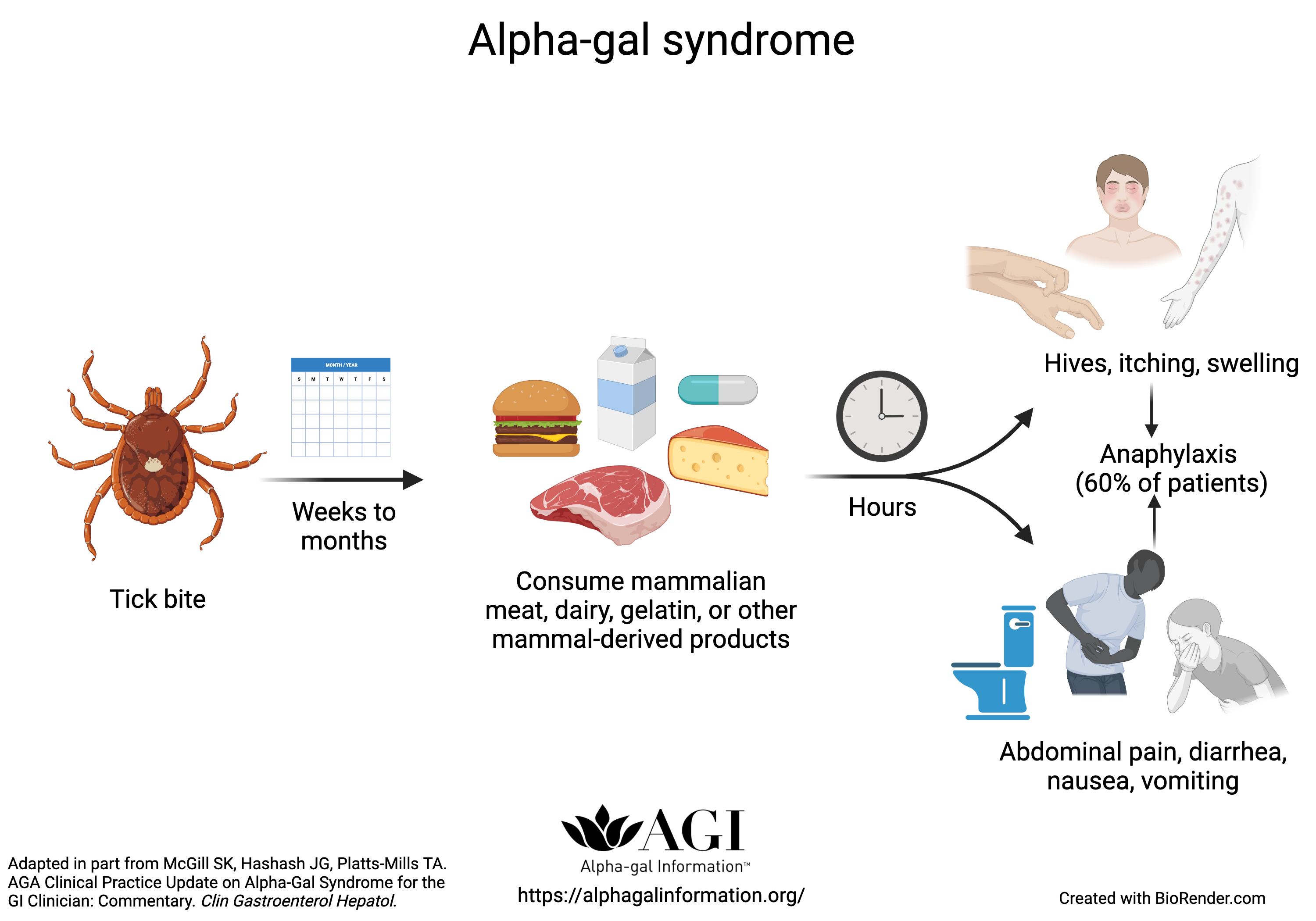
Alpha-gal syndrome is a unique food allergy triggered by a sugar molecule called alphagal. This condition causes allergic reactions to red meat and other products derived from mammals. It is most commonly associated with the bite of the Lone Star tick, which transfers alpha-gal into the bloodstream. The syndrome can cause mild to severe allergic reactions and is increasingly recognized in the United States and globally.
Symptoms of Alpha-Gal Syndrome
Symptoms of alphagal syndrome often appear 3 to 6 hours after consuming red meat or other mammalian products. This delay differentiates it from other food allergies, which typically cause immediate reactions. Common symptoms include:
- Skin Reactions: Hives, itching, or scaly skin.
- Swelling: Swelling of the lips, face, tongue, throat, or other body parts.
- Respiratory Issues: Wheezing or shortness of breath.
- Digestive Problems: Stomach pain, diarrhea, nausea, or vomiting.
- Anaphylaxis: Severe, life-threatening allergic reactions that include throat tightness, difficulty breathing, dizziness, and rapid pulse.
If you experience symptoms after eating red meat or mammalian products, consult a healthcare provider, especially if you live in regions where the Lone Star tick is common.
When to Seek Medical Attention
Seek immediate medical care if you experience symptoms of anaphylaxis, such as:
- Difficulty breathing.
- A rapid, weak pulse.
- Severe dizziness or fainting.
- Swelling of the throat.
Use an epinephrine auto-injector (EpiPen, Auvi-Q) if prescribed and visit the nearest emergency room for further evaluation and treatment.
Causes of Alpha-Gal Syndrome
Alpha-gal syndrome begins when a tick bite introduces alpha-gal molecules into the bloodstream. In susceptible individuals, the immune system creates antibodies targeting alpha-gal, leading to allergic reactions upon consuming products derived from mammals. Foods and substances that may trigger reactions include:
- Red meat such as beef, pork, and lamb.
- Dairy products.
- Gelatins and products containing mammalian ingredients.
In addition, people with alpha-gal antibodies may experience allergic reactions to the cancer drug cetuximab, as its structure mimics alpha-gal molecules.
Risk Factors
Certain factors increase the risk of alpha-gal syndrome, including:
- Geographic Location: Living or spending time in regions where Lone Star ticks are common, particularly in the southeastern, eastern, and central United States.
- Outdoor Activities: Spending time in wooded, grassy areas where ticks thrive.
- Multiple Tick Bites: A history of frequent tick bites may increase the severity of reactions.
Globally, other tick species may also transmit alpha-gal, making the syndrome a concern in parts of Europe, Australia, Asia, and South America.
Complications of Alpha-Gal Syndrome
Alpha-gal syndrome can lead to serious complications, such as:
- Anaphylaxis: A severe allergic reaction requiring emergency treatment with epinephrine.
- Chronic Symptoms: Unexplained anaphylaxis in individuals who remain undiagnosed.
- Dietary Restrictions: Challenges in identifying and avoiding mammalian products in food and medications.
Prevention of Alpha-Gal Syndrome
Preventing tick bites is the most effective way to avoid alpha-gal syndrome. Here are some practical steps:
- Cover Up: Wear long-sleeved shirts, long pants tucked into socks, and gloves when in wooded or grassy areas. Stick to trails to avoid tick habitats.
- Use Bug Spray: Apply insect repellents with at least 20% DEET to exposed skin and treat clothing with permethrin.
- Tick-Proof Your Yard: Remove brush, leaves, and woodpiles where ticks may hide.
- Check for Ticks: Inspect yourself, your children, and your pets thoroughly after spending time outdoors. Shower immediately and use a washcloth to dislodge any ticks.
- Remove Ticks Properly: Use tweezers to carefully remove ticks by grasping them near the head or mouth. Apply antiseptic to the bite site after removal.
Medical Disclaimer
This article is for informational purposes only and should not be considered medical advice. Always consult a healthcare provider for diagnosis and treatment of medical conditions. If you suspect alpha-gal syndrome or experience severe allergic reactions, seek immediate medical attention. Do not delay or disregard professional medical advice based on the content provided here.