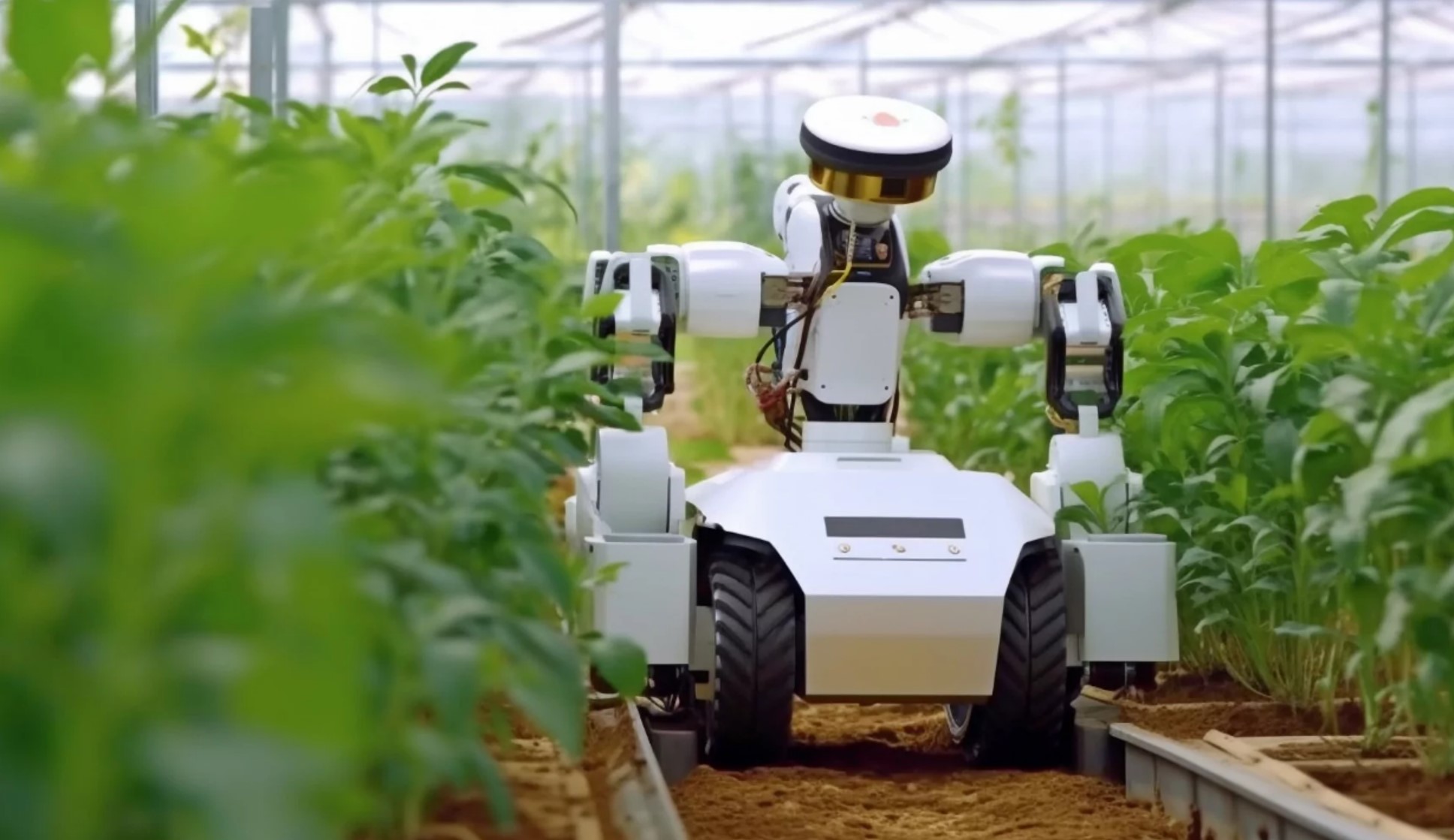
In 2025, AI in African agriculture is no longer a futuristic idea—it’s a growing force driving food security, economic empowerment, and sustainable farming. Across the continent, artificial intelligence is helping smallholder farmers, cooperatives, and agri-tech startups optimize everything from crop yields to supply chains.
This transformation is reshaping the way Africa feeds itself and prepares for a climate-uncertain future.
🌱 Why Africa Needs AI in Agriculture
Agriculture accounts for over 60% of employment across Africa, yet yields remain among the lowest globally. Key challenges include:
- Unpredictable weather patterns due to climate change
- Pests and diseases destroying harvests
- Poor access to agronomic knowledge
- Post-harvest losses due to inefficient logistics
AI-powered tools offer a new hope by bringing data-driven insights directly to the farmer, often via mobile platforms or solar-powered sensors.
🤖 Key AI Applications in African Agriculture
1. Precision Farming and Crop Monitoring
Drones, satellites, and AI image analysis are being used to detect crop stress, soil conditions, and nutrient deficiencies. These systems recommend targeted actions like fertilizer application or irrigation.
Benefit: Boosts productivity while cutting waste.
2. AI Weather Forecasting and Climate Adaptation
Advanced models are being developed to provide hyper-local weather updates and climate risk forecasts. Farmers can now decide the best planting and harvesting times based on AI-driven simulations.
Benefit: Reduces climate-related losses.
3. Pest and Disease Prediction
AI tools analyze data from field images, weather patterns, and historical outbreaks to predict pest risks. Early alerts are sent to farmers to apply prevention measures.
Benefit: Saves entire harvests from avoidable losses.
4. Market Forecasting and Price Intelligence
AI tracks market prices, demand trends, and buyer behavior to guide farmers on what to plant and when to sell. Some apps even recommend routes to maximize profits by minimizing transport costs.
Benefit: Reduces post-harvest losses and improves income predictability.
5. Smart Irrigation and Water Management
AI sensors measure soil moisture, plant health, and weather conditions to control when and how much to irrigate. This approach conserves water while ensuring optimal crop hydration.
Benefit: Promotes sustainable water use in arid zones.
🌍 Notable African Startups Driving AI Agriculture
- Twiga Foods (Kenya): Uses AI to optimize farm-to-market logistics
- Zenvus (Nigeria): Provides AI-driven soil and crop sensors
- Aerobotics (South Africa): Specializes in AI drone analytics for orchard crops
- Agrix Tech (Cameroon): Uses smartphone AI to detect plant diseases from images
- AgroCenta (Ghana): Leverages AI to connect farmers to digital markets
These startups are proving that African-led innovation is at the heart of the agri-AI movement.
📊 AI in African Agriculture: Benefits and Challenges
| Aspect | Benefits | Challenges |
|---|---|---|
| Yield Optimization | Higher output per hectare | Requires training and access to devices |
| Climate Resilience | Better adaptation to extreme conditions | Need for localized, reliable weather data |
| Supply Chain Efficiency | Reduced spoilage, better market access | Infrastructure gaps in rural areas |
| Youth Engagement | Makes farming tech-savvy and appealing | Limited rural internet connectivity |
| Investment Potential | Attracts global agri-tech funding | Political stability and regulatory support |
🔄 How Governments and Donors Are Getting Involved
- African Union supports Smart Africa AgriTech initiatives
- World Bank and FAO fund AI for early warning systems
- Country-level digitization programs (like in Rwanda, Ethiopia, and Nigeria) include agriculture AI pilots
- Public-private partnerships offer AI training and device access to farmer cooperatives
Government support is key to scaling AI solutions beyond pilots into national food security strategies.
💡 The Road Ahead: What’s Next for AI in African Farming
- AI-powered insurance based on crop health data
- Voice-based AI assistants in local languages for low-literacy farmers
- Blockchain + AI for traceable supply chains
- Integration with mobile money platforms for financial access
- Decentralized data hubs for national agriculture policies
These innovations position AI in African agriculture not just as a tool, but as a foundation for inclusive growth and climate-smart development.
✅ Conclusion
AI is transforming agriculture in Africa—not by replacing farmers, but by empowering them with intelligence and precision. From pest alerts to price predictions, these tools are enabling the continent to feed itself smarter, faster, and more sustainably.
As access improves and local solutions scale, AI won’t just be the future of African farming—it will be the reason it thrives.