


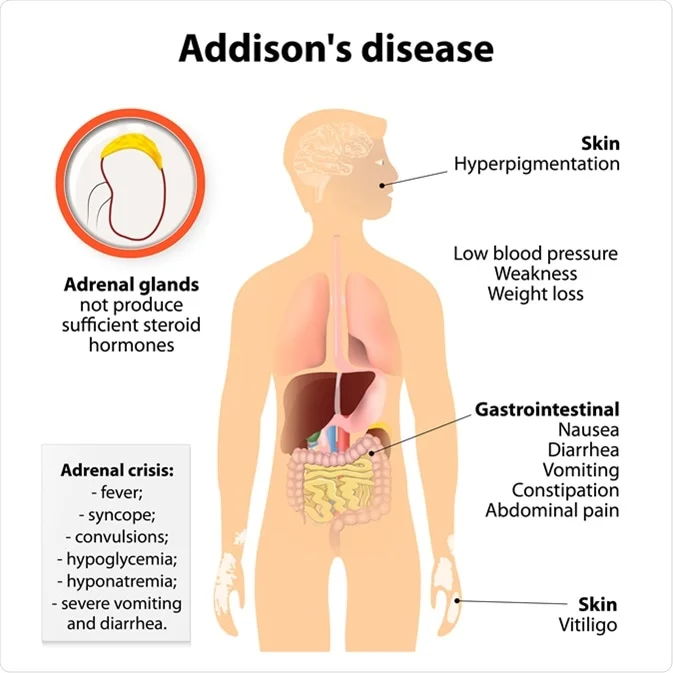
Addison’s disease, or adrenal insufficiency, is a rare condition that occurs when the adrenal glands fail to produce sufficient amounts of essential hormones—primarily cortisol and often aldosterone. These hormones play a critical role in maintaining metabolism, immune function, and stress response. Without treatment, Addison’s disease can lead to life-threatening complications, including an addisonian crisis.
This article provides a comprehensive understanding of Addison’s disease, covering its symptoms, causes, risk factors, complications, and prevention strategies.
Symptoms of Addison’s Disease
Symptoms often develop gradually over months and can be vague at first, leading to delayed diagnosis. However, a sudden stressor like illness or injury may worsen symptoms and trigger an addisonian crisis.
Common Symptoms:
- Extreme fatigue
- Unexplained weight loss and loss of appetite
- Darkened skin patches, particularly in skin folds or scars
- Low blood pressure, sometimes leading to fainting
- Salt cravings
- Low blood sugar (hypoglycemia)
- Nausea, vomiting, or diarrhea
- Abdominal pain
- Muscle and joint pain
- Irritability or depression
- Hair loss or reduced libido (in some individuals)
Symptoms of Addisonian Crisis:
An addisonian crisis is a medical emergency. Seek immediate care if you experience:
- Severe weakness
- Confusion or delirium
- Intense abdominal pain, vomiting, or diarrhea
- Pain in the lower back or legs
- Very low blood pressure
- Reduced consciousness or fainting
Causes of Addison’s Disease
Addison’s disease results from damage to the adrenal glands, which are located above the kidneys and are responsible for producing several vital hormones.
Key Hormones Affected:
- Cortisol: Helps manage stress, regulate metabolism, and maintain blood sugar levels.
- Aldosterone: Regulates sodium, potassium, and blood pressure.
- Androgens: Contribute to muscle mass, libido, and overall well-being.
Types of Adrenal Insufficiency:
- Primary Adrenal Insufficiency:
- Often caused by an autoimmune reaction where the immune system attacks the adrenal glands.
- Other causes include:
- Infections: Such as tuberculosis or fungal infections.
- Cancer Spread: To the adrenal glands.
- Bleeding: Into the adrenal glands.
- Certain medications, such as ketoconazole or cancer treatments with checkpoint inhibitors.
- Secondary Adrenal Insufficiency:
- Occurs when the pituitary gland fails to produce enough adrenocorticotropic hormone (ACTH), which stimulates the adrenal glands.
- Causes include:
- Pituitary tumors or surgery.
- Sudden withdrawal from long-term corticosteroid use.
- Symptoms are generally milder than primary adrenal insufficiency, with a lower likelihood of skin darkening or severe dehydration.
Risk Factors for Addison’s Disease
While Addison’s disease can affect anyone, certain factors increase susceptibility:
- Genetics: Conditions like congenital adrenal hyperplasia.
- Autoimmune Disorders: Hypothyroidism, type 1 diabetes, or vitiligo.
- History of Pituitary Disorders: Tumors, surgery, or inflammation.
- Trauma: Brain injuries affecting hormonal balance.
- Certain Infections or Medications: Tuberculosis, fungal infections, and specific drugs that impair adrenal function.
Complications of Addison’s Disease
If left untreated, Addison’s disease can lead to serious health complications, including:
1. Addisonian Crisis:
- A life-threatening emergency characterized by:
- Severe dehydration
- Low blood sugar
- Dangerously high potassium levels (hyperkalemia)
- It requires immediate medical intervention, including intravenous fluids and corticosteroids.
2. Related Autoimmune Diseases:
- People with Addison’s often have other autoimmune conditions, such as celiac disease or autoimmune thyroiditis.
Prevention of Addisonian Crisis
Although Addison’s disease itself cannot be prevented, managing the condition effectively can reduce the risk of severe complications:
- Monitor Symptoms: Regularly check for signs of fatigue, unexplained weight loss, or salt cravings, and consult your healthcare provider if symptoms worsen.
- Emergency Planning:
- Carry a medical alert bracelet identifying your condition.
- Have an injectable corticosteroid, such as hydrocortisone, for emergencies.
- Adjust Medications During Stress: Increase corticosteroid doses during illness or injury under your healthcare provider’s guidance.
- Avoid Abrupt Medication Changes: Taper corticosteroids slowly under medical supervision to avoid secondary adrenal insufficiency.
- Educate Yourself: Learn how to recognize the early signs of an addisonian crisis.
Living with Addison’s Disease
With proper treatment, most people with Addison’s disease can lead normal, active lives. Treatment typically includes daily hormone replacement therapy:
- Corticosteroids: Replace missing cortisol (e.g., hydrocortisone or prednisone).
- Fludrocortisone: Replaces aldosterone to maintain sodium and potassium balance.
- DHEA (Dehydroepiandrosterone): May be prescribed in some cases to replace androgens, improving energy and mood.
Lifestyle Adjustments:
- Regular Checkups: Monitor hormone levels and adjust medication as needed.
- Balanced Diet: Include sufficient sodium, especially during hot weather or exercise.
- Stress Management: Prepare for increased medication needs during illness or stressful events.
Conclusion
Addison’s disease is a serious but manageable condition with the right diagnosis, treatment, and lifestyle adaptations. Early recognition of symptoms, consistent medical care, and an emergency action plan can help you live a full and active life.
If you suspect Addison’s disease or experience concerning symptoms, consult a healthcare provider promptly to prevent complications and maintain overall well-being.


