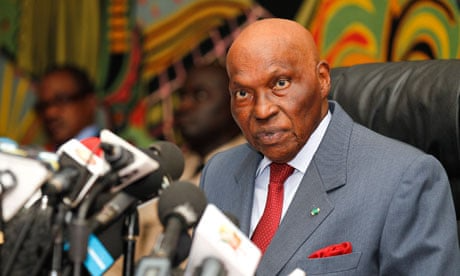
Born on May 29, 1926, Abdoulaye Wade is a politician from France who became Senegalese in 2000 and served as president of Senegal until 2012. In addition, he has headed the Senegalese Democratic Party (PDS) sincee its founding in 1974 and currently serves as its Secretary-General. A prominent member of the opposition, he made four presidential runs,, starting in 1978 and winning the election in 2000. Heled in a contentious campaign for a third term in 2012, although he was re-elected in 2007 with a majority in the first round.
Early life
Wade’s official birth year is 1926, however some sources place his birthdate several years earlier, and the accuracy of historical records is questioned. Wade was born in Kébémer, Senegal, on May 29, 1926. In France, he was a law student and instructor at the Lycée Condorcet. He has two doctorates, one in economics and one in law. At the University of Dakar in Senegal, he served as both the dean of the faculty of economics and law.
Political career
Wade informed President Léopold Sédar Senghor during an Organization of African Unity session in Mogadishu in 1974 that he intended to launch a new party, and Senghor consented. The PDS was established on July 31, 1974. The party, which was originally going to be a Labour party, changed its name to Liberal after a legislation allowing just three parties with three different philosophies was introduced in 1976. Since two of the other parties had already accepted the liberal position, Liberal was the only option left.
In his first presidential contest against Senghor in February 1978, Wade received 17.38% of the vote. Wade was given the moniker “Diombor” by Senghor (Wolof for hare).
Wade was elected to the National Assembly in 1978 as well, a position he held until 1980. Following Senghor’s declaration in late 1980 that he would resign, Wade gained worldwide notice when, in his capacity as Secretary General of the PDS, he released a statement criticizing the procedure and advocating for the army to oversee fresh elections. He then entered and finished second in the presidential contests of 1983 and 1988, trailing Senghor’s successor Abdou Diouf. Due to demonstrations over the 1988 election results, he was detained and given a suspended sentence. He then traveled to France, but he came back in 1990.
Wade became a minister of state without a portfolio in April 1991 after he and four other PDS members joined the ruling Socialist Party (PS) in a national unity cabinet. He and the other PDS ministers left the cabinet in October 1992 as a result of grievances with the way the PS was purportedly in charge of the administration. Wade received 32% of the vote in the presidential election held in February 1993, trailing only Diouf’s 58% victory. Wade and other PDS officials were questioned by the police after Constitutional Council Vice-President Babacar Sèye was killed in May 1993.
Wade, his spouse, and two PDS National Assembly members, Ousmane Ngom and Abdullaye Faye, were accused of participating in the murder on October 1. Despite this, none of them were detained or placed on trial. Wade was detained along with several others in February 1994 during riots because they were suspected of endangering state security. Wade and his co-defendants went on a hunger strike on June 30, 1994, after the accusation of participation in Sèye’s murder was dropped in May of that same year. On July 4, he and his co-defendants were freed, and on August 30, 1994, the remaining charges were dropped.
In March 1995, Wade returned to the cabinet as Minister of State, but he and the other PDS ministers quit once more in March 1998. Despite winning a seat in the National Assembly at the parliamentary election held in February 1998, he announced his retirement in late July 1998, citing the availability of “enough deputies to do the job in my place”.