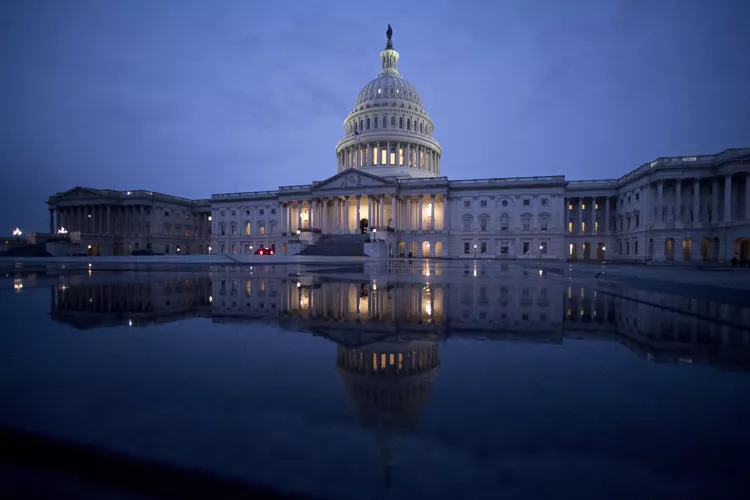
The 2011 debt ceiling crisis was one of the most consequential fiscal and political confrontations in modern U.S. history. What began as a debate over increasing the federal government’s borrowing authority evolved into a high-stakes standoff that rattled global financial markets, triggered the first-ever downgrade of America’s sovereign credit rating, and intensified concerns about the long-term sustainability of U.S. government debt.
At the center of the crisis was the federal debt ceiling—the legal limit on how much money the U.S. Treasury can borrow to meet obligations already approved by Congress. As the national debt approached its statutory limit in 2011, lawmakers became locked in a bitter dispute over whether to raise borrowing authority and under what fiscal conditions.
The conflict unfolded during a fragile economic recovery following the 2007–08 global financial crisis. Government spending had surged in response to recessionary pressures, banking instability, and high unemployment. Fiscal conservatives pushed for spending restraint and deficit reduction, while others warned that failing to raise the debt ceiling could destabilize financial markets and threaten government payments.
The eventual resolution temporarily avoided default but left lasting scars on U.S. fiscal politics, investor confidence, and global perceptions of American financial stability.
What Was the 2011 Debt Ceiling Crisis?
The 2011 debt ceiling crisis was a political and fiscal confrontation in Congress over whether to raise the federal government’s borrowing limit.
The crisis occurred because the United States approached its legal debt ceiling while continuing to run large federal budget deficits following the global financial crisis.
Without congressional action, the Treasury risked losing authority to borrow additional funds needed to meet existing obligations.
These obligations included:
- Treasury interest payments
- Social Security benefits
- Medicare payments
- federal salaries
- military spending
- government contracts
The crisis intensified throughout mid-2011 as lawmakers struggled to negotiate a compromise.
What Is the Debt Ceiling?
The debt ceiling is the maximum amount of money the U.S. government is legally allowed to borrow.
Why the Debt Ceiling Exists
Congress established the debt ceiling to maintain legislative oversight over federal borrowing.
The Treasury issues debt instruments such as:
- Treasury bills
- Treasury notes
- Treasury bonds
to finance government operations when spending exceeds tax revenue.
Debt Ceiling Formula
Government Spending>Tax Revenue=Borrowing Need
When total borrowing approaches the legal limit, Congress must either:
- raise the ceiling
- suspend the ceiling
- reduce spending drastically
The Economic Background Before the Crisis
The crisis emerged during a period of extraordinary fiscal strain.
The 2007–08 Financial Crisis
The United States entered a severe recession following the collapse of the housing market and financial system.
The federal government responded with:
- bank rescue programs
- stimulus spending
- emergency lending
- unemployment support
These measures dramatically increased federal deficits.
Rapid Growth in the Budget Deficit
The federal deficit expanded sharply.
According to government data:
- the deficit stood at approximately $458.6 billion in 2008
- widened to roughly $1.4 trillion in 2009
This surge accelerated federal borrowing dramatically.
Rising National Debt Before 2011
Congress repeatedly raised the debt ceiling during the recovery period.
Debt Ceiling Increases
Between 2008 and 2010:
- the debt ceiling increased from $10.6 trillion to $14.3 trillion
As debt levels approached the new limit again in 2011, another increase became necessary.
However, political divisions had intensified substantially.
The Political Battle in Congress
The crisis reflected deep ideological divisions regarding government spending and fiscal policy.
Fiscal Conservatives’ Position
Fiscal conservatives argued the rapid growth of federal debt threatened long-term economic stability.
They demanded:
- spending cuts
- deficit reduction measures
- constraints on future borrowing
before supporting a debt ceiling increase.
Pro-Debt Ceiling Advocates’ Position
Others argued that failing to raise the debt ceiling would be economically catastrophic.
They warned the government could face:
- delayed payments
- interrupted federal services
- market panic
- damage to U.S. creditworthiness
Supporters emphasized that the debt ceiling concerned payment obligations already approved by Congress—not future spending authorization.
Why Financial Markets Became Alarmed
Markets feared the possibility of a technical default.
What Is a Technical Default?
A technical default occurs when a borrower temporarily fails to meet debt-payment obligations on time.
For the United States, this possibility shocked global investors because Treasury securities are widely considered among the safest financial assets in the world.
Treasury Securities and Global Finance
U.S. Treasury debt plays a central role in:
- global banking systems
- international reserves
- institutional portfolios
- money markets
- interest-rate benchmarks
Any threat to Treasury reliability therefore carries global implications.
How the Crisis Affected Financial Markets
Investor anxiety increased sharply during negotiations.
Stock Market Volatility
Financial markets experienced substantial turbulence as uncertainty intensified.
On Aug. 8, 2011:
- the S&P 500 fell more than 6%
- the Nasdaq Composite declined over 6%
- the Dow Jones Industrial Average dropped more than 600 points
The declines reflected fears about:
- political dysfunction
- economic slowdown
- sovereign credit risk
Consumer and Business Confidence Declined
The prolonged standoff weakened:
- investor confidence
- business sentiment
- consumer expectations
Many feared policymakers might fail to reach an agreement in time.
The Budget Control Act of 2011
Congress ultimately resolved the crisis through legislation.
Passage of the Budget Control Act
The Budget Control Act of 2011 became law on:
- Aug. 2, 2011
The agreement raised the debt ceiling while imposing spending constraints.
Debt Ceiling Increase
The law authorized approximately:
- $2.4 trillion in debt ceiling increases
implemented in multiple stages.
Debt Ceiling Expansion Formula
14.3 Trillion+2.4 Trillion=16.7 Trillion
This allowed the Treasury to continue financing government operations.
Spending Reduction Measures
The legislation also included spending controls.
Planned Spending Reductions
The agreement incorporated approximately:
- $900 billion in projected spending slowdowns over 10 years
A special congressional committee was also tasked with identifying additional deficit reduction measures.
Sequestration Mechanism
If lawmakers failed to reach broader deficit agreements, automatic spending cuts—known as sequestration—would take effect.
These cuts later became highly controversial.
The Historic Credit Rating Downgrade
One of the most important consequences of the crisis was the downgrade of U.S. sovereign credit.
Standard & Poor’s Downgrade
Following the resolution, Standard & Poor’s downgraded the U.S. long-term credit rating from:
- AAA
- to AA+
for the first time in history.
Why the Downgrade Happened
S&P argued the agreement failed to sufficiently stabilize long-term debt dynamics.
The agency cited concerns regarding:
- political polarization
- fiscal sustainability
- long-term debt growth
- policymaking effectiveness
The downgrade shocked financial markets and policymakers globally.
Why the Debt Ceiling Exists Historically
The debt ceiling evolved gradually over time.
Early Congressional Borrowing Control
Before 1917, Congress typically authorized borrowing for specific purposes such as wars.
This maintained a direct connection between:
- spending authorization
- debt issuance
Creation of Aggregate Debt Limits
In 1917 and later in 1939, Congress granted the Treasury greater flexibility in managing debt issuance by establishing broader aggregate borrowing limits.
This improved operational flexibility but also created recurring political battles whenever borrowing approached the legal limit.
Long-Term Implications of the 2011 Crisis
The consequences extended far beyond 2011.
Increased Political Polarization
The crisis intensified partisan conflict surrounding fiscal policy and debt management.
Future debt ceiling debates became increasingly contentious.
Damage to Investor Confidence
The standoff raised questions about the reliability of U.S. fiscal governance.
Although Treasury securities remained dominant globally, the downgrade symbolically weakened perceptions of absolute fiscal stability.
Impact on Fiscal Policy Debates
The crisis reshaped conversations about:
- deficit reduction
- entitlement spending
- tax policy
- government borrowing
- long-term debt sustainability
These debates continue today.
Why the U.S. Rarely Runs Balanced Budgets
The federal government has historically operated with persistent deficits.
Structural Drivers of Federal Debt
Major drivers include:
- entitlement spending
- military expenditures
- economic stimulus
- tax reductions
- recessionary spending
When deficits persist over long periods, national debt accumulates steadily.
Debt-to-GDP Concerns
Economists frequently analyze debt relative to national economic output.
Debt-to-GDP Formula
Debt-to-GDP=GDPNational Debt
Higher ratios may raise concerns about long-term fiscal sustainability.
Could the U.S. Actually Default?
Technically, yes—but the situation is highly complex.
Why Default Is So Dangerous
A U.S. default could potentially disrupt:
- global banking systems
- Treasury markets
- retirement accounts
- money market funds
- international finance
Treasury Secretary Janet Yellen later warned similar standoffs could cause irreparable economic harm.
Extraordinary Measures
When debt ceilings approach, the Treasury often uses temporary accounting tools known as extraordinary measures to delay default risks.
These measures may involve suspending certain government fund investments temporarily.
Why the 2011 Debt Ceiling Crisis Still Matters
The crisis remains highly relevant because debt ceiling confrontations continue recurring in American politics.
The episode demonstrated how fiscal disputes can rapidly affect:
- financial markets
- investor confidence
- sovereign credit ratings
- economic growth
- global stability
It also highlighted the interconnected nature of modern finance, where political gridlock in Washington can influence markets worldwide.
Frequently Asked Questions
What caused the 2011 debt ceiling crisis?
The crisis occurred because the federal government approached its legal borrowing limit while Congress remained divided over spending and debt policies.
What is the debt ceiling?
The debt ceiling is the legal limit on how much money the U.S. government can borrow to meet existing obligations.
How was the 2011 debt ceiling crisis resolved?
Congress passed the Budget Control Act of 2011, which increased the debt ceiling and introduced spending-reduction measures.
Why did Standard & Poor’s downgrade U.S. debt?
S&P cited concerns about political dysfunction and insufficient long-term deficit reduction efforts.
Did the United States default during the crisis?
No. Congress ultimately reached an agreement before the Treasury defaulted on obligations.
Why did markets react so strongly to the crisis?
Investors feared the possibility of a technical default and broader instability in global financial markets.
How did the crisis affect future debt ceiling debates?
The crisis intensified political polarization and established debt ceiling negotiations as recurring high-stakes fiscal confrontations.
Key Takeaways
- The 2011 debt ceiling crisis involved a major political dispute over federal borrowing authority.
- The crisis occurred during recovery from the 2007–08 financial crisis.
- Federal deficits surged after recession-related spending increases.
- Congress resolved the crisis through the Budget Control Act of 2011.
- Standard & Poor’s downgraded U.S. sovereign debt from AAA to AA+.
- Financial markets experienced severe volatility during negotiations.
- The crisis intensified debates over debt, deficits, and fiscal policy.
- Debt ceiling confrontations continue influencing modern U.S. politics and financial markets.
Conclusion
The 2011 debt ceiling crisis represented far more than a routine congressional disagreement over government borrowing. It became a defining test of American fiscal governance, political stability, and global financial credibility.
Although lawmakers ultimately avoided default through the Budget Control Act, the prolonged confrontation exposed deep divisions over spending, taxation, and debt management. The resulting credit downgrade and market turmoil demonstrated that even the perception of instability surrounding U.S. Treasury obligations can produce significant economic consequences.
More than a decade later, the crisis continues shaping discussions about fiscal responsibility, sovereign debt, and the role of political brinkmanship in financial markets. Its legacy serves as a reminder that confidence in government finance depends not only on economic strength, but also on the ability of policymakers to manage risk, maintain stability, and preserve trust in the institutions underpinning the global economy.
Read Also: Caritas Microfinance Bank SWIFT code: CRMFKENA explained (step-by-step)