


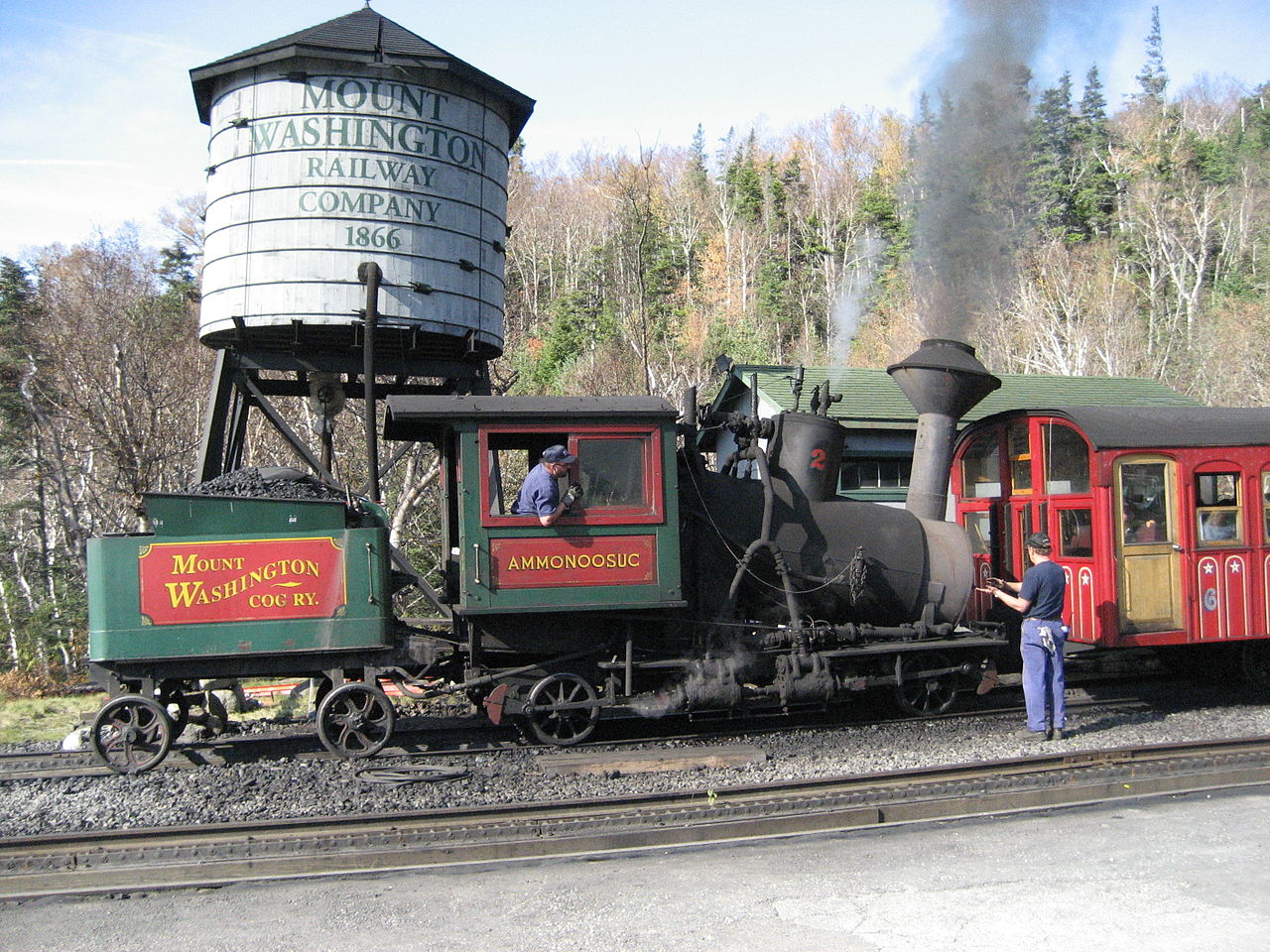
The 0-2-2-0 locomotive is a rare steam engine wheel arrangement classified under the Whyte notation system. It consists of no leading wheels, four powered but uncoupled driving wheels on two axles, and no trailing wheels. In some references, the arrangement appears as 0-(2-2)-0, with brackets emphasizing that the driving axles are not connected by coupling rods.
This design represented an attempt to balance power and traction without mechanically linking the axles, but it was rarely successful. The configuration appeared in a few experimental and specialized locomotives in the mid-19th and early 20th centuries.
Design and Characteristics
In a 0-2-2-0 locomotive, each pair of driving wheels operates independently. This means the axles are driven separately, often through gearing or individual cylinders, rather than being coupled together by side rods.
This separation provided simplified mechanics but reduced adhesion efficiency because the weight and driving force were not evenly distributed. The arrangement thus combined the tractive effort of two small engines on a single frame but at the cost of stability and mechanical complexity.
Early Development
The earliest known example of a 0-2-2-0 locomotive was a well-tank engine built by E. B. Wilson & Co. in 1850 for the York and North Midland Railway. After its absorption by the North Eastern Railway in 1854, the locomotive was rebuilt into a 0-4-0 configuration, reflecting the limited success of the original design.
In 1855, R. and W. Hawthorn constructed a small batch of Glasgow and South Western Railway (G&SWR) Class 99 locomotives to a similar 0-2-2-0 plan. Designed by Patrick Stirling, these engines aimed to improve efficiency through independent driving axles. However, performance issues, particularly poor traction and maintenance difficulties, led to their withdrawal by 1867.
20th-Century Applications
While the 0-2-2-0 type fell out of general use, it re-emerged half a century later in continental Europe. The Royal Bavarian State Railways ML 2/2 class, introduced in 1906, revived the configuration successfully. These locomotives were compact and geared, intended for light shunting and steep gradients, where precise traction was more important than high speed.
The Bavarian ML 2/2 became the most numerous and reliable examples of the 0-2-2-0 layout, proving that the concept could work in specialized environments when paired with modernized gearing systems.
Use in the United States
In North America, the configuration was notably employed on the Mount Washington Cog Railway in New Hampshire, a pioneering mountain railway that used rack-and-pinion technology. The line operated eight 0-2-2-0 locomotives, each built for steep gradient operation.
Today, only two of these locomotives remain in working order, while three are stored and the rest preserved for display. Their success on steep inclines demonstrates the adaptability of the 0-2-2-0 design in specialized mountain railways, where traction outweighed speed.
Performance and Evaluation
The 0-2-2-0 design was mechanically intriguing but rarely efficient in ordinary service. Without coupling rods, the driving wheels did not share traction evenly, leading to slippage and uneven wear. For heavy rail service, the design could not compete with coupled-wheel arrangements such as the 0-4-0 or 0-6-0, which offered far greater pulling power.
Nonetheless, the configuration influenced later experiments with articulated and geared locomotives, including cog rail and industrial switchers, that exploited its ability to manage steep grades and tight curves.
Legacy
Though rare, the 0-2-2-0 locomotive remains a fascinating chapter in the evolution of steam power. It illustrates how early engineers experimented with wheel arrangements to achieve better adhesion, balance, and efficiency. The few surviving examples — particularly on the Mount Washington Cog Railway and in Bavarian museum collections — serve as a testament to 19th-century ingenuity in mechanical design.
While it never achieved mainstream adoption, the 0-2-2-0 helped pave the way for later innovations in independent-axle and rack-driven locomotives, bridging the gap between early steam experimentation and modern traction technology.


