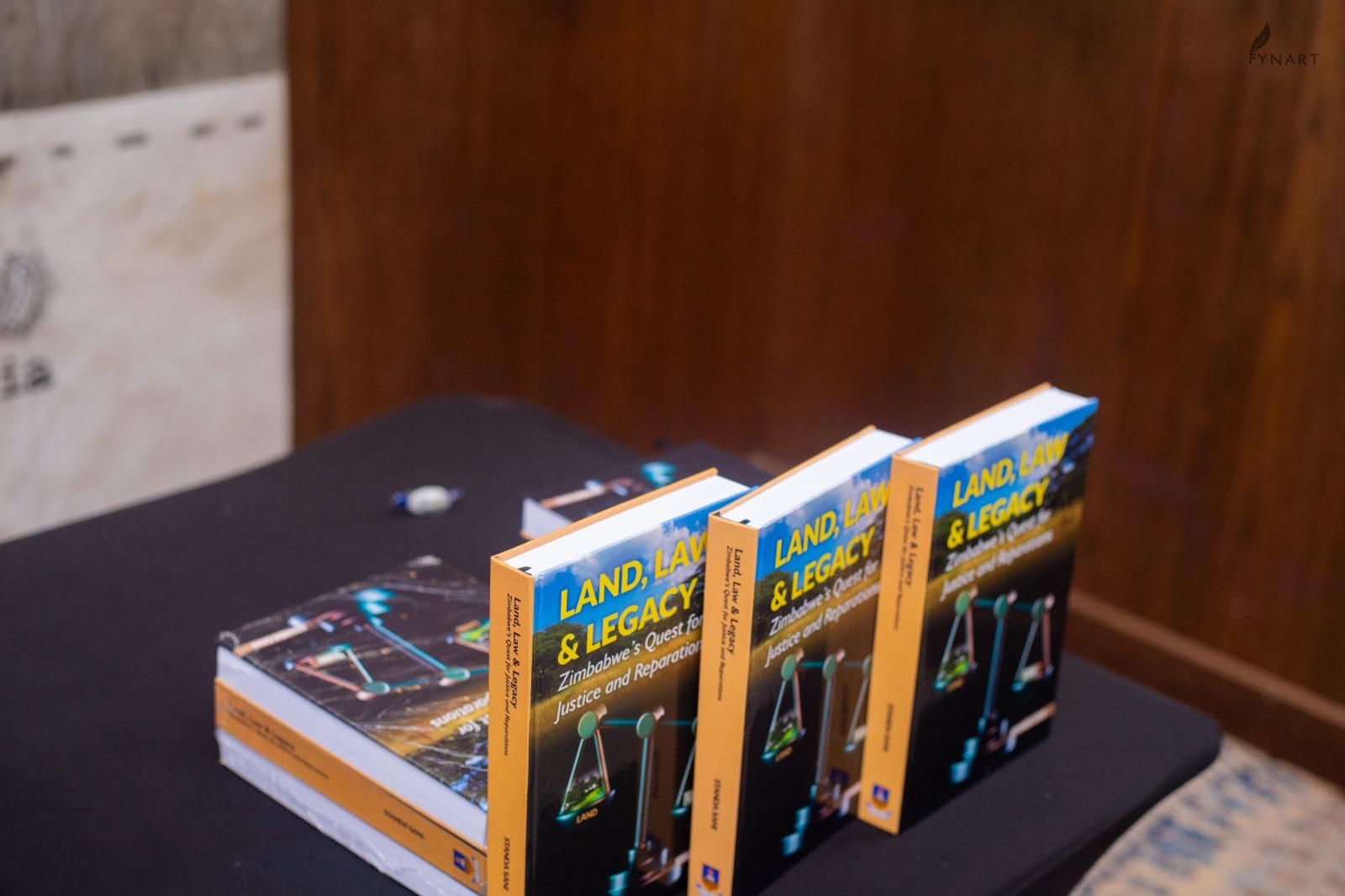
Zimbabwe land question debates have shaped the country’s history, politics, economy and national identity for more than a century. A new book by Zimbabwean legal scholar and author Standa Sani now offers a detailed examination of that complex subject through the lenses of law, justice, historical memory and reparations.
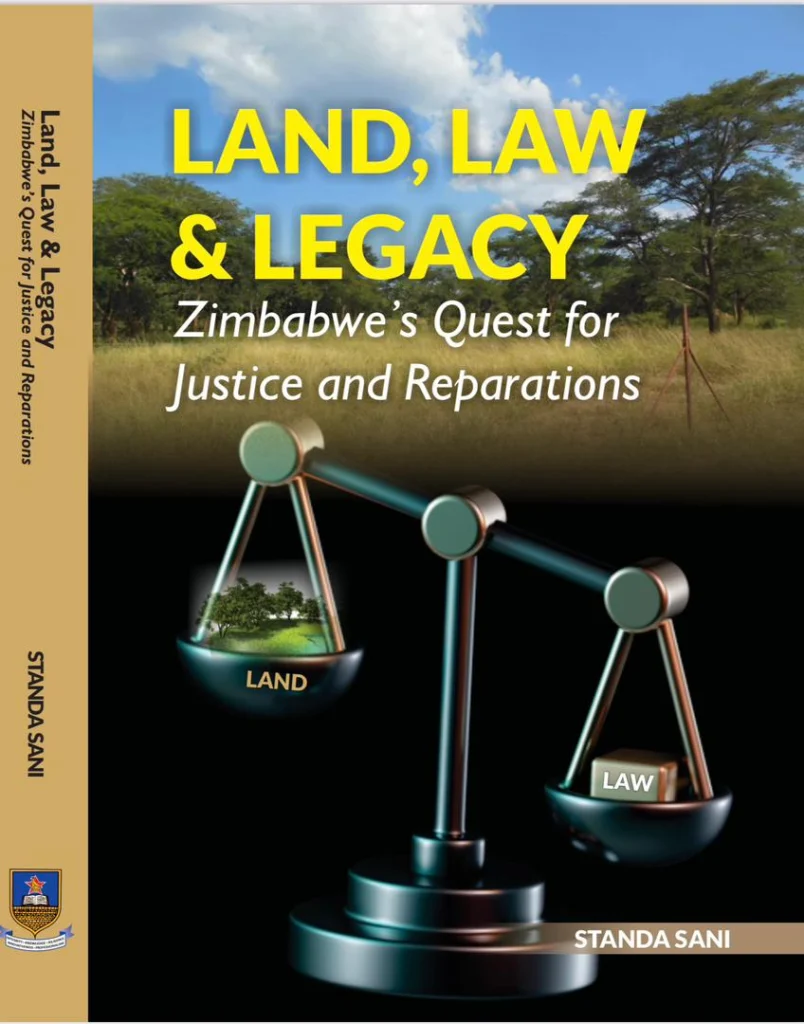
Titled Land, Law & Legacy: Zimbabwe’s Quest for Justice and Reparations, the publication traces the roots of Zimbabwe’s land question from colonial conquest to the present-day search for justice, reconciliation and sustainable development.
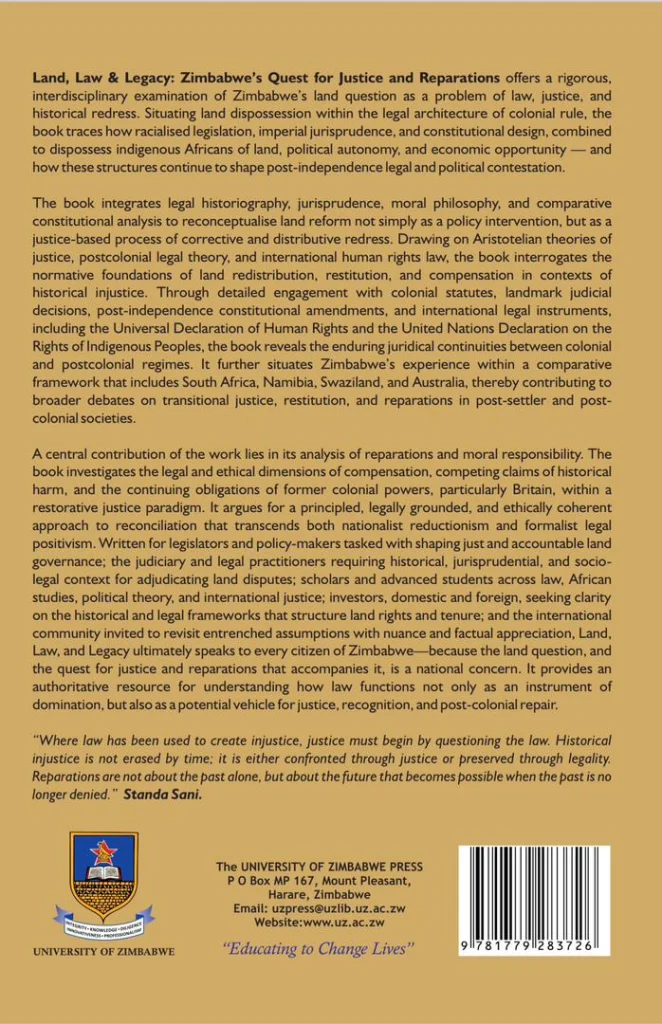
The book examines how colonial-era laws and policies reshaped land ownership in Zimbabwe, dispossessed indigenous African communities and created long-lasting inequalities. It also explores how land reform, reparations and historical accountability remain central to national healing.
Sani’s work brings together legal analysis, historical research, political context and philosophical reflection. Rather than treating land as only an economic resource, the book presents it as a question of justice, identity, dignity and national reconstruction.
A Historical and Legal Examination of Land Dispossession
At the centre of Land, Law & Legacy is a detailed study of how land dispossession was institutionalised through colonial law.
The book examines major colonial statutes and policies that shaped Zimbabwe’s land ownership structure, including the Land Apportionment Act of 1930, the Native Land Husbandry Act of 1951 and the Land Tenure Act of 1969.
These laws are presented as part of a broader system that entrenched racial segregation and unequal access to land. Through this legal framework, indigenous Zimbabweans were systematically pushed away from ancestral lands while colonial settlers gained control over the most productive areas.
By revisiting these laws, Sani places Zimbabwe’s land question within a deeper legal and historical context. The book argues that contemporary debates on land reform cannot be fully understood without first examining the legal architecture that produced dispossession.
The work also considers the significance of the Privy Council judgment and other legal developments that influenced Zimbabwe’s land tenure system. In doing so, it gives readers a wider understanding of how courts, legislation and colonial policy interacted in the making of Zimbabwe’s land crisis.
Justice, Morality and the Meaning of Reparations
Beyond legal history, the book engages with major philosophical and moral questions.
Sani draws on Aristotelian ideas of justice and broader theories of colonialism, racism and redress. The book asks what justice means in a society where land was taken through conquest, law and racial power.
This makes Land, Law & Legacy more than a technical legal study. It is also a reflection on historical wrongs and the obligations that follow from them.
The book explores whether justice should be understood only through property rights or whether it must also include dignity, restitution, recognition and repair. It considers how societies can respond to inherited injustice without creating new forms of instability.
By connecting the Zimbabwe land question to theories of justice, the publication invites readers to think beyond politics and economics. It asks whether reconciliation can be meaningful if historical dispossession remains unresolved.
Zimbabwe Land Question in African and Global Context
Sani also situates Zimbabwe’s land experience within a broader African and international context.
The book examines the rise of Pan-Africanism and the role of liberation movements in challenging colonial domination across Southern Africa. It also considers the contribution of the Organisation of African Unity and the African Union in supporting struggles for independence, sovereignty and self-determination.
This wider framing is important because Zimbabwe’s land question is not an isolated national issue. Across Africa, colonial rule often involved land seizure, forced removals and the creation of racialised systems of ownership. For many postcolonial states, land remains central to debates about justice, citizenship and economic transformation.
The book also draws comparative insights from other historical experiences of injustice, including the Holocaust, to explore how societies remember, acknowledge and repair historical harm.
By placing Zimbabwe within this wider conversation, Land, Law & Legacy connects local land reform debates to global discussions on reparations, historical accountability and restorative justice.
Fast Track Land Reform Programme Under Review
A significant section of the book focuses on Zimbabwe’s Fast Track Land Reform Programme, launched in 2000.
The programme remains one of the most debated chapters in Zimbabwe’s post-independence history. Supporters view it as a necessary response to colonial land dispossession and delayed redistribution. Critics point to its economic, legal and social consequences, including disruption to commercial agriculture and conflict over property rights.
Sani’s book evaluates both the historical necessity and the contemporary impact of the programme. It examines how the Fast Track Land Reform Programme affected displaced white commercial farmers, agricultural production, livelihoods and social relations.
The book does not treat land reform as a simple issue. Instead, it recognises the deep historical grievances that made redistribution urgent while also engaging with the complex outcomes that followed.
This balanced approach gives readers a fuller understanding of why the Zimbabwe land question remains so contested. It is not only about who owns land today, but also about how a society repairs historical harm while building a stable and productive future.
Comparative Lessons From Other Countries
Land, Law & Legacy also compares Zimbabwe’s land reform experience with other countries, including South Africa, Namibia, Eswatini and Australia.
These comparisons help show that land redistribution is a challenge faced by many societies with colonial histories. Different countries have taken different approaches, from market-based redistribution to restitution claims, negotiated settlements and state-led reform.
By examining these examples, Sani highlights both the opportunities and the risks associated with land reform. Redistribution can promote justice, expand economic participation and correct historical imbalance. At the same time, poor implementation can create uncertainty, reduce productivity and deepen social divisions.
The comparative approach gives policymakers, scholars and readers a broader set of lessons. It also shows that the Zimbabwe land question belongs to a wider global debate about how nations address historical injustice in practical and sustainable ways.
Britain’s Role in Zimbabwe’s Historical Land Question
One of the book’s central arguments concerns Britain’s role in Zimbabwe’s historical land question.
Sani contends that Britain bears a moral and historical responsibility to acknowledge and address the enduring consequences of colonial land policies, racial segregation and the subjugation of indigenous African communities.
The book argues that land dispossession was not accidental. It was shaped by colonial power, legal systems and racial ideology. For that reason, the author presents reparations as part of a broader discussion about accountability and historical justice.
This argument places the book within growing international debates about colonial reparations. Across the world, former colonies and descendants of dispossessed communities continue to call for recognition, apology, restitution and material forms of repair.
In the Zimbabwean context, Sani argues that the land question cannot be separated from Britain’s colonial legacy. The book presents reparations not as a narrow political demand but as a moral conversation about historical responsibility, justice and reconciliation.
Land as a Question of Nation-Building
According to the book, land is not merely a matter of property ownership. It is also a foundation for belonging, identity, economic security and national development.
For communities dispossessed under colonial rule, land carries historical, cultural and spiritual meaning. It represents memory, ancestry and dignity. That is why land debates in Zimbabwe often carry emotional weight beyond ordinary policy disputes.
Sani argues that addressing land dispossession is essential to building a just and equitable society. Without confronting the past, efforts at reconciliation may remain incomplete. Without fairness in land access and governance, sustainable development may remain difficult.
The book therefore links land justice to nation-building. It suggests that Zimbabwe’s future depends not only on economic policy but also on the ability to deal honestly with historical injustice.
A Timely Contribution to Legal and Policy Debate
Land, Law & Legacy arrives at a time when questions about land, reparations and colonial history continue to shape public debate across Africa and beyond.
For Zimbabwe, the land question remains central to discussions about agriculture, investment, constitutionalism, social justice and national healing. For the wider region, the issue continues to influence policy debates in countries such as South Africa and Namibia, where land ownership remains deeply unequal.
The book is written for a wide audience. Scholars will find value in its legal and historical research. Policymakers can use it to reflect on the design and consequences of land reform. Legal practitioners can engage with its analysis of land law, property rights and reparative justice. Students can use it as a resource for understanding one of Zimbabwe’s most important national questions.
General readers will also find the book useful because it explains land dispossession and reform in a broader human and historical context.
Author’s View
Sani says the book seeks to encourage a more informed and balanced understanding of Zimbabwe’s land debate.
“This book seeks to contribute to an informed and balanced understanding of Zimbabwe’s land question by examining its historical foundations, legal dimensions, and implications for contemporary justice and reparations discourse,” said Sani.
His statement reflects the book’s central purpose: to move the debate beyond slogans and toward a deeper understanding of history, law and justice.
About the Author
Standa Sani is a Zimbabwean legal scholar, author and registered legal practitioner.
His work focuses on constitutional law, land law, succession law, property law, human rights and historical justice. Through his scholarship and publications, he continues to contribute to legal discourse on land governance, reparations and transformative justice in Zimbabwe and beyond.
Land, Law & Legacy: Zimbabwe’s Quest for Justice and Reparations adds to his broader contribution to debates on law, justice and postcolonial transformation.
Book Availability
Land, Law & Legacy: Zimbabwe’s Quest for Justice and Reparations is available for purchase through the Faculty of Law, University of Zimbabwe, and directly from the author.
Media, Speaking Engagement and Book Purchase Enquiries
Standa Sani
Email: [email protected]
Email: [email protected]
Conclusion
Land, Law & Legacy: Zimbabwe’s Quest for Justice and Reparations offers a timely and thoughtful contribution to one of Zimbabwe’s most important historical and legal debates.
By examining the Zimbabwe land question through colonial history, legal analysis, moral philosophy, reparations and comparative land reform, Standa Sani provides readers with a broad framework for understanding why land remains central to justice and national development.
The book does not reduce the subject to politics alone. It presents land as a question of law, memory, dignity, accountability and the future of the nation.
For scholars, policymakers, legal practitioners, students and general readers, Land, Law & Legacy offers a serious and accessible entry point into the continuing conversation about Zimbabwe’s land question, historical justice and the search for meaningful reparations.
Read Also: Book Review: Trump Unyielding: A Biography of Donald J. Trump