


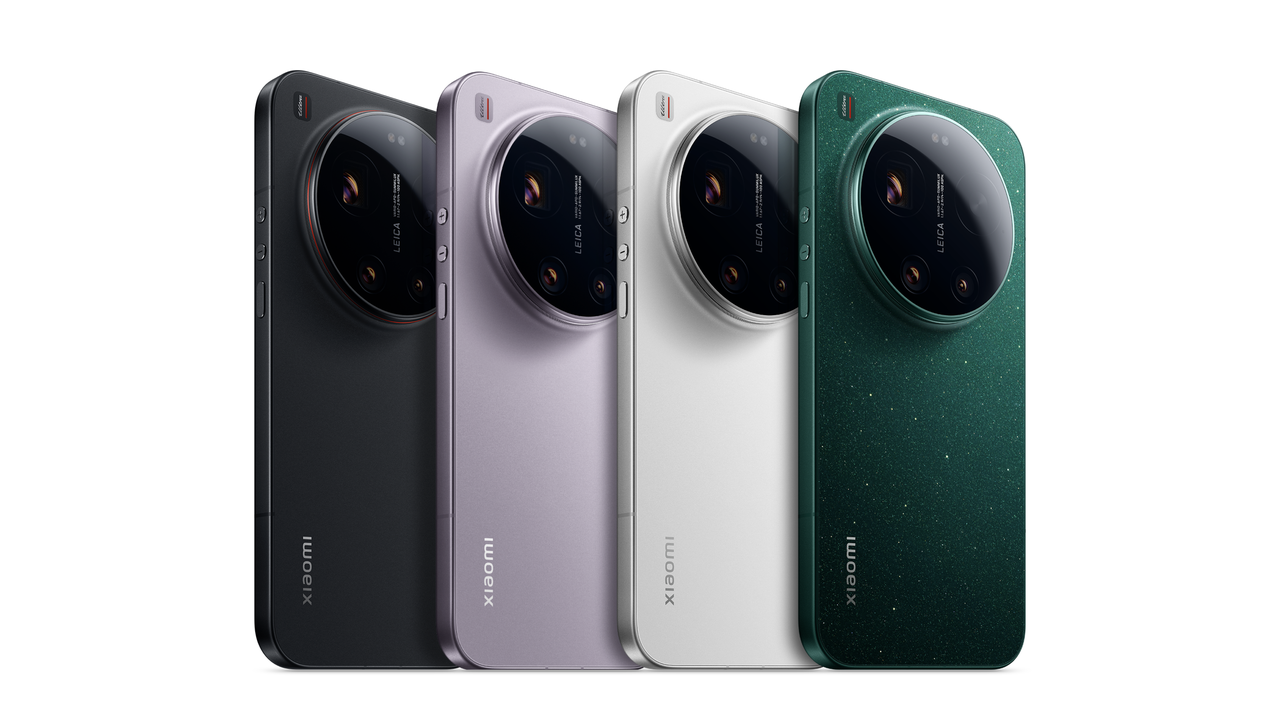
The Xiaomi 17 Ultra arrives as Xiaomi’s clearest attempt yet to dominate the global premium camera-phone segment. The Xiaomi 17 Ultra does not rely on one headline feature alone. Instead, it pairs a 1-inch main sensor with a continuous zoom telephoto, a large LTPO display, Qualcomm’s latest flagship chip, and a bigger battery than the previous Ultra sold globally.
That combination gives it a very specific role in the market. This is not a minimalist flagship, and it is not priced like a value device. It is built for buyers who want top-end imaging, long battery life, fast charging, and flagship-grade hardware across the board, while accepting that the asking price places it firmly in premium territory.
Specifications
| Category | Details |
|---|---|
| Display | 6.90-inch LTPO AMOLED, 1200 x 2608, 120Hz, 12-bit, Dolby Vision, HDR10+, HDR Vivid, 2160Hz PWM |
| Chipset | Qualcomm Snapdragon 8 Elite Gen 5 (3nm) |
| RAM & Storage | 512GB/16GB base globally, UFS 4.1 |
| Rear Camera | 50MP main, 200MP continuous zoom telephoto, 50MP ultrawide, 3D ToF |
| Front Camera | 50MP autofocus selfie camera |
| Battery | 6000mAh |
| Charging | 90W wired, 50W wireless, 22.5W reverse wired, 10W reverse wireless |
| OS | Android 16, HyperOS 3 |
| Build | Glass front, fiber-reinforced plastic or silicone polymer back, aluminum frame, IP68/IP69 |
| Connectivity | 5G, Wi-Fi 7, Bluetooth 5.4, NFC, infrared, satellite communication |
Design and Build Quality
The Xiaomi 17 Ultra looks more restrained than the Chinese Leica version, and that will divide opinion. The global model drops the rotating ring and dual-tone rear treatment in favor of a simpler flat-back design with a large circular camera island. In person, the phone still feels substantial and well assembled, but it is less distinctive than the Leica-branded edition.
Build quality is strong. The frame is aluminum, the front uses Xiaomi’s Shield Glass, and the chassis carries both IP68 and IP69 protection. That matters on a phone this expensive. It should feel durable, and it does. The rear panel, however, uses fiber-reinforced plastic rather than glass on the regular global variant. It imitates glass quite well and keeps weight in check, but some buyers will still read it as a compromise at this price. Smudging is also an issue, especially on darker finishes.
In hand, the Xiaomi 17 Ultra is large and unapologetically so. At 224g, it is not difficult to manage, but it is clearly a two-handed phone for many tasks. Weight distribution is decent, and the flat frame gives it a stable grip, though the size of the camera island reminds you constantly where Xiaomi has placed its priorities. Compared with the Xiaomi 15 Ultra, the design is cleaner but also slightly less characterful. Whether that is a step forward depends on how much you liked the Leica styling.
Display Performance
The Xiaomi 17 Ultra uses a 6.9-inch LTPO AMOLED display, slightly larger than the previous model’s panel. Resolution is lower on paper than before, but Xiaomi offsets that with its HyperRGB subpixel arrangement. In practice, the screen still looks sharp. You would need to pixel-peep to complain about detail at normal viewing distances.
Brightness is a little more nuanced. Peak HDR brightness is excellent, reaching about 3,674 nits on a 10% window and even a bit more inside the gallery app. However, full-screen brightness is not class-leading. Manual mode sits around 639 nits, while auto mode reaches roughly 1,132 nits, which is solid but behind some rivals. Even so, outdoor usability remains good. The panel is bright enough for strong daylight use, and HDR playback looks the part.
Refresh rate behavior is one of the better implementations around. Since this is an LTPO panel, the Xiaomi 17 Ultra can scale down to 1Hz when idle and ramp up intelligently depending on the task. Xiaomi’s default mode is the one to use. It handles app behavior sensibly, including matching video frame rates properly in YouTube during playback. That gives the phone a polished feel in daily use while helping battery efficiency.
Performance and Benchmarks
The Xiaomi 17 Ultra runs on Qualcomm’s Snapdragon 8 Elite Gen 5, paired with UFS 4.1 storage and up to 16GB of RAM. As expected, this is true flagship hardware. Benchmark scores place it among the fastest Android phones currently available, with GeekBench, AnTuTu, and 3DMark results all landing in the top tier. The margins are not dramatic, but they do confirm that Xiaomi is extracting nearly all the available performance from the chip.
The CPU architecture is familiar for this generation: two high-performance Oryon V3 Phoenix L cores and six Phoenix M cores. GPU duties are handled by the Adreno 840, which remains a top-class graphics solution for Android. The Xiaomi 17 Ultra is not just fast on paper. It has the memory bandwidth and thermal design to behave like a premium flagship rather than a benchmark device that struggles once the heat builds.
Real-world performance
In daily use, the Xiaomi 17 Ultra feels quick and well sorted. Apps open immediately, large photo libraries load without hesitation, and multitasking feels effortless. The combination of fast storage, ample RAM, and mature software tuning means the phone rarely gives you a sense of waiting. That matters more than synthetic numbers, and here the phone behaves exactly as a flagship should.
Gaming stability is generally good too. The Xiaomi 17 Ultra has enough GPU headroom for demanding titles at high settings, and unlike some compact flagships, it does not appear overly constrained by its form factor. There is still heat under prolonged load, but not to the point where the experience feels inconsistent. This is a better gaming phone than many camera-first flagships, even if gaming is not its main identity.
Thermal performance
Thermals are handled reasonably well. In CPU stress testing, the Xiaomi 17 Ultra drops to around 60% of peak performance and then stays comparatively stable rather than oscillating wildly. That is a meaningful distinction. Heavy throttling is not ideal, but predictable throttling is easier to live with than constant spikes and dips that translate into visible frame-rate swings.
GPU stability at around 67% in 3DMark stress testing is respectable, not class-leading. In practice, that suggests the Xiaomi 17 Ultra can sustain demanding use without collapsing, though it is still tuned conservatively once the chip gets hot. The result is a phone that remains fast under pressure, but not one that pretends heat is irrelevant.
Camera Performance
The Xiaomi 17 Ultra is built around camera hardware that is unusually ambitious even by flagship standards. There is a 1-inch 50MP main sensor, a 200MP periscope telephoto with continuous optical zoom from 3.2x to 4.3x, and a 50MP ultrawide with autofocus. On the front, Xiaomi finally upgrades to a 50MP autofocus selfie camera. This is one of the most complete camera systems currently sold globally.
Main camera analysis
The main camera is the star of the system. It uses a 1-inch-type OmniVision OVX10500 sensor with a 23mm equivalent lens, OIS, and multi-directional PDAF. In daylight, it produces excellent detail and does so with a crisp look that still feels natural rather than overprocessed. Colors are vivid but not cartoonish, while white balance remains steady. Dynamic range is very wide, sometimes to the point of slightly flattening high-contrast scenes, though that is a minor complaint rather than a real flaw.
Pixel behavior is equally convincing. The default output balances detail and cleanliness very well, and even the full 50MP mode has practical value in good light. Portrait work is strong too. Skin tones stay neutral, facial detail is convincing, and natural lens-based subject separation means Portrait mode often feels optional rather than necessary. The Xiaomi 17 Ultra also delivers unusually good 2x crops from the main sensor, which gives it another highly usable focal length without obvious compromise.
Low-light performance
Low-light imaging is where the Xiaomi 17 Ultra really justifies its price. The main camera is outstanding after dark. Detail remains high, noise is well controlled, dynamic range is broad, and Xiaomi avoids the waxy oversoftened look that still affects many night modes. Exposure handling is mature. The phone preserves highlights without making scenes feel flat, and white balance remains dependable under mixed lighting.
The telephoto is equally impressive. At both 3.2x and 4.3x, it maintains strong detail, clean color, and well-preserved highlights. That matters because many zoom cameras deteriorate quickly at night. The Xiaomi 17 Ultra does not. Even 8.6x shots remain genuinely usable in decent lighting, though darker areas can soften. The ultrawide is the least exciting camera here, but it still performs at a high level for the class, especially in daylight. At night it falls behind the main and telephoto, yet remains competitive rather than weak.
Video performance
The Xiaomi 17 Ultra has the hardware for serious video work. Rear cameras support up to 8K30 and 4K120, while Dolby Vision HDR is available in key modes. The front camera also reaches 4K60, which is useful for creators who care about framing and detail. On paper, it is one of the more flexible video systems in Android.
In actual use, video quality is very strong, though not flawless. The phone’s still photography sets such a high bar that its video performance can feel merely excellent rather than class-defining. Stabilization on the main camera could still be better while walking, and that is one of the few recurring weaknesses mentioned in the source material. Otherwise, the overall video package remains broad, sharp, and reliable, especially once you factor in the telephoto range and strong HDR support.
Battery and Charging
Battery life on the global Xiaomi 17 Ultra is very good, even if it trails the Chinese version. The 6000mAh battery is smaller than the China-only 6800mAh pack, but it still improves on the Xiaomi 15 Ultra and delivers an Active Use Score of about 19 hours. In the global flagship space, that puts it near the top, with only a few large-battery rivals doing clearly better.
Real-world endurance should satisfy demanding users. A heavy day of photography, navigation, 5G use, and media consumption is well within reach. Lighter users should comfortably reach into a second day. For a camera-heavy flagship with a large high-refresh display, that is a strong result. The Xiaomi 17 Ultra may not match the Chinese model, but it still has the battery life buyers in this class expect.
Charging is quick enough to feel premium. Wired charging at 90W takes the phone from near empty to full in around 43 minutes, while a 30-minute charge gets it to roughly 72%. That is practical speed, not just headline speed. Wireless charging at 50W is also welcome, and reverse charging support adds flexibility. Heat management during charging appears well controlled, with no sign that Xiaomi is chasing numbers at the expense of battery health. There are also sensible charge-limiting and smart charging features built in.
Software and User Experience
The Xiaomi 17 Ultra ships globally with HyperOS 3 on Android 16. Visually, it remains unmistakably Xiaomi software. Changes from the previous version are subtle, but the platform feels mature and fast. Animation work appears more polished, and the overall experience is less cluttered than older Xiaomi skins used to be, even if it still offers a huge number of options.
Software support is now more competitive. Xiaomi promises five major OS upgrades and six years of security patches. That is a real improvement and one that matters at this price. Longevity potential is stronger now, which in turn helps resale value and makes the phone easier to justify as a long-term purchase. Buyers spending this much should not have to accept short support cycles, and Xiaomi has finally moved closer to what the segment demands.
HyperOS 3 also leans heavily into connectivity and AI. The Super Island feature is Xiaomi’s answer to Apple’s Dynamic Island. It works well enough for timers, music, and calls, though it is not central to the experience. More useful is Xiaomi’s broader cross-device support, which now extends to more Android devices, Apple gear, and desktop platforms. The only awkward addition is the back-camera-based heart-rate measurement system, which feels more clever than genuinely practical.
Connectivity and Extras
Connectivity is exhaustive. The Xiaomi 17 Ultra supports 5G, Wi-Fi 7, Bluetooth 5.4, NFC, infrared, and even two-way satellite communication. That is an unusually complete package, and it supports the phone’s identity as a premium do-everything flagship.
There is also dual-SIM support with eSIM flexibility, though enabling eSIM disables one physical slot. The ultrasonic fingerprint scanner is excellent, and audio codec support is strong, including aptX HD, aptX Adaptive, LHDC 5, and MIHC. Missing features are few. There is no microSD slot, but that is standard at this level. The only practical omission for some users will be the charger in the European retail box.
Audio and Multimedia
The Xiaomi 17 Ultra has a strong multimedia package. The stereo speakers are not the loudest in absolute terms, but they are well tuned. Compared with the previous generation, they are slightly quieter, yet they sound fuller and warmer, with cleaner vocals and a more refined character overall. That makes them easy to like over longer listening sessions.
Combined with the large LTPO OLED panel, the phone is excellent for streaming, gaming, and photo review. The display supports all the right HDR standards, and the speaker setup has enough quality to match the premium positioning. There is no headphone jack, of course, but the wireless audio support is broad enough that most buyers in this segment will not mind.
Competition and Market Position
The Xiaomi 17 Ultra sits in a relatively comfortable market position outside China, but that does not make it cheap. At roughly €1,449 for 16GB/512GB, it competes directly with the Galaxy S26 Ultra and indirectly with other premium flagships such as the Oppo Find X9 Pro, vivo X300 Pro, and Honor Magic8 Pro. Its pricing is high, yet Xiaomi does at least include generous base storage.
Against the Galaxy S26 Ultra, the Xiaomi 17 Ultra appears to have the stronger camera proposition, faster charging, and potentially better battery life. Against the Oppo Find X9 Pro and vivo X300 Pro, the contest becomes more nuanced. Oppo offers longer endurance and a slightly more compact body, while vivo may appeal to users who prefer its image processing and faster charging. Even so, the Xiaomi 17 Ultra looks like the more complete imaging package overall. Honor’s Magic8 Pro is easier to recommend on price in some markets, but it does not match Xiaomi’s camera breadth.
That leaves the Xiaomi 17 Ultra with clear market positioning. It is for buyers who want flagship hardware with the fewest imaging compromises possible in global markets. Value for money is not simple here because the price is high, but the phone does make a case for itself by being excellent in more than one area. It is not just a camera phone. It is a true full-package flagship with cameras as its strongest argument.
Verdict
The Xiaomi 17 Ultra is one of the most convincing premium Android flagships currently available globally. Its camera system is broad, coherent, and genuinely outstanding. The 1-inch main sensor performs like a top-tier flagship should, the continuous zoom telephoto is more versatile than most fixed-zoom rivals, and even the ultrawide is better than its modest hardware might suggest. Battery life is strong, charging is fast, the display is excellent, and performance is fully in line with the category.
Its weaknesses are real, but limited. The price is very high. The regular global design feels a bit less special than the Leica edition. Video stabilization while walking could still improve. And the camera app can overwhelm casual users because Xiaomi gives you almost every mode imaginable. Still, none of those issues fundamentally undercut the product.
As a result, the Xiaomi 17 Ultra stands out not because it wins one category by a mile, but because it does almost everything well while being exceptional in photography. That balance gives it strong longevity potential, good resale prospects for a Xiaomi flagship, and a much stronger case than many expensive Android phones that rely on brand prestige alone.
Why This Phone Matters in Africa
The Xiaomi 17 Ultra matters in Africa because flagship buyers in the region often need more than prestige. They need battery reliability, fast charging, strong network support, and a phone that can replace several devices at once. On those points, the Xiaomi 17 Ultra makes sense. The 6000mAh battery is large enough for demanding travel and work days, the charging speeds are practical, and the camera system reduces the need for a separate compact camera for many users.
Pricing sensitivity remains the main obstacle. This is an expensive phone in any market, and in many African markets it will remain a niche purchase. Even so, for professionals, creators, and enthusiasts who do buy at this level, the Xiaomi 17 Ultra offers broad 5G connectivity, strong wireless support, and better long-term value than older Xiaomi flagships thanks to the improved update promise. Repairability will vary by country, but Xiaomi’s growing presence in several African markets should make service and resale stronger than for less established premium brands. Samsung will still likely hold an edge in resale, though Xiaomi closes the gap by offering more hardware for the money.
Final Thoughts
The Xiaomi 17 Ultra is for buyers who care about photography first but do not want to sacrifice the rest of the flagship experience. It suits mobile photographers, creators, premium Android users, and travelers who value battery life and a versatile camera system. It also fits users who want to keep a phone for several years and now expect proper software support from Xiaomi.
It is less ideal for buyers who want the best value in pure price-to-performance terms, or for people who simply need a premium phone without camera ambitions. Those users may find better value lower in Xiaomi’s own lineup or in more mainstream flagships. For everyone else, the Xiaomi 17 Ultra has the kind of longevity outlook that premium buyers want: modern silicon, excellent cameras, strong battery life, and a support policy that finally feels appropriate for the price.
The Review
Xiaomi 17 Ultra
As it currently stands, the Xiaomi 17 Ultra is likely the best camera phone outside of China. The Oppo Find X9 Ultra and the vivo X300 Ultra will be the only real competitors, if they make it outside of China. Maybe the video recording capability is the only thing that keeps us from giving this phone a perfect score.
PROS
- Premium and sturdy design.
- Even bigger display.
- Class-leading battery life; decently fast charging.
- Loud and very nice-sounding speakers.
- Feature-rich HyperOS; decent sustained performance
- Superb main camera, surprisingly good ultrawide, excellent telephoto across its entire (admittedly narrow) zoom range
CONS
- Very high price tag at launch.
- Main camera's video stabilization could be better when walking.
- Camera app is brimming with features and modes, and it can be overwhelming.
- Shorter minimum focusing distance on the telephoto camera would have been appreciated.
 MI
MI


