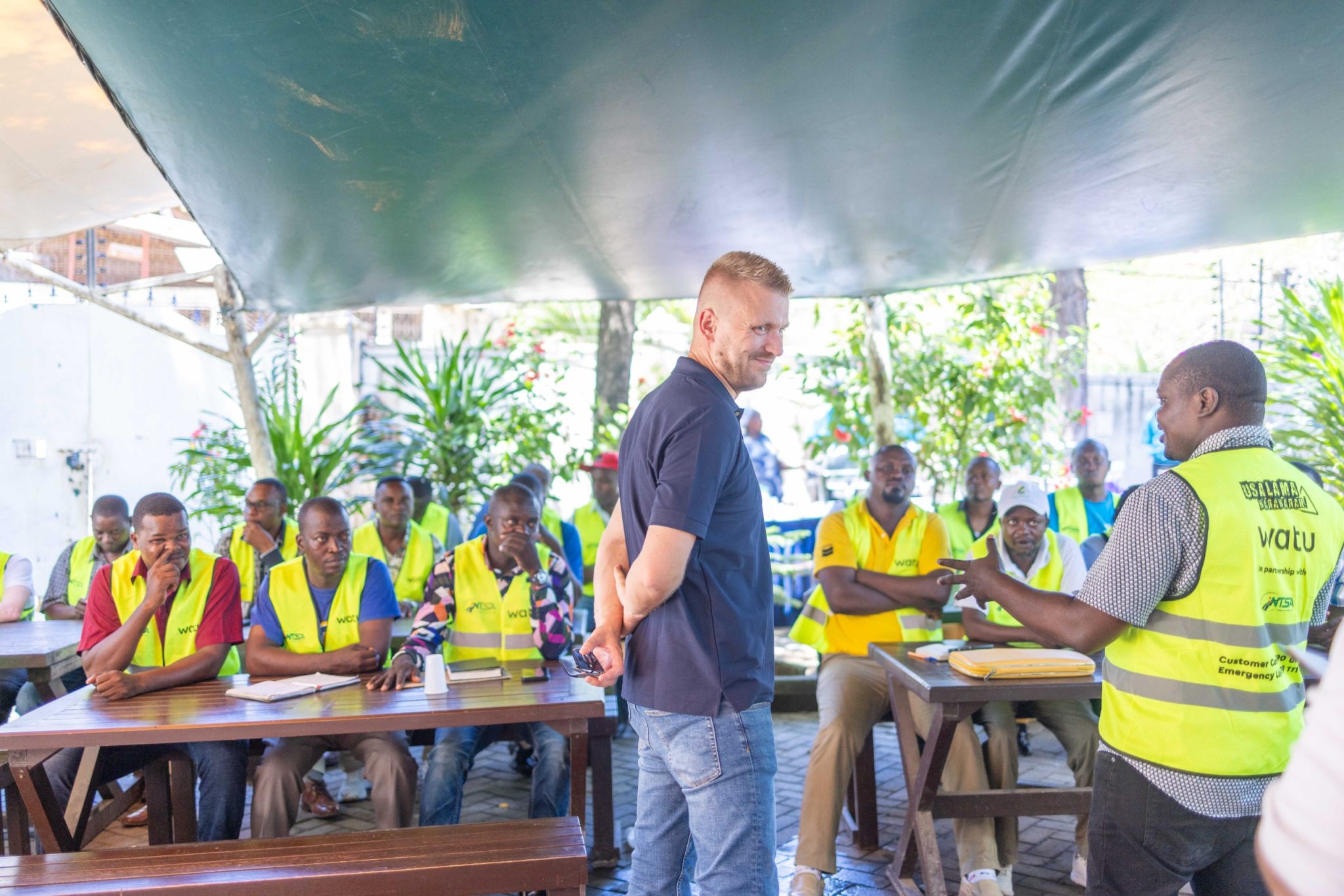
When Andris Kaneps first handed a modest cash loan to a women’s group in Mombasa back in 2015, there was little sign it would grow into one of Africa’s most ambitious fintechs. A decade later, his company—Watu Credit—has evolved from a small micro-lender for motorcycle riders into a multinational financier with global ambitions, now venturing boldly into Latin America.
The company’s expansion into Brazil, its second Latin American foothold after Mexico, signals the next phase of a long-term plan to export its buy-now-pay-later (BNPL) model beyond Africa. Backed by years of profitability rather than venture funding, Watu expects to reach $340 million in revenue this year after posting a 67% rise to $230 million in 2024.
“If you can thrive in Africa, you can succeed anywhere,” said CEO Kaneps. “Operating here taught us endurance, creativity, and patience—qualities we now carry into every new market.”
A business built on resilience
Unlike many African fintechs that burned cash chasing valuation milestones, Watu chose profitability over hype. It expanded across eight African countries by re-investing its own income, a deliberate strategy that insulated it from global funding droughts and currency shocks.
Deputy CEO Paras Patel explained the philosophy: “Startups that depended entirely on investors struggled when capital dried up. We built sustainability first, then scale. It’s slower, but it lasts.”
That approach also shaped Watu’s culture of flexibility. Some years, growth took precedence; in others, the company tightened its margins. This year, Patel said, “profitability is once again at the center.”
Reinvention through innovation
Watu’s brand grew around financing motorcycle taxis—boda-bodas—but economic turbulence in 2022-23, including surging fuel prices and a weakening Kenyan shilling, exposed the risks of depending on a single product.
The company responded by diversifying into smartphone financing, launching Watu Simu, a pay-as-you-go model that has since become its fastest-growing segment. The logic was simple: while roughly one million riders could qualify for motorcycle loans, tens of millions of working adults in East and Central Africa needed affordable smartphones.
“Our own customers asked for it,” Patel said. “Drivers and riders wanted phones for apps and work. We piloted it—and it exploded.”
With smartphone penetration still hovering between 20 and 30 percent in markets like Uganda, Tanzania, and DRC, the opportunity remains vast.
From Mombasa to Mexico City
Watu sees parallels between Africa and Latin America—two regions with large informal economies, youthful populations, and low access to formal credit. Together, they represent a combined two billion potential consumers.
“Africa prepared us for complexity,” Kaneps said. “Latin America shares the same spirit of hustle, just with more regulation.”
In Brazil, where Watu is piloting its smartphone and mobility-finance products, the company faces tougher consumer-protection rules and mature credit-bureau systems. Yet the fundamentals are familiar: high informal employment and millions of adults outside the banking system. The World Bank estimates that 120 million Latin Americans remain unbanked, while self-employment exceeds 50 percent in countries like Peru and Colombia.
To adapt, Watu plans to rely on local partnerships, stronger compliance frameworks, and currency-hedging tools to manage volatility. Its biggest advantage is the grass-roots distribution network it built in Africa—over 10,000 commission-based agents who act as lenders, marketers, and community touchpoints.
A softer approach to risk
Critics of BNPL models often cite rising debt among low-income borrowers, but Watu says its system is designed to accommodate economic fluctuations. Instead of penalties, it offers borrowers payment pauses or “parking” periods for financed assets such as motorcycles.
Its smartphone loans lock devices temporarily when payments lapse, resuming once instalments continue—creating discipline without defaulting clients. Many customers take two years or more to finish paying, without extra charges.
“Flexibility is our secret weapon,” Kaneps said. “We would rather keep a customer in business than punish them out of the system.”
A maturing ecosystem
Today, Watu employs about 3,000 people across Africa and works with a network of dealers and agents serving millions of customers. Even traditional banks that once doubted its model now finance its loan book.
“Those same institutions that dismissed us at the start now extend credit lines to us,” Patel said. “Banks are partners, not enemies.”
The broader fintech landscape is evolving fast. Competitors armed with new capital are entering asset-finance, and local banks are experimenting with micro-leasing products. But Watu’s founders insist their edge lies in trust and experience. “It took us a decade to build the loyalty of our agents and riders,” Patel said. “That’s the real barrier to entry.”
A decade of lessons
For Kaneps, who began in a modest coastal office handing out small loans, success has been more human than financial. “My biggest joy is meeting riders who bought their first bike through Watu and now employ others,” he said. “That’s the impact that matters.”
As the company crosses oceans, Watu’s challenge is balancing its triple ambition—geographic expansion, consistent profitability, and social impact. Whether its African playbook can conquer Latin America’s bustling streets remains to be seen, but the experiment could redefine how frontier markets think about credit, technology, and opportunity.