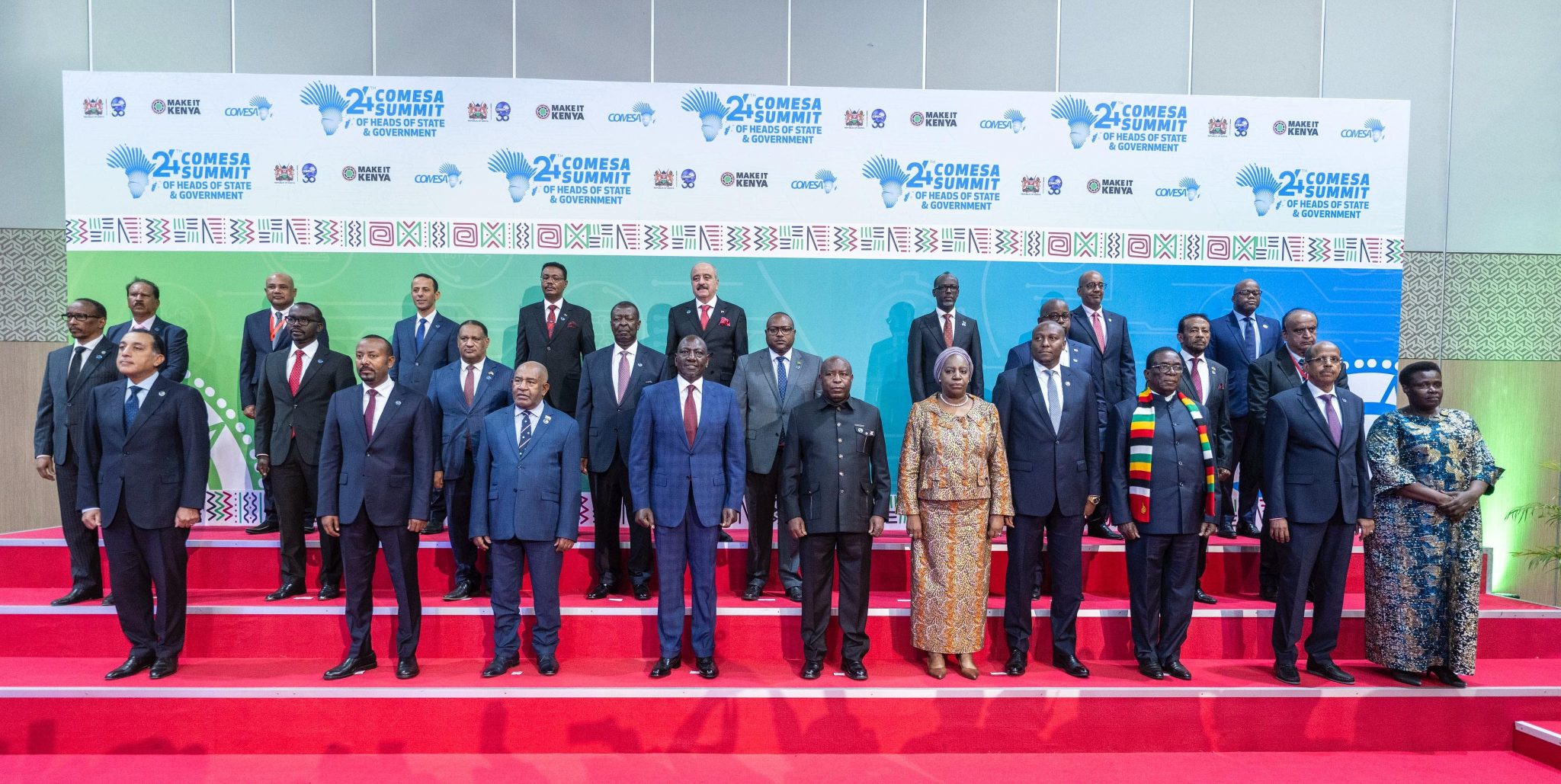
The Common Market for Eastern and Southern Africa (COMESA), a regional bloc of 21 member states representing more than 640 million people, has launched a digital payments platform that allows cross-border trade to be settled directly in local currencies, reducing dependency on the US dollar. The move marks a major step toward Africa’s long-standing goal of deepening regional financial integration and lowering trade costs.
Known as the Digital Retail Payments Platform, the new system will enable businesses and traders within COMESA to conduct cross-border transactions in their national currencies, minimizing the need for dollar conversions. The platform is currently being piloted between Malawi and Zambia, but COMESA plans to extend it across all 21 member states, including Kenya, Ethiopia, and Egypt — three of the bloc’s largest economies.
According to COMESA officials, the platform aims to keep transaction costs below 3%, a dramatic reduction from the current average cost of around 8% when using traditional banking or dollar-based payment channels. The initiative is being implemented in collaboration with two digital financial service providers and a foreign exchange management firm, whose names are yet to be disclosed.
“For the first time, cross-border trade within COMESA can be settled directly in local currencies,” said Kenya’s Trade Minister Lee Kinyanjui during the launch event in Nairobi. “This is a game-changer.”
Reducing dollar dependency across Africa
COMESA — whose members include Burundi, Comoros, the Democratic Republic of Congo, Djibouti, Egypt, Eritrea, Eswatini, Ethiopia, Kenya, Libya, Madagascar, Malawi, Mauritius, Rwanda, Seychelles, Somalia, Sudan, Tunisia, Uganda, Zambia, and Zimbabwe — has long sought to reduce its reliance on external currencies. Together, these countries represent a combined GDP exceeding $1 trillion and form one of Africa’s largest trading blocs.
However, intra-COMESA trade remains below 10% of the bloc’s total trade volume, largely due to high currency conversion costs, limited financial connectivity, and heavy dependence on the US dollar for settlements. The new payment platform is expected to address these bottlenecks by providing faster, cheaper, and more secure transaction options for traders, especially small and medium-sized enterprises (SMEs) that often face liquidity and forex challenges.
By facilitating trade in local currencies, COMESA hopes to unlock billions in trapped value across its member states. For Kenya, Egypt, and Ethiopia, which together account for nearly half of the bloc’s total GDP, the system could ease pressure on dollar reserves, reduce forex volatility, and improve balance of payments stability.
Kenya leads regional integration push
Kenya’s President William Ruto, who recently assumed the COMESA chairmanship, praised the initiative as a cornerstone of Africa’s financial independence. He emphasized that regional economic growth depends on strengthening indigenous institutions and promoting African-led financial infrastructure.
“One of the most viable pathways for Africa is to strengthen our home-grown financial institutions,” Ruto said. He added that Kenya has increased its investment in regional trade banks, including $100 million to the Trade and Development Bank (TDB) and $50 million to Afreximbank, as part of a broader strategy to boost trade financing within Africa.
The new platform also aligns with broader continental efforts under the African Continental Free Trade Area (AfCFTA) and Pan-African Payment and Settlement System (PAPSS) — initiatives designed to harmonize payment frameworks, enhance liquidity flows, and eliminate currency barriers across Africa’s emerging markets.
A new era for intra-African trade
The Digital Retail Payments Platform could mark a turning point for African trade by reducing foreign currency dependency, cutting transaction costs, and promoting financial sovereignty. Analysts note that enabling trade in local currencies such as the Kenyan shilling, Ethiopian birr, or Egyptian pound will enhance price competitiveness and build resilience against global currency fluctuations.
For traders and SMEs across eastern and southern Africa, the platform promises faster settlements, greater transparency, and stronger regional linkages, ultimately supporting the bloc’s ambition to build a self-sustaining African economic zone.