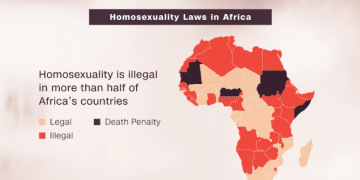
A Ugandan court recently dismissed a legal challenge against the nation’s stringent anti-gay legislation, known as the Anti-Homosexuality Act 2023. Enacted in May of the previous year, the law has sparked widespread condemnation from the LGBTQ community, human rights advocates, the United Nations, and several Western nations due to its severe penalties, including life imprisonment for consensual same-sex activities and the death penalty for “aggravated homosexuality.”
Deputy Chief Justice Richard Buteera of Uganda, presiding over the case, stated, “The Anti-Homosexuality Act 2023 will not be nullified in full, nor will its enforcement be permanently halted.”
While the ruling disheartened many critics of the law, the panel of five judges did annul certain sections they found to violate international human rights standards. These nullified sections had criminalized the non-reporting of homosexual acts, the leasing of property for such acts, and situations where homosexual sex resulted in one partner contracting a terminal illness.
However, Justice Buteera emphasized, “The core of our decision is that the petition largely fails.”
The UN Human Rights Commissioner, Volker Turk, reiterated calls for Uganda to completely repeal the law, highlighting its contradiction with international human rights obligations. Similarly, the United States has taken steps, such as visa restrictions for Ugandan officials and suspending Uganda from significant trade agreements, in response to the enactment of the law. The State Department expressed concerns that this law is part of a larger decline in human rights protections in Uganda.
Amnesty International expressed dismay at the court’s decision, labeling the law as “inhumane” and a missed chance to overturn it. The verdict arrives as many East African governments intensify their anti-gay campaigns, a movement often backed by conservative religious groups.
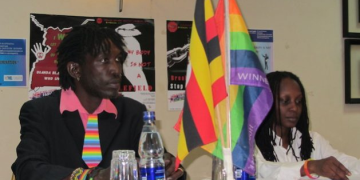
Nicholas Opiyo, representing the challengers, expressed disappointment, indicating that the court failed to transcend prevalent public prejudice. The challenge was initiated by academics, ruling party members, and human rights activists, arguing that the law infringes upon basic rights like non-discrimination and privacy, as enshrined in Uganda’s constitution and international human rights treaties.
Despite the outcry, some Ugandan officials, including Speaker of Parliament Anita Among, praised the ruling, viewing it as a stand against foreign interference. President Museveni’s administration has consistently criticized Western nations for allegedly imposing pro-LGBTQ views on Africa.
The law has found substantial support in Uganda, a predominantly Christian and conservative nation. The international community, including entities like the World Bank, has responded with punitive measures, such as loan suspensions, to protest against the legislation.