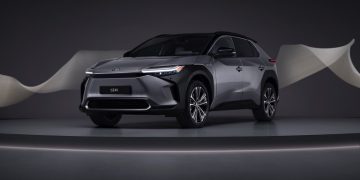
Toyota has officially unveiled the Toyota bZ7, a flagship electric saloon designed for China’s booming EV market. Positioned above traditional executive sedans like the BMW 5-Series in size, the bZ7 represents Toyota’s most ambitious effort yet in the Beyond Zero (bZ) lineup. With deep integration of Xiaomi’s smart ecosystem and Huawei’s HarmonyOS infotainment system, Toyota is doubling down on localized innovation to appeal directly to Chinese consumers.
Bold Exterior Design
At 5,130mm long, 1,965mm wide, and 1,506mm tall, with a wheelbase of 3,020mm, the Toyota bZ7 offers proportions well-suited to the Chinese executive saloon market. Its styling adopts Toyota’s new EV design language, featuring:
- A closed-off front grille and wraparound lighting similar to the Prius.
- Sharp body lines along the flanks to break up the long profile.
- A fastback-inspired silhouette that blends sportiness with formality.
- A full-width LED rear light bar and subtle tail spoiler for modern premium appeal.
These features combine to give the bZ7 an imposing yet elegant road presence, positioning it against luxury EV rivals such as the BYD Han L and XPeng P7+.
Xiaomi and HarmonyOS Integration
Inside, the Toyota bZ7 puts technology at the heart of the driving experience. Key highlights include:
- Xiaomi Smart Ecosystem: Seamless connectivity with Xiaomi smartphones, tablets, and smart home devices. Features include remote vehicle controls and personalized user profiles synced across devices.
- HarmonyOS Infotainment: Powered by Huawei’s HarmonyOS, the infotainment system offers a large floating touchscreen, localized services, and intuitive interface elements familiar to Chinese users.
- Luxury Interior Appointments: Real wood trim, a mix of synthetic and real leather, ambient lighting, wireless charging pads, and a head-up display.
- Passenger Comfort: Sculpted rear seating, a panoramic glass roof, and premium rear armrest controls emphasize comfort for executive passengers.
Powertrain and Battery Options
While Toyota has not disclosed full technical details, filings reveal the Toyota bZ7 will feature a 207kW electric motor, likely rear-mounted. Built on Toyota’s e-TNGA platform, the bZ7 will support both single- and dual-motor layouts, opening the door to potential AWD variants.
Battery options are expected to include 65kWh and 74kWh packs, borrowed from the bZ5, offering a range between 550km and 630km (WLTP equivalent). DC fast charging of up to 90kW will allow a 30–80% charge in approximately 25 minutes.
Market Positioning
Pricing is expected between RMB 200,000 (£20,600 / $28,100) and RMB 300,000 (£30,900 / $42,100), placing the bZ7 in the competitive premium EV segment. Rivals include the Lynk & Co Z10, XPeng P7+, and BYD Han L.
Toyota’s strategy goes beyond traditional automotive strengths by leveraging Chinese tech partnerships. Integrating Xiaomi and Huawei ensures the Toyota bZ7 speaks directly to the needs of China’s tech-savvy luxury market.
Conclusion
The unveiling of the Toyota bZ7 shows how Toyota is adapting its global EV strategy to local markets. With its Xiaomi smart ecosystem integration, HarmonyOS infotainment, premium design, and competitive range, the bZ7 is set to challenge both domestic and international electric saloon rivals. A full market launch is expected before the end of 2025, starting in China and potentially expanding to global markets thereafter.