Net Worth: $60 Million
Category: Richest Politicians › Presidents
Birthdate: May 6, 1953
Birthplace: Edinburgh, Scotland
Profession: Politician, Lawyer, Diplomat, Statesman
Nationality: United Kingdom
What is Tony Blair’s Net Worth?
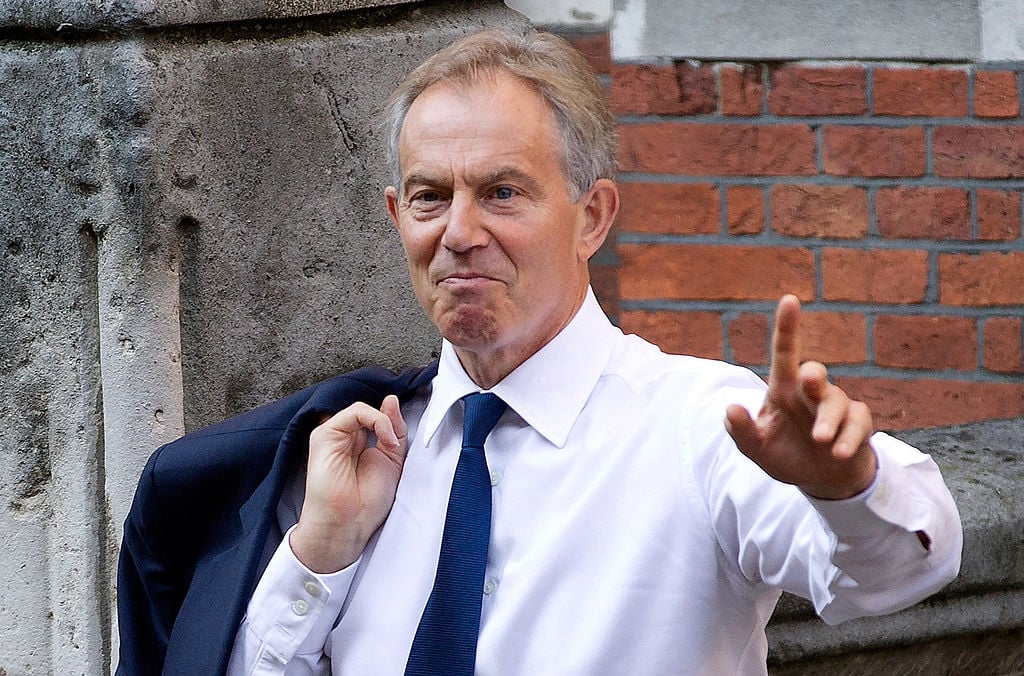
Tony Blair, the former Prime Minister of the United Kingdom (1997–2007), has an estimated net worth of $60 million. His wealth comes from book deals, speaking engagements, business consultancy, and advisory roles at major global institutions.
After leaving office, Blair has earned millions through consulting for investment banks, advising foreign governments, and creating the Tony Blair Institute for Global Change. His financial activities, particularly in the Middle East, have sparked ethical concerns and controversy.
Early Life & Education
Anthony Charles Lynton Blair was born on May 6, 1953, in Edinburgh, Scotland. His family moved to Australia briefly before settling in Durham, England.
- Attended Fettes College, a prestigious Scottish boarding school.
- Took a gap year in London to pursue a career as a rock music promoter.
- Graduated from Oxford University (St John’s College) in 1975 with a degree in Jurisprudence (Law).
- Played guitar in a band called Ugly Rumours and performed stand-up comedy.
- Trained as a barrister (lawyer) at Lincoln’s Inn after Oxford.
Blair’s early life shaped his charismatic, media-savvy political style.
Political Career: From Labour Party to Prime Minister
Early Political Career (1983-1994)
- Elected MP for Sedgefield (1983) at age 30.
- Labour Party’s rising star, advocating for modernization and economic reform.
- Shadow Home Secretary (1992-1994) under John Smith’s leadership.
Labour Party Leadership (1994-1997)
- Became Labour Party Leader in 1994, after John Smith’s sudden death.
- Rebranded the party as “New Labour”, shifting from socialist policies to centrist, pro-business policies.
- Abolished Clause IV, reducing trade union power and embracing free-market capitalism.
UK Prime Minister (1997-2007): Achievements & Controversies
Blair won a landslide election in 1997, ending 18 years of Conservative rule. He served three terms (1997-2007), making him Labour’s longest-serving PM.
Domestic Achievements
✅ Economic Growth – UK experienced longest period of sustained economic expansion.
✅ Minimum Wage Act (1998) – Introduced a national minimum wage.
✅ Human Rights Act (1998) – Strengthened individual rights in UK law.
✅ Scottish & Welsh Devolution (1999) – Established Scottish Parliament and Welsh Assembly.
✅ Education & Healthcare Investment – Increased public spending and reduced NHS waiting times.
Foreign Policy & Wars
✅ Kosovo (1999) & Sierra Leone (2000) Military Interventions – Considered successful humanitarian actions.
❌ Iraq War (2003) – Backed US invasion under George W. Bush, claiming Saddam Hussein had WMDs (Weapons of Mass Destruction).
❌ Afghanistan War (2001-present) – Committed UK troops alongside US forces.
❌ London Bombings (2005) – Introduced controversial anti-terror laws.
Resignation (2007)
- Blair faced immense criticism over Iraq, leading to Labour Party decline.
- Resigned in 2007, handing power to Gordon Brown.
Blair’s foreign policy decisions remain controversial, particularly his close relationship with George W. Bush.
Post-Premiership: Business & Consulting Ventures
After leaving office, Blair became a multimillionaire through consulting, investments, and speaking engagements.
1. Tony Blair Associates (2008-2016)
- Consulted for foreign governments (including autocratic regimes).
- Earned millions from advising the UAE, Kuwait, and Kazakhstan.
- Controversial deal with Libya’s Muammar Gaddafi.
2. JPMorgan Chase & Other Private Sector Roles
- Hired as senior advisor to JPMorgan Chase ($4 million per year).
- Consultant for Zurich Financial Services (climate change strategy).
3. Tony Blair Institute for Global Change (2016-present)
- Focuses on policy reform, economic development, and African governance.
- Works with governments in Africa, the Middle East, and Europe.
4. Public Speaking & Book Deals
- Blair commands $250,000 per speech at corporate and political events.
- Memoir A Journey (2010) earned him $6 million in advance payments.
Blair’s financial success post-politics has been criticized, with some labeling him a “profit-driven politician”.
Controversies & Criticisms
1. Iraq War & “Blair Lies” Scandal
- 2003: UK invaded Iraq, justifying it with false claims of WMDs.
- Chilcot Report (2016): Blair misled Parliament and the public.
- Many see him as a war criminal, with some calling for his prosecution.
2. Money-Making After Office
- Criticized for profiting from former political connections.
- Deals with repressive regimes (Kazakhstan, UAE, Saudi Arabia, etc.) have tarnished his image.
3. Brexit & UK Politics
- Strongly opposed Brexit, advocating for a second referendum.
- Criticized for disconnecting from working-class Labour voters.
Blair remains a divisive figure, admired for economic and social policies but criticized for war and corporate ties.
Personal Life & Real Estate
Family
💍 Married Cherie Booth (1980) – Barrister and human rights lawyer.
👶 Four children: Euan, Nicholas, Leo, and Kathryn.
- Euan Blair founded a multimillion-dollar job placement company.
Real Estate Portfolio (Worth over $30 million)
🏡 Connaught Square Mansion (London) – $8 million.
🏡 Buckinghamshire Estate – $6 million.
🏡 Luxury Homes in France and the UK – Combined worth over $30M.
Blair has one of the largest property portfolios among UK politicians.
Conclusion: The Legacy of Tony Blair
✅ Key Achievements:
- Modernized Labour Party & UK economy.
- Introduced progressive policies (minimum wage, human rights, devolution).
- Played key roles in global diplomacy (Kosovo, Northern Ireland, Middle East).
❌ Major Controversies:
- Led UK into the Iraq War based on false intelligence.
- Profited from Middle East & corporate advisory roles.
- Criticized for elitism and disconnect from working-class Labour voters.
Final Verdict:
Blair’s legacy is complex. He reshaped British politics and governance but is haunted by Iraq and post-office financial dealings.
Despite criticism, he remains one of the most influential British leaders of the 21st century.