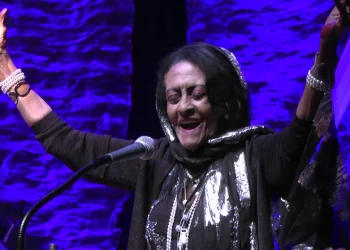
Anyango, born Eriko Mukoyama in Tokyo, Japan, is a trailblazer in the world of African music. As the world’s first female performer of the nyatiti, a traditional string instrument of the Luo people from East Africa, Anyango has defied cultural norms and made an indelible mark in both African and world music. Her journey began with a fascination for African music, leading her to Kenya, where she trained in a remote village without electricity or running water. Through dedication and perseverance, Anyango became not only the first woman to master the nyatiti but also a powerful advocate for cultural exchange between Japan and Kenya.
Anyango’s Musical Beginnings
Anyango’s musical journey started in 1997 when she formed a trio band, becoming both the band leader and lead vocalist. By 1999, she had self-produced a CD titled TAIKA and was performing regularly at live houses in Japan. In 2001, she traveled to New York for music training, but her journey was cut short by the September 11th attacks. After briefly returning to Japan, Anyango’s path took another twist when she attended an East African music performance by invitation from a friend. It was at this performance that she fell in love with Kenyan traditional music, particularly the nyatiti.
Journey to Kenya: Learning the Nyatiti
In 2004, Anyango took a bold step and traveled to Kenya, where she would spend months immersing herself in the culture and learning the nyatiti from the Luo people. The nyatiti, a revered instrument traditionally played only by select men, became her passion. Through intense training, Anyango earned the distinction of being the first woman—and the first foreigner—to be recognized as a traditional nyatiti player.
In 2005, Anyango performed for the elders of the Luo villages and the nyatiti masters, who welcomed her as one of their own. Her performances at venues such as Bomas of Kenya and in the slums of Nairobi to an audience of children marked milestones in her journey. Her dedication was so profound that she was the first foreign performer at Bomas of Kenya since Kenya’s independence in 1963.
International Recognition and Achievements
Anyango’s commitment to African music soon garnered international acclaim. She was awarded “Best of Atlanta: Classical Meets Contemporary” by Atlanta Magazine in 2009. That same year, she was honored by Newsweek as one of “Japan’s 100 Most Respected People.” Her performances at the FUJI ROCK FESTIVAL in 2010, where she was selected as the Best Act in the World Music category, cemented her place in global music. She continued to rise in stature, collaborating with renowned artists and performing worldwide, from Kenya to France, Germany, and the United States.
Albums and Cultural Advocacy
Since her first album release, Nyatiti Diva in 2009, Anyango has released a total of nine albums, with AOKO being her latest in 2022. Her albums have received wide recognition, reaching number one in the World Music category at Tower Records in Japan. In addition to music, Anyango has written several books, including “The Law of Capturing Dreams”, which details her journey in Kenyan traditional music.
As a Japanese-Kenyan Cultural Ambassador, Anyango conducts lectures and performances at over 100 schools across Japan, inspiring the next generation of musicians and fostering cultural exchange. In 2025, she performed at the inaugural Juneteenth Freedom Vibes Festival ahead of the opening of the National Juneteenth Museum, further cementing her role as a cultural advocate.
The Nyatiti: An Instrument of Deep Cultural Significance
The nyatiti is more than just a musical instrument; it is a profound symbol of Luo culture. Traditionally, it was a sacred instrument, reserved only for the men of the Luo community. The nyatiti is played while the performer sits on a low stool, with the instrument placed slightly away from the body. Its distinctive sound comes from its eight strings, which were historically made from the Achilles tendons of female cattle, and from the rhythmic accompaniment provided by the gara (iron bells) and oduongo (an iron ring on the right big toe).
The nyatiti’s symbolism extends beyond music, with the four lower strings representing the four days of birth, and the upper four strings symbolizing the four days of death. When played, it sounds like “nya, ti, ti”, symbolizing the connection between life and death. Anyango’s deep understanding and respect for this tradition has allowed her to bring the nyatiti to international audiences, helping preserve this vital part of Luo heritage.
Legacy and Continuing Impact
Anyango’s dedication to promoting the nyatiti and its cultural significance has been unwavering. Her mission, passed on to her by her late mentor Okumu Orengo, has been to “go out into the world; go to the places I cannot reach and play this instrument for the entire people of the earth.” This message is the guiding force behind her performances and cultural outreach, as she continues to bring the sounds of Kenya to global audiences.
From her humble beginnings in Japan to becoming a celebrated musician and cultural ambassador, Anyango‘s journey serves as an inspiration to musicians everywhere, showing the power of music to bridge cultures, preserve traditions, and inspire change.
Conclusion
Anyango, the world’s first female nyatiti player, is more than just a musician; she is a cultural ambassador who has dedicated her life to preserving and promoting African music. Through her performances, albums, books, and educational outreach, she continues to celebrate the beauty of Luo culture and African traditions. Her story is a testament to the power of passion, perseverance, and the ability to cross cultural boundaries through the universal language of music.