In recent days, Kenya has witnessed a surge in public outcry and demonstrations against the current administration and its newly proposed Finance Bill 2024. The collective voice of the people is resonating through cities and across social media platforms, encapsulating a significant moment in the nation’s quest for governance reform. This article delves into the heart of these protests, examining the motivations, demands, and the overarching implications for Kenya’s political landscape.
Background
The dissent began with the proposal of the Finance Bill 2024, perceived by many as yet another burden on the already strained economic conditions of the common citizen. The bill, which was meant to increase various taxes, has sparked widespread anger among all segments of the population, leading to a unification of voices across generational divides. The discontent has rapidly evolved from a focus on this single legislative piece to a broader denunciation of what is seen as systemic corruption and poor governance under President William Ruto’s leadership.
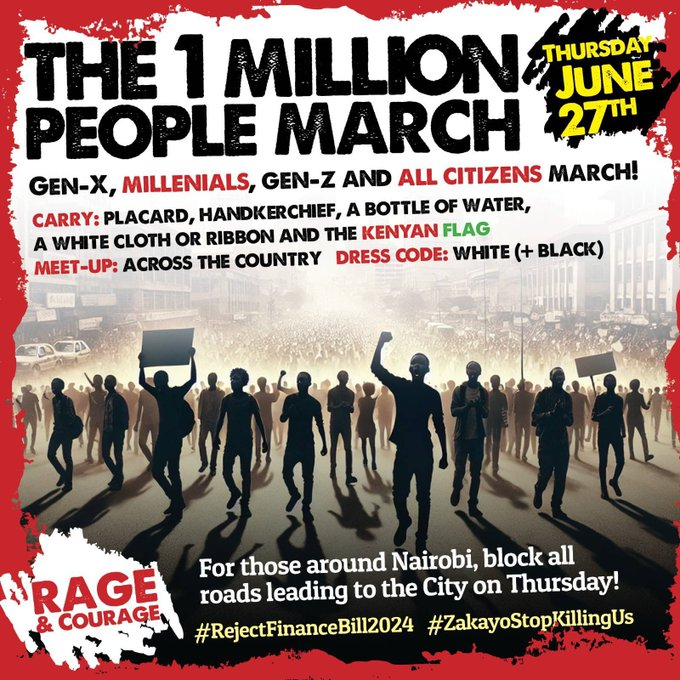
The 1 Million People March
The pinnacle of these protests was the “1 Million People March,” where citizens from all walks of life—Gen-X, Millennials, and Gen-Z—came together in a powerful display of unity. Participants were encouraged to bring Kenyan flags, wear white to symbolize peace and solidarity, and meet across the country. This march not only highlighted the widespread opposition to the Finance Bill but also underscored a deeper, more profound discontent with the state of the nation.
The Voice of Social Media
Social media has played a pivotal role in organizing, galvanizing, and broadcasting the sentiments of the Kenyan populace. Hashtags like #ROADTOSTATEHOUSE and #RejectFinanceBill2024 have trended, serving as rallying calls for action and solidarity. Influential tweets have depicted somber images of protesters dressed in black in front of significant landmarks, symbolic of mourning and defiance, further intensifying the call for change.
Political Repercussions
The response from the government has been one of the most scrutinized aspects of this situation. President Ruto’s decision to send the bill back to Parliament was seen as a direct result of the relentless pressure from the public. However, critics argue that this action is insufficient and continue to demand more significant changes, including the resignation of the President and the recall of all UDA MPs. These demands signify a deep-seated distrust in the current leadership and a strong desire for a new direction.
Public Sentiment and Future Projections
The spirit of the protests is encapsulated in the poignant messages shared by protestors and online commentators, emphasizing that the struggle is not just about economic relief but also about reclaiming political agency. Many express a readiness to continue the fight, indicating that the issues at hand are seen as existential for the future of democracy in Kenya.
Conclusion
As Kenya stands at this critical juncture, the “Road to State House” has become more than a physical march; it is a metaphor for the country’s journey towards transparency, accountability, and genuine leadership. The ongoing protests and the powerful voices of its citizens reflect a nation’s enduring spirit and its relentless pursuit for a governance model that truly represents and respects its people. The world watches as Kenyans march on, hopeful and determined to shape a new chapter in their country’s history.