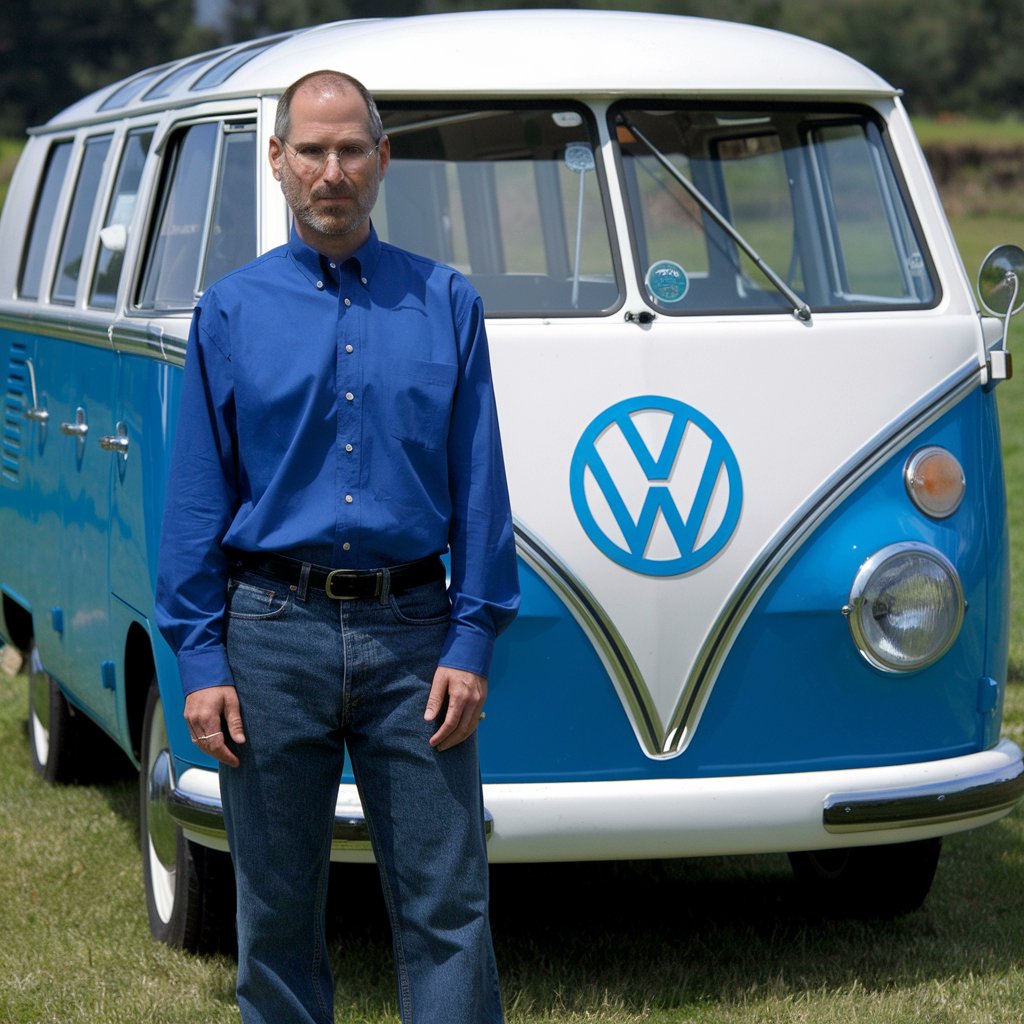
In 1976, two young innovators, Steve Jobs and Steve Wozniak, set out to change the computing world with limited resources but boundless ambition. At just 21 years old, Jobs sold his Volkswagen bus for $1,500, while Wozniak parted with his Hewlett-Packard calculator for $500. With these funds, they laid the foundation for what would become one of the most valuable companies in the world—Apple Inc.
The Birth of Apple I
On April 1, 1976, the duo introduced their first product, the Apple I computer, marking the beginning of their entrepreneurial journey. Their big break came when a local computer dealer ordered 100 units for $50,000. With no capital to buy parts, they secured supplies on credit, giving them just a month to complete the order.
With the help of family and friends, Jobs and Wozniak successfully delivered the computers and paid their suppliers with just one day to spare. This marked Apple’s first revenue and solidified its place in the nascent personal computing industry.
A Strategic Partner and Apple’s First Success
Recognizing the company’s potential, Mike Markkula, a former executive at Fairchild Semiconductor and Intel, provided crucial business expertise and financial backing. He:
✅ Helped craft a business plan
✅ Invested $92,000 in Apple
✅ Arranged a $250,000 credit line
With this support, Apple launched the Apple I for $666.66, generating $774,000 in revenue. But the real breakthrough came with the Apple II, which pushed sales to $139 million just three years later.
Apple Goes Public: A Billion-Dollar Milestone
In 1980, Apple reached a defining moment—it became a publicly traded company. On its first day of trading, Apple’s market value soared to $1.2 billion, closing at $1.8 billion, a remarkable feat for a company that started in a garage.
The Macintosh Revolution and Jobs’ Departure
In 1983, Jobs recruited John Sculley, then-President of Pepsi-Cola, as Apple’s CEO. The following year, Apple launched the Macintosh, branding it as a symbol of innovation and counterculture.
Despite strong sales and technical superiority over IBM PCs, the Macintosh struggled due to compatibility issues. Internal conflicts soon led to strategic disagreements between Jobs and Sculley, ultimately forcing Jobs out of Apple in 1985.
The Return of Jobs and Apple’s Revival
After 12 years away, Jobs returned as CEO in 1997, inheriting a company on the brink of collapse. His visionary leadership transformed Apple from a personal computer company into a global leader in digital technology.
Under Jobs, Apple introduced game-changing products such as:
📱 iPhone – Revolutionized mobile communication
💻 MacBook – Redefined laptop computing
🎵 iPod & iTunes – Changed the music industry
📱 iPad – Created the tablet market
Apple’s Unstoppable Growth
By the time of Steve Jobs’ passing in 2011, Apple had grown into a tech empire with a market value of $391 billion.
From a garage in 1976 to a multibillion-dollar powerhouse, Apple’s journey remains a testament to innovation, resilience, and visionary leadership—a legacy that continues to shape the world of technology today.