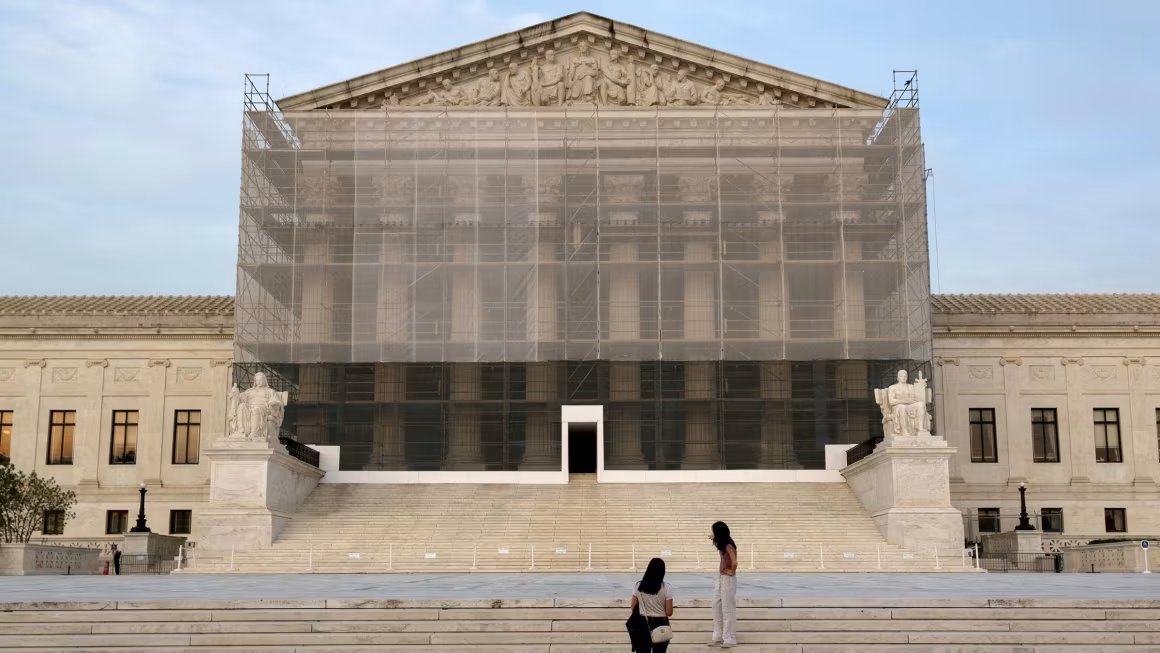
Supreme Court Greenlights Trump’s Plan to Deport Migrants to South Sudan and Other Conflict Zones. In a deeply polarizing decision, the U.S. Supreme Court on Monday granted President Donald Trump’s emergency request to resume deporting migrants to third-party countries—including crisis-hit nations like South Sudan—with minimal notice and limited legal recourse. The ruling marks a pivotal victory for the Trump administration, which has increasingly relied on emergency appeals to override lower court decisions blocking its immigration agenda. Migrant Deportations to South Sudan
The conservative majority on the Court issued the order without explanation, while Justices Sonia Sotomayor, Elena Kagan, and Ketanji Brown Jackson dissented. Justice Sotomayor sharply criticized the move, accusing the Court of “rewarding lawlessness” and enabling the executive branch to “openly flout” judicial authority. Migrant Deportations to South Sudan
“Rather than allowing our lower court colleagues to manage this high-stakes litigation with the care and attention it plainly requires, this court now intervenes to grant the government emergency relief from an order it has repeatedly defied,” she wrote.
The ruling puts on hold a decision by U.S. District Judge Brian Murphy, who had ruled that deporting migrants to third countries without giving them a fair opportunity to contest their removal violated basic constitutional protections. Murphy had ordered the government to provide 10 days for migrants to raise claims of potential torture and an additional 15 days to appeal if denied—conditions the Trump administration deemed a “usurpation” of its foreign policy powers. Migrant Deportations to South Sudan
A Win for Executive Power
The administration hailed the decision as essential to restoring immigration enforcement authority. It argued that some of the migrants being removed have serious criminal records and pose national security threats. However, lawyers representing the detainees refuted these claims, stating that many of the individuals have no criminal convictions whatsoever.
According to the Department of Homeland Security, the administration does not always notify migrants of their destination if it has received diplomatic “assurances” that they will not be harmed. In cases where such assurances are absent, DHS policy mandates a notice period. But rights groups say the administration has been offering less than 24 hours’ notice in many cases—hardly enough time to mount a legal defense.
Legal and Humanitarian Fallout
Legal scholars and immigrant advocates expressed alarm over the ruling. “It’s difficult to overstate how big a deal today’s ruling is,” said Steve Vladeck, CNN’s Supreme Court analyst and Georgetown Law professor. “It enables the government to deport individuals to any country that will take them, without meaningful due process or regard for their safety.”
The decision has garnered additional scrutiny following reports that the U.S. has detained a group of migrants—including nationals from Cuba, Vietnam, and Laos—at a U.S. military base in Djibouti, en route to South Sudan. These individuals have reportedly been held in a converted shipping container and denied access to legal counsel.
Human rights organizations warn that South Sudan remains plagued by violence, political instability, and severe food insecurity. The United Nations recently classified the humanitarian situation there as “critical.”
“These individuals are stranded incommunicado in Djibouti, a country of which they have no knowledge, and en route to another country, South Sudan, where none have ever set foot,” argued the National Immigration Litigation Alliance and allied groups in filings to the Court. Migrant Deportations to South Sudan
A Pattern of Emergency Appeals
This is not the first time the Trump administration has used the Supreme Court’s emergency docket to circumvent lower court rulings. Just last month, the Court allowed the administration to cancel Temporary Protected Status (TPS) for Venezuelans and end humanitarian parole for hundreds of thousands of migrants from Cuba, Nicaragua, Haiti, and Venezuela.
While Trump’s legal team has often been successful in securing emergency relief, the Court has in the past blocked efforts to remove due process protections. In a 2022 case, the Court ruled that the government could not use the 1798 Alien Enemies Act to expedite deportations without allowing migrants to contest their removability.
Looking Ahead
With the Court’s decision now in effect, the Trump administration is likely to expand deportations to other volatile countries, including Libya, where reports have emerged of plans to send detainees despite ongoing civil unrest and the absence of a formal agreement from Libyan authorities.
As legal challenges continue and the administration doubles down on its hardline immigration stance, human rights groups warn that the precedent set by Monday’s ruling could have far-reaching consequences—not just for the U.S. immigration system, but for international humanitarian law and America’s standing in the world.