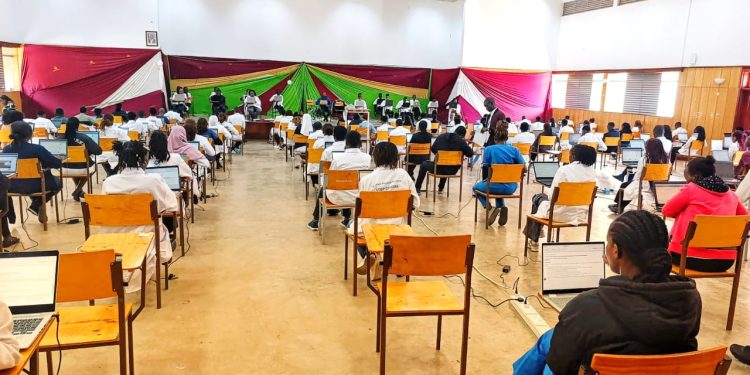
Kenyan nurses and midwives who are looking to emigrate for work opportunities abroad must undergo a verification process facilitated by the Nursing Council of Kenya (NCK). This process ensures that their professional credentials are recognized and validated for international employment. Here’s a detailed breakdown of the steps that need to be followed.
1. Access the Outmigration Page on NCK’s Official Website
The first step for Kenyan nurses and midwives is to visit the Outmigration page on the NCK website. Here, they will find the necessary application form for verification of credentials to enable them to work abroad.
2. Complete the Application Form
Applicants must fill out the application form for verification, providing detailed information about their academic background and professional experience.
3. Submit Required Documents
Along with the completed application form, the following documents must be submitted:
- National ID Card or Passport for identity verification.
- NCK-issued professional certificates.
- A valid practice license from the Nursing Council of Kenya.
- Proof of payment for the prescribed verification fee.
These documents are essential to ensure that the verification process can proceed smoothly.
4. Additional Documents for International Applications
Different countries have specific requirements for nurses and midwives wishing to work there. Here are some of the additional documents required depending on the country:
- Canada: For nurses applying to Canada through the National Nursing Assessment Service (NNAS), the following are needed:
- Recommendation letter from the current employer or immediate supervisor.
- Recent medical report.
- Police Clearance Certificate.
- United Kingdom: Nurses applying to the Nursing and Midwifery Council (NMC) in the UK will need:
- Recommendation letter from the current employer or immediate supervisor.
- Medical report.
- Police Clearance Certificate.
- Curriculum Vitae (CV) in the prescribed format.
- Proof of registration with the National Employment Authority (NEA).
- Pass results for the International English Language Testing System (IELTS) or the Occupational English Test (OET).
It’s crucial for applicants to ensure that all these documents are accurate and complete to avoid delays.
5. Submit Documents and Payment
Once all the required documents have been collected, they should be submitted to the Nursing Council of Kenya. Along with the documents, applicants must submit proof of payment for the verification fee.
6. Verify Compliance with Local Regulations
Nurses and midwives should ensure that they comply with any additional regulations set by the destination country. For example, some countries may have further registration requirements or additional qualifications that need to be verified.
7. Processing and Verification Outcome
After submission, the NCK will process the application and verify the submitted documents. This process includes confirming the authenticity of the credentials and ensuring that the nurse or midwife meets the professional standards required by the destination country.
8. Await Final Approval
Once the verification is complete, the NCK will issue a verification certificate, which the applicant can present to the relevant authorities in the country they wish to work in.
Additional Resources and Assistance
For more information or assistance with the emigration verification process, Kenyan nurses and midwives can contact the Nursing Council of Kenya via email at [email protected].
Kenya’s Role in Global Health Workforce
Kenya has long been a source country for skilled healthcare professionals, including nurses and midwives. As the demand for healthcare professionals grows globally, particularly in developed countries, the Kenyan government and NCK continue to support initiatives that ease the migration process and provide recognition for the high-quality training Kenyan professionals receive.
Recent Developments in the Kenyan Health Workforce Abroad
In July 2025, the UK made a significant move by officially recognizing Kenya’s clinical officers as eligible to work in the UK as Physician Associates (PAs). This decision opens the door for more Kenyan healthcare professionals to find better-paying jobs abroad, boosting Kenya’s reputation in the global health workforce.
Conclusion:
The process for Kenyan nurses and midwives to work abroad involves several essential steps, starting with document submission, followed by thorough verification by the Nursing Council of Kenya. By following the outlined procedures and ensuring that all required documents are in order, Kenyan healthcare professionals can successfully meet international requirements and pursue opportunities abroad. With increased recognition of Kenyan-trained professionals, the future looks bright for those seeking to enhance their careers on a global scale.