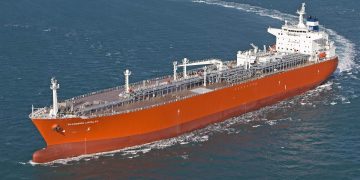
SS Tacito was an Argentine oil tanker built in 1924 by the Northumberland Shipbuilding Company in England. Initially owned by the Compañía General de Combustibles (CGC), the vessel served Argentina for nearly four decades before being renamed Astranorte in 1963. She remained in service until her scrapping in 1965. Tacito gained recognition during World War II for rescuing survivors of torpedoed Allied and Brazilian ships in the South Atlantic.
Construction
- Builder: Northumberland Shipbuilding Company, Howdon, River Tyne, England
- Yard number: 264
- Launched: 29 October 1924
- Completed: December 1924
- Length: 430.0 ft (131.1 m)
- Beam: 57.0 ft (17.4 m)
- Draught: 26 ft 1 in (7.95 m)
- Depth: 33.1 ft (10.1 m)
- Tonnage: 8,331 GRT, 4,749 NRT, 11,306 DWT
- Propulsion: 12 corrugated furnaces, three boilers, Wallsend Slipway Co. triple-expansion steam engine (626 NHP), single screw
- Speed: Service speed not officially recorded, but comparable tankers of the era averaged 11–12 knots
Her powerplant and tonnage made her a medium-sized tanker by interwar standards, well-suited for transporting petroleum products along South Atlantic routes.
Career
Early Service
SS Tacito entered service in late 1924 under Compañía General de Combustibles (CGC), a key player in Argentina’s petroleum industry. She was registered in Buenos Aires and remained part of Argentina’s merchant fleet for 35 years.
In 1932, Tacito was assigned the code letters HBDS, which in 1934 were replaced by the call sign LCGF as maritime communications modernized.
World War II
During the Battle of the Atlantic, Tacito played an indirect but vital role in humanitarian efforts:
- 28 July 1942: Off the coast of British Guiana, the German submarine U-155 torpedoed the Brazilian cargo ship Barbacena. Tacito was one of three ships that responded to distress calls and rescued survivors.
- 24 July 1943: The Canadian-built Fort Chilcotin, under UK Ministry of War Transport charter, was sunk by U-172 off the Brazilian coast. Fifty-three survivors managed to escape in lifeboats. On 29 July 1943, Tacito picked up the survivors at sea and landed them safely in Rio de Janeiro on 1 August.
These rescues cemented Tacito’s place in Argentina’s wartime maritime history as a neutral but compassionate vessel.
Later Years
In 1959, Tacito was sold to Trans-Orna SRL, marking her transition away from CGC. Four years later, in 1963, ownership passed to Astramar Compañía Argentina de Naviera SAC, which renamed her Astranorte.
Her final voyage came in 1965, when she arrived in Rosario, Argentina, on 1 August 1965, where she was broken up for scrap after more than 40 years of service.
Legacy
SS Tacito stands as an example of Argentina’s interwar merchant fleet expansion, reflecting the importance of oil transportation for the national economy. Her humanitarian role during World War II, rescuing survivors of torpedoed ships, gave her a reputation beyond commercial service. Though scrapped in 1965, her name remains linked to Argentina’s maritime history.