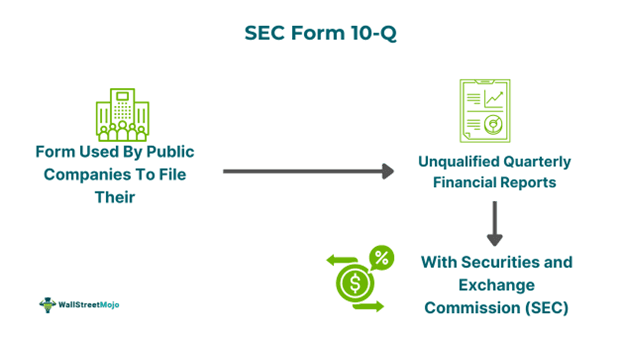
Public companies in the United States are required to disclose financial information regularly so investors can evaluate business performance, risks, and operational trends. One of the most important quarterly disclosure documents is SEC Form 10-Q, a report filed with the U.S. Securities and Exchange Commission after each of the first three fiscal quarters of the year.
For investors, analysts, portfolio managers, and financial journalists, the SEC Form 10-Q provides a timely snapshot of how a company is performing between annual reports. It contains updated financial statements, management commentary, risk disclosures, and operational insights that can significantly influence stock prices and investor sentiment.
Unlike the annual Form 10-K, which contains audited financial statements and a broader overview of the business, the 10-Q focuses on quarterly performance and is generally unaudited. Even so, it remains one of the most closely watched financial documents in global capital markets.
Understanding how the SEC Form 10-Q works can help investors identify trends early, evaluate management decisions, and make more informed investment choices.
What Is SEC Form 10-Q?
SEC Form 10-Q is a comprehensive quarterly financial report that publicly traded companies must file with the U.S. Securities and Exchange Commission.
The filing provides updated information about a company’s:
- Financial performance
- Revenue and earnings
- Operating expenses
- Cash flow
- Business risks
- Internal controls
- Legal matters
- Management analysis
Public companies are required to file a Form 10-Q for the first three quarters of each fiscal year.
The fourth quarter is instead covered within the company’s annual Form 10-K filing.
Why SEC Form 10-Q Matters
The SEC Form 10-Q is important because it gives investors frequent updates about company performance throughout the year.
Without quarterly reporting, investors would need to wait an entire year to evaluate financial developments.
The filing allows markets to monitor:
- Revenue growth trends
- Profitability changes
- Rising debt levels
- Operational challenges
- Industry conditions
- Strategic decisions
For publicly traded companies, quarterly filings are critical to maintaining market transparency and investor confidence.
How SEC Form 10-Q Works
After each of the first three fiscal quarters, companies prepare financial disclosures summarizing recent performance.
The report is then filed electronically through the SEC’s EDGAR system and becomes publicly accessible.
Investors, analysts, competitors, journalists, and regulators can review the filing almost immediately.
The SEC Form 10-Q is generally shorter and less detailed than the annual Form 10-K, but it still contains substantial financial and operational information.
What Is Included in SEC Form 10-Q?
The filing consists of several important sections designed to help investors evaluate company performance.
Financial Statements in SEC Form 10-Q
The filing contains condensed financial statements for the quarter.
These commonly include:
| Financial Statement | Purpose |
|---|---|
| Income Statement | Shows profitability |
| Balance Sheet | Shows assets and liabilities |
| Cash Flow Statement | Shows cash movement |
| Shareholders’ Equity | Shows ownership changes |
Although these statements are usually unaudited, they still provide valuable insights into company performance.
Management Discussion and Analysis (MD&A)
The Management Discussion and Analysis section explains the company’s quarterly results from management’s perspective.
Executives discuss:
- Revenue drivers
- Business trends
- Economic conditions
- Cost pressures
- Strategic priorities
- Operational challenges
This section often provides context behind financial changes.
Risk Disclosures
Companies must update investors about material risks that could affect future performance.
Examples include:
- Economic uncertainty
- Cybersecurity threats
- Regulatory investigations
- Litigation
- Supply chain disruptions
- Market volatility
Changes in risk disclosures can sometimes reveal emerging business concerns before they become obvious elsewhere.
Internal Controls
The SEC Form 10-Q also discusses internal financial controls.
Companies disclose whether:
- Internal systems remain effective
- Significant weaknesses exist
- Material control changes occurred
Strong internal controls are essential for reliable financial reporting.
Legal Proceedings
The filing may include updates on lawsuits, investigations, or regulatory matters involving the company.
Legal disclosures can materially affect investor sentiment and company valuation.
SEC Form 10-Q Filing Deadlines
The filing deadline depends on the company’s public float, which refers to publicly traded shares available in the market.
| Company Category | 10-Q Deadline |
|---|---|
| Large accelerated filer | 40 days |
| Accelerated filer | 40 days |
| Non-accelerated filer | 45 days |
Large Accelerated Filers
Companies with public float exceeding $700 million are considered large accelerated filers.
Accelerated Filers
Companies with public float between $75 million and $700 million fall into this category.
Non-Accelerated Filers
Smaller companies with less than $75 million in public float receive slightly more filing time.
What Happens if a Company Misses the Deadline?
Companies unable to meet the deadline must submit Form NT 10-Q.
This filing explains why the report was delayed and requests a short extension.
Common reasons for delays include:
- Mergers and acquisitions
- Auditor reviews
- Bankruptcy proceedings
- Internal investigations
- Corporate restructuring
Repeated late filings can damage investor confidence and attract regulatory scrutiny.
SEC Form 10-Q vs Form 10-K
Although related, the SEC Form 10-Q and Form 10-K serve different purposes.
| Feature | Form 10-Q | Form 10-K |
|---|---|---|
| Frequency | Quarterly | Annual |
| Audit Status | Usually unaudited | Audited |
| Detail Level | Moderate | Extensive |
| Filing Requirement | First 3 quarters | Full fiscal year |
| Purpose | Quarterly updates | Comprehensive annual disclosure |
The Form 10-K generally contains more extensive operational, strategic, and financial information.
SEC Form 10-Q vs Form 8-K
Companies also file Form 8-K to disclose major corporate events.
| Filing | Purpose |
|---|---|
| Form 10-Q | Quarterly performance |
| Form 10-K | Annual performance |
| Form 8-K | Major unexpected events |
Examples of Form 8-K disclosures include:
- CEO departures
- Acquisitions
- Bankruptcy filings
- Major lawsuits
- Significant corporate changes
Why Investors Read SEC Form 10-Q
Professional investors monitor 10-Q filings closely because they provide near-term operational insights.
Investors Use SEC Form 10-Q to Analyze:
- Earnings growth
- Cash flow quality
- Inventory levels
- Debt exposure
- Margin trends
- Share buybacks
- Competitive positioning
- Operational risks
Quarterly changes can reveal important trends before annual reports are published.
How SEC Form 10-Q Influences Stock Prices
Financial markets react quickly to new corporate information.
Strong quarterly results may push stock prices higher, while weak performance can trigger declines.
Investors often compare reported results against:
- Analyst expectations
- Previous quarters
- Competitor performance
- Company guidance
Even small changes in revenue growth or profit margins can influence market sentiment significantly.
Common Red Flags in SEC Form 10-Q Filings
Experienced investors look for warning signs that may indicate deeper operational or financial issues.
Common Red Flags Include:
- Declining revenue growth
- Falling cash flow
- Rising debt
- Weak liquidity
- Inventory buildup
- Higher legal risks
- Increased operating costs
- Frequent guidance reductions
One weak quarter may not signal major trouble, but repeated negative trends deserve attention.
Limitations of SEC Form 10-Q
Despite its importance, the filing also has limitations.
Unaudited Financial Statements
Unlike the Form 10-K, most 10-Q financial statements are not audited.
Short-Term Focus
Quarterly reporting may encourage excessive focus on short-term performance.
Complexity
Some filings remain difficult for beginners to interpret due to accounting terminology.
Management Bias
Companies may present operational developments in ways favorable to management.
Investors should analyze 10-Q data critically rather than relying solely on company narratives.
Where to Find SEC Form 10-Q Filings
Investors can access SEC Form 10-Q filings through several sources.
SEC EDGAR Database
The SEC’s EDGAR platform remains the primary public source.
Investor Relations Websites
Most public companies publish filings on investor relations pages alongside:
- Earnings releases
- Presentations
- Conference call transcripts
- Annual reports
How to Read SEC Form 10-Q Efficiently
Beginners can simplify the process by focusing on key sections first.
Step 1: Review Revenue and Earnings
Look at overall financial performance.
Step 2: Examine Cash Flow
Cash generation often reveals operational quality better than earnings alone.
Step 3: Read MD&A Carefully
Management explanations provide useful strategic context.
Step 4: Compare Previous Quarters
Trend analysis is more valuable than isolated numbers.
Step 5: Analyze Risk Changes
New risks can reveal emerging business threats.
Why SEC Form 10-Q Matters in Modern Investing
Quarterly reporting plays a major role in maintaining transparency in public markets.
Without these disclosures, investors would have limited visibility into changing business conditions.
The SEC Form 10-Q helps support:
- Market efficiency
- Investor protection
- Corporate accountability
- Financial transparency
- Regulatory compliance
Institutional investors, analysts, hedge funds, and regulators all depend heavily on quarterly reporting data.
Why This Matters
The SEC Form 10-Q is one of the most important tools investors use to evaluate public companies throughout the year. It provides updated financial information, management insights, and operational disclosures that help markets assess company performance in real time.
In fast-moving financial markets, quarterly filings often shape investor expectations, stock valuations, and strategic decisions. Understanding how to analyze SEC Form 10-Q filings can give investors a significant advantage when evaluating companies and identifying risks early.
Frequently Asked Questions
What is SEC Form 10-Q?
SEC Form 10-Q is a quarterly financial report filed by public companies with the U.S. Securities and Exchange Commission.
How often is SEC Form 10-Q filed?
Companies file it after each of the first three fiscal quarters every year.
Is SEC Form 10-Q audited?
Generally, no. Most 10-Q filings contain unaudited financial statements.
What is included in SEC Form 10-Q?
It includes financial statements, management analysis, risk disclosures, internal controls, and legal updates.
What is the difference between Form 10-Q and Form 10-K?
Form 10-Q is a quarterly report, while Form 10-K is a more detailed annual audited filing.
Where can investors find SEC Form 10-Q filings?
They are available through the SEC EDGAR database and company investor relations websites.
Why do investors analyze SEC Form 10-Q filings?
Investors use them to monitor financial performance, risks, operational trends, and management decisions.
Key Takeaways
- SEC Form 10-Q is a quarterly financial report for public companies
- It provides updated financial and operational disclosures
- Companies file three 10-Q reports annually
- The filing contains unaudited financial statements
- Investors use it to monitor company performance and risks
- Filing deadlines depend on company size and public float
- The report is a critical tool for financial transparency and market accountability
Conclusion
The SEC Form 10-Q remains one of the most important disclosure documents in modern investing because it provides timely updates about company performance throughout the year. By combining financial statements, management commentary, risk disclosures, and operational insights, the filing helps investors evaluate businesses beyond headlines and earnings announcements.
Although quarterly reports can be complex, understanding how to analyze SEC Form 10-Q filings allows investors to identify trends early, assess financial health more accurately, and make more informed investment decisions in increasingly competitive financial markets.
Read Also: OpenAI Launches ChatGPT Finance With Bank Account Connections
Form 10-Q, (also known as a 10-Q or 10Q) is a quarterly report mandated by the United States federal Securities and Exchange Commission, to be filed by publicly traded corporations.
Pursuant to Section 13 or 15(d) of the Securities Exchange Act of 1934, the 10-Q is an SEC filing that must be filed quarterly with the US Securities and Exchange Commission. It contains similar information to the annual form 10-K, however the information is generally less detailed, and the financial statements are generally unaudited. Information for the final quarter of a firm’s fiscal year is included in the 10-K, so only three 10-Q filings are made each year.
These reports generally compare last quarter to the current quarter and last year’s quarter to this year’s quarter. The SEC put this form in place to facilitate better informed investors. The form 10-Q must be filed within 40 days for large accelerated filers and accelerated filers or 45 days after the end of the fiscal quarter for all other registrants (formerly 45 days). Academic researchers make this report metadata available as structured datasets in the Harvard Dataverse.