Barely weeks before Kenyan learners sit for their national examinations, school heads are warning that delays in the release of government funds could jeopardize the integrity of the tests. They say the financial crisis has crippled operations, leaving schools unable to buy essential materials and equipment needed for exam sessions.
Principals caution that if the situation persists, students may be forced to share resources during practical exams, a move they describe as unfair and damaging to performance standards. “We are stuck waiting on deliveries from suppliers, and if they don’t arrive, our students might end up sharing equipment. That wouldn’t be fair, and it makes it very hard to ensure the exams are conducted properly,” one principal lamented.
The Kenya Certificate of Secondary Education (KCSE) exam is scheduled to start on October 21, with rehearsals on October 17. Learners under the Competency-Based Curriculum (CBC) will sit the Kenya Junior Secondary Education Assessment (KJSEA) from October 27, coinciding with the Kenya Primary School Education Assessment (KPSEA) and the Kenya Primary Learning Evaluation Assessment (KPLEA).
This convergence has created an unusually crowded examination season, heightening pressure on schools already struggling with resource shortages. Heads say the Ministry of Education’s allocation of Sh3,044 per secondary school student is inadequate to meet mounting operational costs tied to exam preparations.
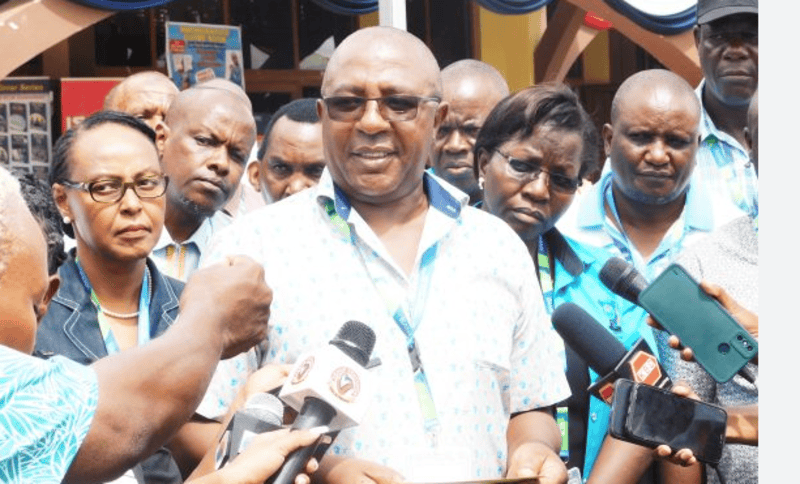
Kenya Secondary School Heads Association (KESSHA) chairperson Willy Kuria said the delayed release of capitation funds has triggered a severe cash crunch across institutions. “This is the term for exams; schools are expected to buy materials, pay suppliers and prepare adequately, yet funds have not hit their accounts. Schools are finding it difficult to prepare for the exam,” Kuria stated.
He revealed that both day and boarding schools with low enrolment have been hardest hit, with some principals resorting to borrowing to purchase examination materials. Kuria urged the government to fast-track disbursement, warning that the continued delay undermines national exams integrity and exerts enormous pressure on already overburdened administrators.
Many institutions are simultaneously racing to complete the syllabus before exam week, even as fee defaults and unpaid staff compound financial strain. “The little money we received barely dented the debts. It feels like a cycle we can’t escape. We are now pleading with suppliers and banks to extend credit just to keep schools running,” one headteacher said.
Education Cabinet Secretary Julius Ogamba acknowledged the funding delay but said disbursements will only be made to verified schools. He confirmed that 37,128 schools with 8.82 million learners have received funds, with verification extended to higher learning institutions. Ogamba requested an additional 10 days to complete the verification process, initially slated to last one month.
Meanwhile, the Kenya Primary Schools Head Teachers Association (KEPSHA) warned that schools are “running on empty” as the third term enters its sixth week. Farad Ali, KEPSHA chairperson, appealed for swift intervention, saying many institutions are struggling to remain operational. “Head teachers are struggling to keep schools afloat,” he said, warning that continued financial strain could disrupt the entire national examination calendar.
The delayed funding crisis has now evolved into a national concern, with education stakeholders urging the government to act swiftly to safeguard fairness, credibility, and stability in Kenya’s education system.