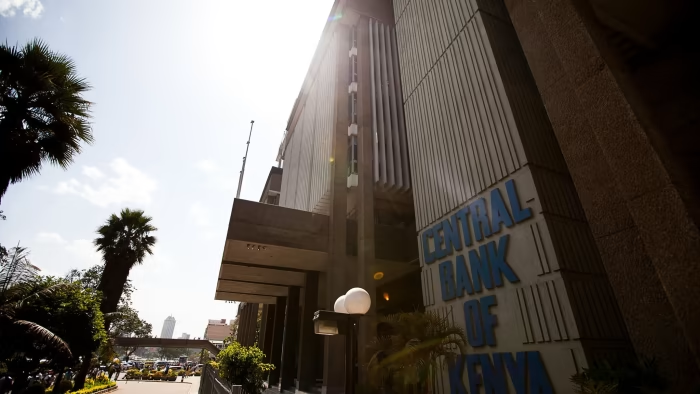
Commercial banks have urged the Central Bank of Kenya (CBK) to further reduce the Central Bank Rate (CBR) to lower borrowing costs and revive private sector lending, which has remained sluggish despite previous monetary easing.
Through the Kenya Bankers Association (KBA), lenders argue that low inflation, a stable exchange rate, and weak private sector credit justify a further rate cut. “Overall inflation remains low, and expectations are anchored within the target range. The Kenyan shilling remains stable, supported by strong forex reserves, resilient remittances, and a manageable current account deficit,” KBA said in its latest research note.
KBA emphasized that with these positive macroeconomic indicators, there is “scope to cut the Central Bank Rate (CBR) to provide impetus for stronger private sector credit growth and support economic expansion.”
The KBA report comes ahead of the CBK’s Monetary Policy Committee (MPC) meeting on October 7, where the regulator will review the policy rate. The MPC has cut the CBR in each of its last seven sessions, most recently on August 12, reducing it from 9.75 percent to 9.5 percent.
Lenders believe a further rate reduction would make credit more affordable for households and businesses, thereby accelerating economic activity. Private sector credit expanded by 3.3 percent in August, marking its fastest growth in six months.
However, the CBK has expressed frustration over banks’ slow adjustment of lending rates in response to policy cuts. During a recent meeting, Governor Kamau Thugge urged commercial banks to “end excuses” and promptly align loan pricing with changes in the CBR. He hinted that a new loan pricing model under development would ensure faster transmission of monetary policy changes to the market.
Despite the push for lower rates, banks remain cautious due to the rising level of non-performing loans (NPLs), which reached 17.6 percent by June 2025. The increase in defaults has made lenders hesitant to expand credit, even as interest rate reductions create a more favorable borrowing environment.
Earlier in the year, this cautious stance led to a decline in private sector credit, which contracted by 2.9 percent in January and 1.3 percent in February before rebounding in midyear. Analysts note that restoring business confidence through cheaper credit will be essential for sustaining growth momentum in Kenya’s post-inflation recovery phase.
As the Monetary Policy Committee meets this week, all eyes are on whether the CBK will heed the call from commercial banks and implement another CBR cut to stimulate lending and consolidate Kenya’s fragile economic gains.