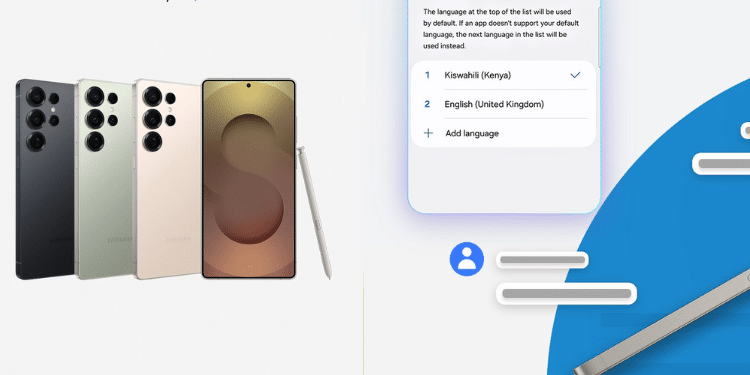
Samsung has announced a major update for its Galaxy devices by introducing Kiswahili and Amharic language support to system settings and the Samsung Keyboard. The move is aimed at improving accessibility and ensuring millions of users across East Africa can navigate their devices in their preferred languages.
The company emphasized that this upgrade reflects its commitment to localization and inclusivity, noting that Kiswahili is spoken by more than 100 million people as a regional lingua franca, while Amharic is the national language of Ethiopia.
Why Kiswahili and Amharic Matter
For many users, language is the biggest barrier to fully enjoying smartphone features. By adding these two widely spoken African languages, Samsung is ensuring that people in Kenya, Tanzania, Uganda, Ethiopia, and beyond have the option to personalize their Galaxy experience.
“Samsung Electronics is committed to innovation that empowers communities. By adding Kiswahili and Amharic language support, we are taking a significant step toward bridging the digital divide and fostering greater inclusion,” the company said.
This move also strengthens Samsung’s presence in Africa’s rapidly growing smartphone market, giving it an edge over competitors like Apple, Huawei, and Xiaomi.
How to Switch Your Device Language
Users can change both the system language and the keyboard input on Galaxy devices.
To change the system language:
- Open Settings
- Go to General Management
- Tap Language & Region → Language
- Tap Add language and select Kiswahili or Amharic
- Set it as default or move it to the top of the list
To change keyboard input language:
- Open Settings → General Management
- Select Samsung Keyboard
- Tap Languages and types → Manage input languages
- Download and enable Kiswahili or Amharic
- Switch easily by holding the spacebar or tapping the globe icon
Conclusion
The addition of Kiswahili and Amharic to Samsung Galaxy devices is more than a software upgrade — it’s a cultural milestone. It ensures that millions of East Africans can engage with technology in familiar languages, making smartphones more user-friendly, inclusive, and relevant. For Samsung, this decision cements its role as a brand that not only leads in innovation but also listens to the voices of local communities.