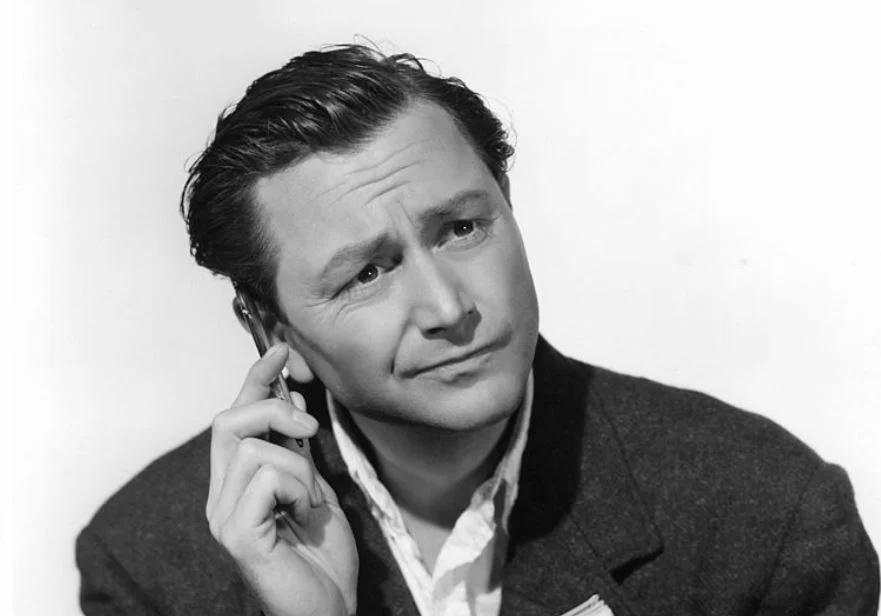
Robert Young net worth was estimated at $2 million at the time of his death in 1998—equivalent to about $4 million today after adjusting for inflation. His wealth reflected a career that stretched over five decades, balancing steady film work with television roles that made him one of America’s most recognizable faces.
Born in Chicago in 1907, Young entered Hollywood through the Pasadena Playhouse, where his acting talent was discovered. MGM signed him in the early 1930s, and he quickly became one of the studio’s most reliable contract players. Over the next two decades, he appeared in more than 100 films, often alongside screen legends like Greta Garbo, Joan Crawford, and Katharine Hepburn. Although rarely a marquee star, he developed a reputation for dependability and likability, earning solid paychecks as a steady presence in Golden Age Hollywood.
By the late 1940s, Young shifted toward projects that offered more character depth, with films such as The Enchanted Cottage and Crossfire drawing critical attention. Yet his most enduring financial and cultural success came after moving into radio and television. In 1949, he launched Father Knows Best, which migrated to television in 1954. As Jim Anderson, Young portrayed the quintessential American father, earning two Emmy Awards and residual income from years of reruns. The series became a cornerstone of American television and one of the most influential family sitcoms of its era.
Young’s second career peak came in 1969 with Marcus Welby, M.D., where he played the empathetic doctor opposite James Brolin. The show tackled difficult medical and social issues, a groundbreaking move for the time. Running for seven seasons, it earned him another Emmy and solidified his reputation as an actor who could embody warmth, integrity, and moral clarity. These roles not only defined his public image but also ensured consistent earnings well into his sixties.
Despite his professional stability, Young struggled privately with alcoholism and depression. In later years, he spoke openly about mental health, helping to destigmatize conversations around addiction and emotional well-being. His advocacy added depth to his legacy, showing that his influence extended beyond the screen.
Young’s personal wealth included his Westlake Village home, built in the 1970s, which was sold by his estate for $750,000 shortly after his passing. While his $2 million net worth was modest compared to modern Hollywood stars, it reflected steady success in an era when actors earned far less and residuals were limited.
Robert Young’s financial and cultural legacy endures through his portrayals of Jim Anderson and Marcus Welby—characters that became national symbols of fatherhood and compassion. His career demonstrates how consistent work, reputation, and adaptability could secure both financial stability and cultural immortality in mid-century Hollywood.