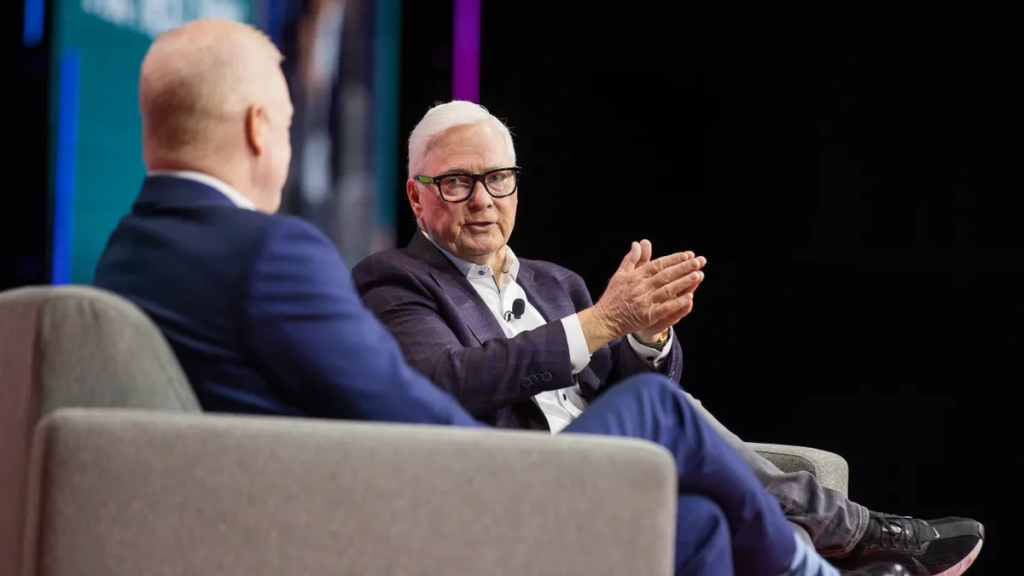
The retail industry is rapidly evolving with the integration of artificial intelligence (AI), as executives from major companies discussed at the National Retail Federation’s 2026 Big Show in New York City. From enhancing the customer journey to transforming business operations, AI’s impact is being felt across the industry.
As AI continues to advance, many retailers are eager to collaborate with external AI platforms and build AI tools internally. The insights shared by retail leaders during the event highlighted the need for a balanced approach to integrating AI while maintaining human intelligence in the process.
Collaborative Efforts Between Retailers and Tech Giants
AI collaboration is key, as demonstrated by the recent partnership between Walmart and Google’s Gemini. This collaboration exemplifies how retailers are tapping into the power of AI chatbots to guide customers through their shopping experience. Google’s AI capabilities are reshaping how shoppers search for products by allowing them to type in highly specific product details, ultimately simplifying the buying process.
REI and Ulta Beauty executives also emphasized the importance of combining human interaction with AI. “AI partnered with human knowledge and interaction will make a real difference in business,” said Kecia Steelman, CEO of Ulta Beauty. Retailers like REI believe AI will touch every aspect of the retail journey, underscoring its critical role in shaping future business models.
Balancing Speed and Strategy in AI Integration
While some executives champion the “fail fast” mentality to adapt quickly to new technologies, others, like Josh Krepon from Steve Madden, stress the importance of moving thoughtfully and slowly. “It makes more sense to move thoughtfully and slow,” Krepon said, reflecting concerns about rushing AI integration without fully understanding its long-term impact.
Max Magni, Macy’s Chief Customer and Digital Officer, views AI as an enabler, not a strategy. “AI is super important. It’s going to help us listen to our customer better,” Magni said, highlighting that AI tools should support retail operations without overshadowing human insights.
The Future of AI and Retail Creativity
Bob Eddy, CEO of BJ’s, echoed a similar sentiment, stating that AI would not replace creativity in retail but instead amplify it. “When technology accelerates imagination, we get new possibilities for merchandising, design, forecasting, fulfillment, and the art of supply,” Eddy said. This perspective emphasizes that AI will not diminish the creative aspects of retail but instead provide innovative tools for improvement.
Personalization and the Role of Data
A key theme that emerged from the discussions was the importance of data in AI adoption. Nikki Baird, Vice President of Strategy and Product at Aptos, pointed out that retailers must gain access to valuable consumer data to remain competitive. “Unless they’re willing to share that data, then the retailer loses,” Baird said, warning that external AI platforms could diminish the retailer’s role in the consumer journey if data ownership is not properly addressed.
As AI continues to make strides in retail, executives remain focused on leveraging its capabilities to enhance the customer experience while maintaining the core human elements that make retail such a dynamic industry. Retailers’ willingness to embrace AI and collaborate with technology partners will shape how the industry evolves in 2026 and beyond.