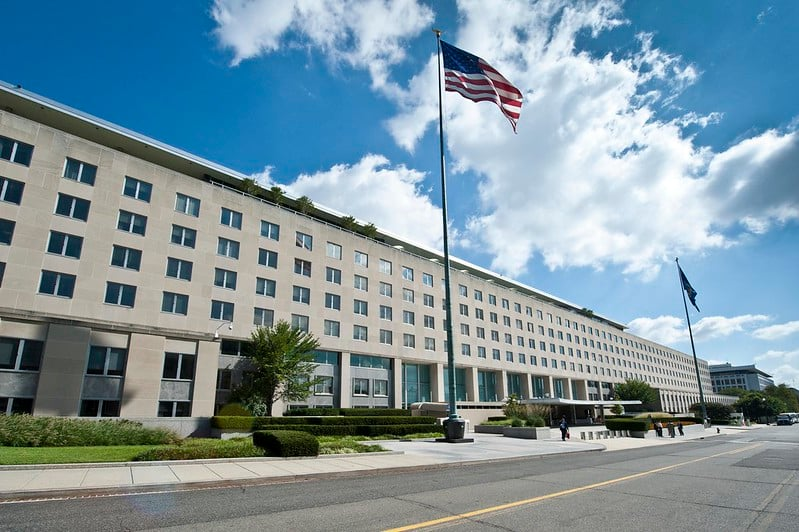
The Qatar Military Sale was approved by the United States Department of State on May 2, 2026, with two proposed defence deals worth about $5 billion cleared for Qatar amid heightened regional tensions. The announcement comes as security concerns persist following the ongoing conflict involving Iran and its wider regional impact.
The approval includes two separate packages: an Advanced Precision Kill Weapon System (APKWS) deal valued at $992.4 million and a PATRIOT air and missile defence replenishment package estimated at $4.01 billion. U.S. officials said the sales are intended to strengthen Qatar’s defence capabilities and support regional stability.
Qatar Military Sale includes missile systems and defence upgrades
Under the Qatar Military Sale, Qatar has requested to purchase 10,000 APKWS units and a combination of PATRIOT missile systems. These include 200 PATRIOT Advanced Capability-2 (PAC-2) Guidance Enhanced Missile-Tactical units and 300 PATRIOT Advanced Capability-3 (PAC-3) Missile Segment Enhancement systems.
The principal contractor for the APKWS deal will be BAE Systems. Meanwhile, the PATRIOT package will be handled by Lockheed Martin and RTX Corporation.
According to the State Department, the proposed sale will enhance Qatar’s ability to address both current and emerging threats. Officials added that the country is capable of integrating the systems into its armed forces without difficulty.
Emergency justification cited in Qatar Military Sale
The State Department said an emergency determination was made to expedite the Qatar Military Sale. Officials stated that the urgency reflects U.S. national security interests and the need to respond to evolving threats in the region.
“The Secretary of State has determined and provided detailed justification that an emergency exists that requires the immediate sale,” the department said in its statement.
Furthermore, the department described Qatar as a key regional partner that contributes to political stability and economic progress in the Middle East. It added that strengthening Qatar’s defence aligns with U.S. foreign policy objectives.
Regional tensions shape Qatar Military Sale decision
The Qatar Military Sale comes amid heightened tensions linked to the ongoing conflict involving Iran and the United States, as well as Israel’s involvement in the wider confrontation. Since the conflict began on February 28, Iran has launched attacks targeting U.S. interests across the region, including facilities in Qatar.
Qatar, which hosts the Al-Udeid Air Base, has been directly affected by these developments. The base is the largest U.S. military installation in the Middle East and plays a central role in regional operations.
However, attacks on Qatar have paused since April 8, following a two-week ceasefire brokered by Pakistan. The pause was later extended indefinitely by Donald Trump on April 21.
Read Also: United States
Defence cooperation central to Qatar Military Sale
The Qatar Military Sale also reflects the broader defence relationship between Washington and Doha. Qatar holds Major Non-NATO Ally (MNNA) status, which provides enhanced access to U.S. defence cooperation and technology.
According to the State Department, the sale will help Qatar defend its territorial integrity and deter regional threats. Officials added that the deal will not alter the fundamental military balance in the region and will not require additional U.S. personnel to be deployed.
In addition, the PATRIOT system is expected to replenish Qatar’s missile defence capabilities, ensuring continued protection against aerial threats. The department emphasized that such systems are critical for maintaining stability in a volatile security environment.
Qatar’s position in global arms market
The Qatar Military Sale highlights the country’s role as a major defence importer. According to the Stockholm International Peace Research Institute (SIPRI), Qatar is the fourth-largest arms recipient globally and the second-largest among Arab nations.
Data from SIPRI shows that Qatar accounts for 7.4 percent of total U.S. arms exports. Its arms imports increased by 106 percent between the periods 2016–2020 and 2021–2025.
During the latter period, Qatar acquired 100 combat aircraft. Of these, 48 were supplied by the United States, 33 by the United Kingdom, 13 by France and six by Italy. This trend reflects a sustained effort by Qatar to modernize its military capabilities.
Broader implications of Qatar Military Sale
The approval of the Qatar Military Sale is part of a wider package of U.S. arms deals announced on the same day, totalling more than $8.6 billion. These also include proposed sales to Israel, Kuwait and the United Arab Emirates.
Analysts say the timing of these approvals underscores the strategic importance of strengthening allied defence capabilities in the Middle East. At the same time, the emphasis on deterrence reflects concerns about the potential for escalation in the region.
Looking ahead, the implementation of these deals will likely reinforce existing defence partnerships while shaping the regional security landscape. However, the long-term impact will depend on how tensions evolve and whether diplomatic efforts succeed in reducing conflict risks.
The Qatar Military Sale therefore represents both a response to immediate security concerns and a continuation of long-standing defence cooperation between the United States and Qatar. As regional dynamics remain uncertain, such agreements are expected to play a central role in maintaining strategic balance.
Read Also: Constitution of the United States