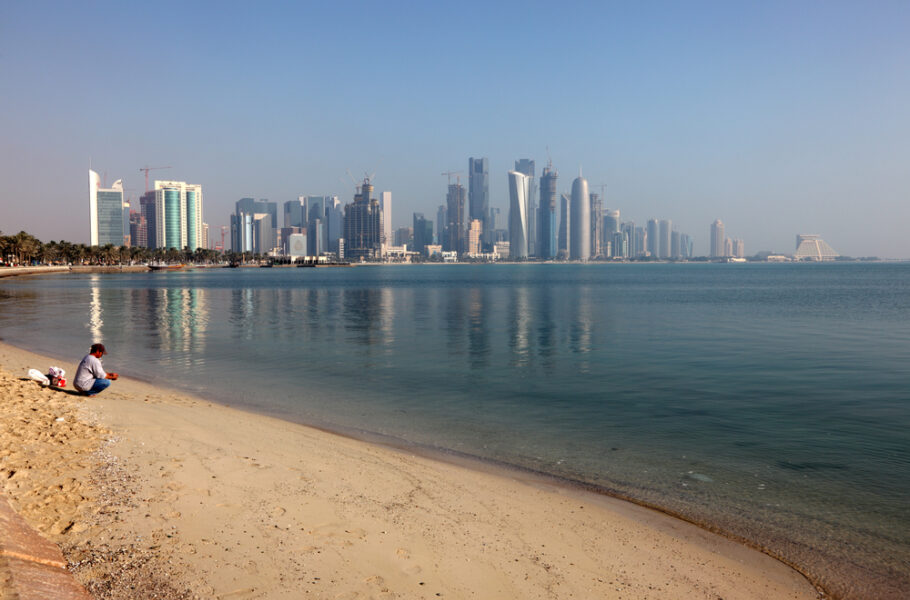
Qatar has officially denied reports circulating online claiming that oil pollution has reached the country’s shores, describing the information as false and inaccurate.
The clarification was issued through the Government Communication Office (GCO), which stated that the Ministry of Environment and Climate Change continues carrying out monitoring operations and field inspections in coordination with relevant authorities.
According to the statement, environmental assessments conducted so far have not detected oil pollution affecting Qatar’s coastline.
The announcement comes amid growing regional concern regarding environmental risks in Gulf waters, where shipping activity, energy infrastructure and geopolitical tensions have increased attention on maritime safety and environmental monitoring.
Qatar Rejects Oil Pollution Claims
In a public notice shared through official communication channels, the Government Communication Office said reports alleging that oil pollution had reached Qatar’s shores were incorrect.
Authorities emphasized that environmental monitoring remains active and ongoing.
The statement explained that the Ministry of Environment and Climate Change continues coordinating with relevant agencies to assess conditions and ensure environmental safety across coastal areas.
Officials urged the public to rely on verified government sources rather than unconfirmed online reports.
Read Also: Promise Dental Care Qatar | Multidisciplinary Dental Excellence
Environmental Monitoring Continues
The Ministry of Environment and Climate Change stated that monitoring and field inspections remain underway as part of precautionary environmental management efforts.
These inspections reportedly include:
- Coastal assessments
- Marine monitoring
- Environmental field checks
- Coordination with relevant agencies
- Ongoing surveillance activities
The ministry indicated that authorities remain prepared to respond rapidly should any environmental threats emerge.
Importance of Coastal Environmental Protection in Qatar
Coastal and marine protection remains highly important for Qatar because of the country’s geographic position along the Arabian Gulf.
Qatar relies heavily on marine resources and coastal infrastructure for sectors including:
- Energy exports
- Shipping
- Fishing
- Tourism
- Industrial operations
Protecting coastal ecosystems therefore remains a strategic national priority.
Environmental authorities in the Gulf region frequently conduct monitoring programs because oil transportation and maritime traffic remain central to regional economies.
Rising Attention on Gulf Environmental Risks
Reports involving potential oil pollution in Gulf waters often attract significant attention because the region hosts some of the world’s busiest energy shipping routes.
Environmental incidents involving oil spills can affect:
- Marine ecosystems
- Fisheries
- Tourism
- Water quality
- Coastal communities
As a result, Gulf states maintain extensive monitoring systems and emergency preparedness mechanisms aimed at minimizing environmental risks.
Qatar’s rapid response to the recent reports reflects the sensitivity surrounding environmental and maritime issues within the region.
Government Urges Reliance on Official Information
Authorities encouraged the public to verify information through official communication platforms before sharing reports related to environmental safety or national infrastructure.
The Government Communication Office emphasized that official agencies remain the primary source for accurate updates regarding environmental monitoring and coastal conditions.
Misinformation involving environmental incidents can create unnecessary public concern, particularly in regions heavily dependent on maritime and energy activities.
Qatar’s Environmental Protection Efforts
Qatar has expanded environmental sustainability initiatives in recent years as part of broader national development goals.
The country has invested in:
- Marine conservation
- Climate monitoring
- Coastal protection
- Sustainability programs
- Environmental research
The Ministry of Environment and Climate Change plays a central role in overseeing these initiatives and coordinating environmental response systems.
Strategic Importance of Gulf Waters
The Arabian Gulf remains one of the world’s most strategically important maritime regions due to its role in global energy transportation.
Large volumes of crude oil and natural gas shipments pass through Gulf waters each year.
Because of this, regional governments closely monitor environmental conditions involving:
- Oil transportation
- Shipping activity
- Industrial discharge
- Maritime accidents
Any reports of oil pollution typically trigger immediate attention from environmental authorities and international observers.
Read Also: New Empire Dental Centre Qatar | Compassionate Dental Care
Public Reassurance From Authorities
Qatar’s statement appears aimed at reassuring both residents and businesses that no confirmed oil contamination has affected the country’s coastline.
Officials stressed that environmental conditions continue being monitored carefully and that current inspections have not identified pollution reaching Qatar’s shores.
The government’s communication strategy also reflects increasing emphasis on rapid public clarification during periods of online misinformation or speculation.
Conclusion
Qatar has confirmed that reports claiming oil pollution reached the country’s shores are false.
According to the Government Communication Office and the Ministry of Environment and Climate Change, ongoing monitoring and field inspections continue in coordination with relevant agencies to ensure environmental safety and coastal protection.
Authorities have urged the public to rely on verified official information while environmental monitoring operations remain active across Qatar’s coastal areas.