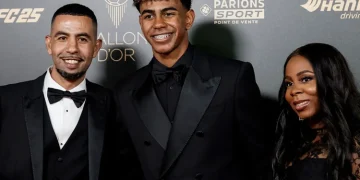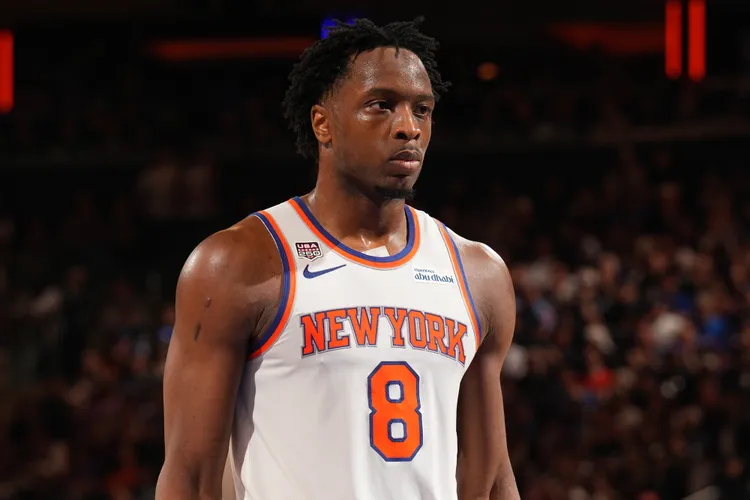
OG Anunoby’s parents, Ogugua Chigbogu Damian Anunoby Sr. and Grace Ndidi Okereke Anunoby, did not live to witness every defining moment of their youngest son’s basketball career. Their influence, however, remains central to the story of the Nigerian-British athlete who developed into one of the NBA’s most respected two-way players.
Ogugua “OG” Anunoby Jr. was born in London on July 17, 1997, to Nigerian parents. His mother died from cancer when he was about one year old, leaving his father responsible for raising a large family that eventually settled in Jefferson City, Missouri. Anunoby Sr. worked as a university professor and placed a strong emphasis on education, discipline, order and thoughtful communication.
Grace had been a competitive track-and-field athlete in Nigeria. Her athletic background became part of the family’s explanation for why several of the Anunoby children displayed natural sporting ability. OG’s older brother Chigbo pursued American football and spent time with multiple NFL organisations after playing at Morehouse College.
Their father initially imagined that OG might become a baseball player. Basketball eventually became the younger Anunoby’s main sport after he asked for an adjustable hoop for the family home and demonstrated that he would use it consistently.
That investment helped begin a journey through Jefferson City High School, Indiana University, the Toronto Raptors and the New York Knicks. OG was selected with the 23rd pick of the 2017 NBA Draft and became an NBA champion with Toronto in 2019. He later emerged as a central figure in New York’s 2026 championship run, including a 33-point performance and decisive late play during the Finals.
His father died in September 2018, one year after OG entered the NBA and only months before Toronto’s championship season began. Neither parent saw the full scale of the career their values helped create.
Who Were OG Anunoby’s Parents?
OG Anunoby’s father was Dr. Ogugua Chigbogu Damian Anunoby Sr., a Nigerian academic who taught business and finance at universities in Nigeria, Britain and the United States.
His mother was Grace Ndidi Okereke Anunoby, also from Nigeria. She competed in track-and-field events at national level and was remembered within the family as a determined sprinter and jumper.
The couple married in London in 1988 and built a family that ultimately included seven children.
OG was the youngest and was named after his father. His initials come from Ogugua, rather than being an independently chosen sporting nickname.
The family’s full history connected several countries.
Nigeria represented the parents’ birthplace and cultural foundation.
Britain was where the couple pursued part of their education and where OG was born.
The United States became the country in which the children were raised and where OG’s basketball career developed.
That international journey gave Anunoby several overlapping identities. He was born in England, raised mainly in Missouri and comes from a Nigerian Igbo family.
OG Anunoby Was Named After His Father
The basketball player’s full name is Ogugua Anunoby Jr.
He is widely known as OG, a shortened version that has become so familiar that some supporters assume it was created as a sporting nickname.
Instead, the name connects him directly with his father.
Naming a child after a parent can represent continuity, respect and responsibility within a family. In OG’s case, it also reinforces the importance of the man who raised him after the death of his mother.
The shared name became particularly meaningful because Anunoby Sr. was not merely a distant family figure.
He was the parent responsible for managing education, discipline, sport and daily life in a household containing several children.
OG later became known publicly for a quiet and controlled personality that resembles many of the values his father described when discussing the family.
Anunoby Sr. believed that people should speak only when necessary and should contribute meaningfully when they did.
That philosophy helps explain why OG has often been portrayed as reserved during interviews and public appearances.
Grace Anunoby Was a Nigerian Athlete
Grace Anunoby competed nationally in athletics in Nigeria.
Her events reportedly included sprinting and jumping, sports that require speed, power, coordination and intense individual focus.
Although OG was too young to remember much of his mother directly, her athletic history became part of how his father understood the abilities of their children.
Anunoby Sr. credited Grace’s sporting background when discussing the family’s physical talent.
The connection is plausible without implying that athletic success is determined only by genetics.
Children may inherit physical traits, but professional performance also depends on opportunity, coaching, discipline, health and sustained practice.
Grace’s influence therefore existed in two ways.
She contributed to a family in which athletic ability appeared across several children.
Her absence also shaped the responsibilities taken on by OG’s father and older siblings after her death.
Grace Died When OG Was a Baby
Grace died from cancer on May 12, 1998, when OG was still an infant.
The loss meant he grew up without having the opportunity to form the kind of memories older children retain of a parent.
His six siblings experienced the tragedy at different ages, with some old enough to remember their mother more clearly.
For OG, knowledge of Grace came primarily through family stories, photographs and accounts of her athletic personality.
He later acknowledged that growing up without a mother was difficult but credited his father with doing an effective job of raising the family.
The death transformed Anunoby Sr.’s life.
He was pursuing an academic career while also becoming the principal parent to seven children.
Balancing university work with a large household required organisation and support from the older siblings.
The family’s later achievements suggest that education, sport and personal responsibility remained important despite the loss.
Ogugua Anunoby Sr. Was Born in Nigeria
Anunoby Sr. was born on August 15, 1952, in Akwa Village, Nigeria.
He completed his early education in Nigeria before moving to Britain for postgraduate study.
His academic journey eventually included qualifications from the University of Strathclyde, the University of Glasgow and Brunel University in London, according to published family accounts and his obituary.
He earned credentials in economics, finance, management and related areas, building expertise that supported a long teaching career.
His educational progress is significant because international study requires more than academic ability.
Moving from Nigeria to Britain involves cultural adjustment, financial planning and the challenge of establishing a professional network in a new country.
Anunoby Sr. later repeated that process when moving the family from Britain to the United States.
His career demonstrates the mobility of highly educated African professionals who contributed to institutions in several countries.
His Father Built an International Academic Career
Before settling in Missouri, Anunoby Sr. worked in several academic and professional roles.
His obituary states that he lectured at the University of Lagos, served in an executive role with an African financial institution in Lagos and later taught at Oxford Brookes University in England.
He joined Lincoln University in Jefferson City in 2001 and remained a professor there until his death in 2018.
Lincoln University is a historically Black institution in Missouri whose origins date to the period following the American Civil War.
The university became both an employer and a community anchor for the Anunoby family.
OG grew up close to a campus environment in which education was not an abstract idea. It was his father’s profession and part of everyday family life.
Students, faculty work and academic routines surrounded the household.
For a future professional athlete, this environment provided a reminder that sport was only one path toward achievement.
The Family Moved From London to Missouri
OG was born in London and spent the first years of his life in Britain.
When he was about four, the family moved to Jefferson City after his father accepted the teaching position at Lincoln University.
The relocation changed the environment in which OG would develop.
London offered a major international city, while Jefferson City was a smaller American community with a different sporting culture.
Basketball, baseball and American football were integrated deeply into school and community life in Missouri.
The move also positioned OG within the United States’ school and college sports pathway.
That system provided organised competition, high-school coaching, university recruitment and eventually access to the NBA Draft.
Had the family remained elsewhere, his development route might have looked very different.
The move did not guarantee a professional career, but it placed him within an established basketball infrastructure.
OG Is One of Seven Children
The Anunoby family included seven children: Adaeze, Adaora, Chigbogu “Chigbo,” Ogonna, Ifeoma, Olisamaka and OG.
Published profiles do not fully clarify whether all seven children shared both parents, so the safest description is that Anunoby Sr. was the father of the seven siblings.
Growing up in a large family can influence a child in several ways.
Older siblings may help with caregiving and provide early examples of academic or athletic achievement.
Younger children often learn to compete for attention, negotiate disagreements and become independent.
OG, as the youngest, had several older siblings whose experiences could guide him.
He could observe how they approached education, work and sport.
The household also provided built-in competition for games and other activities.
Those dynamics may have contributed to the calm confidence he later displayed in professional basketball.
The Anunoby Household Valued Discipline
Anunoby Sr. described his goal as raising a “proper family,” by which he meant one that valued hard work, order and success.
His approach included clear behavioural expectations.
He believed children should think before speaking and should contribute something meaningful rather than talking simply to attract attention.
That philosophy is visible in OG’s public personality.
He is not typically associated with lengthy interviews, dramatic public statements or constant social-media promotion.
His teammates and coaches often describe his game through reliability rather than spectacle.
On the court, he takes difficult defensive assignments, moves without demanding constant possession and contributes in multiple ways.
This does not mean every aspect of his character can be attributed directly to his father.
Personality develops through many influences.
The similarities are nevertheless notable.
Education Was Non-Negotiable
Anunoby Sr. required OG to read for approximately an hour each evening, according to the Sportsnet family profile cited in the source material.
This requirement reflected the father’s belief that athletic interest should not replace intellectual development.
For young athletes, education provides several forms of protection.
It creates options if injury ends a career.
It supports financial literacy and contract understanding.
It helps players communicate with coaches, executives and business partners.
It can also build the concentration required to absorb tactical information.
OG eventually attended Indiana University, combining NCAA basketball with university study before entering the NBA Draft.
His college career was cut short by injury, illustrating why education remained relevant even for a player with professional potential.
His Father Initially Saw a Baseball Future
Basketball was not the first sport Anunoby Sr. imagined for his youngest son.
OG showed ability in baseball, particularly as a pitcher.
His father initially believed the sport might offer the best route for him.
Baseball rewards arm strength, coordination, patience and technical repetition.
A tall athlete with strong physical control can become an effective pitcher if given suitable coaching.
OG, however, developed a stronger interest in basketball.
The change illustrates the importance of allowing young athletes to discover the sport that best matches their motivation.
Parents can identify ability, but long-term success usually requires the child to care deeply about training.
Anunoby Sr. supported that change once OG demonstrated seriousness.
The Basketball Hoop Became a Defining Investment
OG asked his father to purchase a high-quality adjustable basketball hoop for the family’s backyard.
The equipment cost several hundred dollars, a meaningful purchase for a household with many children.
Anunoby Sr. agreed on the condition that his son use it consistently and provide “value for money.”
The phrase reflected his financial and academic background.
He evaluated even a sporting purchase through discipline, commitment and return.
OG accepted the challenge.
The hoop became a place where he could practise outside formal team sessions, repeating movements and developing familiarity with the ball.
His father later described it as an excellent investment.
The story is modest compared with the resources available to modern elite prospects, but it captures an important part of athletic development.
A player does not always need the most expensive training centre.
Consistent access to a court, hoop or field can be enough to support thousands of hours of practice.
Chigbo Anunoby Pursued American Football
OG’s older brother Chigbo played defensive tackle at Morehouse College.
He signed with the Indianapolis Colts as an undrafted free agent in 2012 and later spent time with several NFL organisations. Lincoln University and sports databases identify his professional affiliations and college background.
Chigbo’s experience gave OG an immediate example of the opportunities and uncertainty surrounding professional sport.
An undrafted player must often fight for roster positions without the security given to high draft selections.
Teams may release, re-sign or move such players through practice squads and temporary contracts.
Watching that process could teach a younger sibling that reaching a professional organisation is not the end of the struggle.
It may also have helped the family understand agents, contracts, training camps and the business side of American sport before OG reached the NBA.
Athletics Ran Through the Family
Grace’s track career, Chigbo’s football experience and OG’s basketball success demonstrate the range of sporting ability within the family.
The siblings did not all pursue the same discipline.
This matters because athletic families are sometimes described as though one set of inherited qualities automatically produces identical careers.
Track requires explosive movement and individual execution.
American football demands physical strength, tactical discipline and highly specialised roles.
Basketball combines coordination, endurance, decision-making, shooting and team movement.
The Anunoby children adapted their abilities to different sports.
That variety also suggests the family encouraged participation without imposing one fixed path.
OG Developed Late as a Basketball Prospect
Anunoby was not treated as a guaranteed future NBA star throughout childhood.
He developed steadily and did not receive the level of national recruiting attention given to the most celebrated American high-school prospects.
At Jefferson City High School, he grew into a versatile forward and produced a strong senior season.
His combination of size, movement and defensive potential eventually attracted college programmes.
He chose Indiana University, a historically significant basketball institution competing in the Big Ten.
The move represented a major step.
College basketball exposed him to stronger opponents, national broadcasts and professional scouting.
His progress demonstrates that elite careers do not always begin with childhood fame.
Some athletes develop physically and technically later than others.
Indiana University Revealed His NBA Potential
Anunoby played for the Indiana Hoosiers from 2015 to 2017.
He entered college without the profile of a future lottery-level star but quickly attracted attention through defence, athleticism and versatility.
His ability to guard several positions made him especially valuable.
Modern basketball increasingly rewards players who can switch between smaller guards and larger forwards without creating a defensive weakness.
Anunoby possessed the size and foot speed required for that role.
He also developed as a finisher and outside shooter.
A knee injury ended his second college season prematurely, creating uncertainty before the NBA Draft.
Teams had to assess both his long-term potential and his medical recovery.
The injury may have contributed to him remaining available until the 23rd selection.
Toronto Drafted OG in 2017
The Toronto Raptors selected Anunoby with the 23rd pick in the first round of the 2017 NBA Draft.
The selection made him a professional only months after the injury that ended his college season.
He later credited his father for the way he and his siblings had been raised, particularly after reaching the NBA.
The transition fulfilled one part of their shared journey.
Anunoby Sr. had supported the switch from baseball, purchased the hoop and maintained educational expectations.
He lived long enough to see OG drafted and begin his rookie season.
That timing is important because he witnessed confirmation that the basketball investment had produced a professional opportunity.
Anunoby Sr. Died in 2018
OG’s father died on September 27, 2018, at the age of 66.
His death came approximately one year after the draft and shortly before the beginning of OG’s second NBA season.
The loss was another major family tragedy.
OG had already grown up without his mother and now entered adulthood without either parent.
His father did not see Toronto’s championship run in 2019.
He also did not witness OG’s later defensive recognition, major contract, move to New York or championship success with the Knicks.
Nevertheless, the systems and expectations he established remained part of his son’s preparation.
Neither Parent Saw the 2019 NBA Championship
Toronto defeated the Golden State Warriors in the 2019 NBA Finals, giving Anunoby his first championship ring.
He did not play during the postseason because of a medical issue, but he remained part of the championship roster.
The title came less than a year after his father’s death.
It represented both a major professional achievement and a reminder of the parents who could not share the moment in person.
Grace had died before OG began forming lasting childhood memories.
Anunoby Sr. had seen him reach the league but not win its championship.
That emotional contrast continued throughout the player’s later career.
OG Became One of the NBA’s Leading Defenders
Anunoby gradually developed from a promising role player into one of the league’s strongest perimeter defenders.
He became known for guarding elite scorers across several positions.
His combination of strength, reach and balance allows him to defend both quick players and physically larger forwards.
In 2023, he led the NBA in steals and was selected to an All-Defensive team.
Defensive excellence is sometimes harder for casual viewers to evaluate than scoring.
It involves positioning, preparation, communication and the ability to anticipate an opponent’s movement.
These qualities align with the order and discipline emphasised in the Anunoby household.
A defender cannot succeed by acting independently on every possession.
He must understand the wider team structure and accept assignments that may not produce individual statistics.
The Knicks Acquired Him in 2023
The New York Knicks acquired Anunoby from Toronto in December 2023.
The trade sent RJ Barrett, Immanuel Quickley and draft compensation in the other direction, showing how highly New York valued Anunoby’s defence, size and shooting.
He immediately improved the Knicks’ ability to defend the strongest opposing wings.
His presence also helped balance a roster built around scoring and playmaking from other stars.
New York later signed him to a major long-term contract, confirming that it viewed him as part of the team’s championship core.
The move placed Anunoby in one of basketball’s most demanding media markets.
His quiet personality contrasted with the intensity surrounding the Knicks, but his controlled playing style made him well suited to the pressure.
OG Helped the Knicks Reach the 2026 NBA Finals
Anunoby became one of New York’s central postseason players during the 2026 championship run.
The Knicks faced the San Antonio Spurs in the NBA Finals, and Anunoby delivered several major performances.
Official NBA coverage recorded 28 points in Game 3 and 33 points in New York’s dramatic Game 4 victory.
His Game 4 contribution became one of the defining moments of the series.
New York recovered from a 29-point second-half deficit, and Anunoby completed the comeback with a decisive late play after contributing at both ends of the court.
The performance demonstrated how far his offensive game had developed.
He was no longer only a defender asked to limit opponents.
He had become capable of carrying a significant scoring burden during the sport’s most important series.
The Knicks Won the 2026 Championship
New York completed its title run in June 2026, ending a championship drought that had lasted more than five decades.
Anunoby added a second NBA title to his career and played a far more direct role than he had during Toronto’s 2019 postseason.
The championship represented a milestone his parents would almost certainly have valued deeply.
His mother’s athletic history and his father’s standards of discipline had contributed to the player who delivered under Finals pressure.
The moment also connected the Anunoby family’s Nigerian, British and American history with one of New York’s most celebrated sporting achievements.
What OG Inherited From Grace
It is impossible to determine precisely which physical qualities OG inherited from his mother.
Family accounts nevertheless identify Grace as a competitive sprinter and jumper, and her children displayed significant athletic ability.
OG’s explosiveness, coordination and defensive movement fit the general profile of an athlete with strong speed and power.
However, reducing Grace’s influence to genetics would be incomplete.
Her life remained part of the family’s shared memory.
Older siblings and her husband preserved stories about her determination and competitiveness.
Those stories gave OG a connection with the mother he lost before he could know her fully.
What OG Learned From His Father
The clearest lessons inherited from Anunoby Sr. involved discipline, education, value and restraint.
The reading requirement emphasised intellectual growth.
The condition attached to the basketball hoop emphasised commitment.
The family rule about speaking thoughtfully emphasised control.
His father’s academic career demonstrated the value of expertise and long-term preparation.
These lessons appear throughout OG’s professional identity.
He is not known for excessive self-promotion.
He performs specialised work consistently.
He has improved gradually rather than building his career through one brief burst of attention.
His game reflects preparation and efficiency.
His Quiet Personality Became Part of His Identity
Anunoby’s reserved manner has become a familiar feature of media coverage.
He often gives concise answers and avoids dramatic public statements.
That style can be misinterpreted as a lack of personality.
In reality, quiet athletes may communicate more strongly within trusted relationships and team environments than during press conferences.
The behaviour also fits the family philosophy described by his father: speaking should add to a conversation rather than create unnecessary noise.
In an NBA culture that often rewards visible branding and constant online engagement, Anunoby’s restraint makes him distinctive.
His performance becomes the primary source of his public identity.
Nigerian Heritage Remains Central to His Story
Both of Anunoby’s parents were Nigerian, and their education, sport and family values shaped the environment in which he grew up.
His story contributes to the expanding influence of African players and families within global basketball.
Nigeria has produced and developed numerous athletes who reached the NBA directly or through diaspora communities in Europe and North America.
Anunoby represents the diaspora route.
He was born in Britain, developed in the United States and carries a Nigerian family identity.
This combination reflects the global movement of modern basketball talent.
The sport’s future increasingly depends on development networks extending beyond traditional American pathways.
What the Family Story Teaches Young Athletes
The Anunoby family story contains several lessons that extend beyond basketball.
Education and Sport Can Develop Together
His father did not treat academic work as an obstacle to athletic ambition.
He expected OG to read and continue learning while supporting his training.
Expensive Equipment Has Value Only When Used
The basketball hoop mattered because OG practised consistently.
Buying equipment without discipline would not have produced the same result.
Young Athletes Can Change Sports
Anunoby showed ability in baseball before basketball became his main focus.
Exploring more than one sport can help children identify where their motivation and skills fit best.
Development Does Not Need to Begin With Fame
OG was not treated as a guaranteed NBA star from early childhood.
His progress accelerated through high school and college.
Family Influence Can Continue After Loss
Neither parent lived to see every achievement.
Their lessons remained part of his identity and decision-making.
What Comes Next for OG Anunoby?
Anunoby entered the period after New York’s 2026 title as an established champion and a central member of the Knicks.
The immediate challenge is maintaining the standard required to compete for another championship.
Winning once creates new expectations.
Opponents study the champions more carefully, while the physical demands of repeated postseason runs can test player health.
Anunoby’s role will continue to include difficult defensive assignments, efficient scoring and the versatility to support several lineup combinations.
His long-term legacy may also extend beyond basketball.
With his father’s academic and financial background, he has a family example for approaching investments and life after sport thoughtfully.
Expert Analysis
OG Anunoby’s family history provides a strong explanation for the qualities that define his career.
Grace contributed a recognised athletic tradition before her death.
Anunoby Sr. created the disciplined household in which that ability could develop.
The father did not push OG toward basketball immediately. He initially saw baseball potential and allowed his son’s preference to emerge.
Once basketball became the focus, he required evidence of commitment before investing in equipment.
That approach balanced support with accountability.
The reading requirement established a similar balance between sport and education.
OG could pursue basketball, but not at the cost of intellectual development.
His later career reflects those foundations.
He entered the NBA without the publicity given to the highest draft selections.
He built his value through defence, preparation and steady improvement.
He became an NBA champion in Toronto, earned individual defensive recognition and later emerged as a major Finals performer for New York.
The Game 4 performance in the 2026 Finals may appear far removed from a backyard hoop in Jefferson City.
The connection is direct.
The hoop gave him a place to practise.
His father demanded that he use it.
His family supplied examples of athletic and academic commitment.
Coaches later refined those foundations into professional skill.
The story also carries unavoidable sadness.
Grace never saw her youngest son grow into an athlete.
Anunoby Sr. saw him enter the NBA but died before the first championship.
OG’s success cannot replace those absences.
It can, however, demonstrate how deeply parental influence may remain present after death.
Frequently Asked Questions
Who were OG Anunoby’s parents?
OG Anunoby’s parents were Ogugua Chigbogu Damian Anunoby Sr. and Grace Ndidi Okereke Anunoby. Both were Nigerian. His father was a university professor, while his mother competed in track and field.
What happened to OG Anunoby’s mother?
Grace Anunoby died from cancer in May 1998, when OG was approximately one year old.
What did OG Anunoby’s father do?
Anunoby Sr. was an academic who taught at institutions in Nigeria, Britain and the United States. He worked at Lincoln University in Jefferson City from 2001 until his death in 2018.
How many siblings does OG Anunoby have?
OG is one of seven children and has six older siblings, including former professional American football player Chigbo Anunoby.
Where was OG Anunoby born?
He was born in London, England, on July 17, 1997, before moving to Jefferson City, Missouri, as a young child.
Did OG Anunoby’s parents see him reach the NBA?
His father saw him drafted by Toronto in 2017 and complete his rookie season. He died in September 2018. His mother died when OG was a baby.
Is OG Anunoby an NBA champion?
Yes. He won the 2019 NBA championship with Toronto and became a champion again with the New York Knicks in 2026.
Conclusion
OG Anunoby’s rise from a London-born child in a Nigerian family to a two-time NBA champion was shaped by parents whose lives combined athletics, education and international ambition.
Grace Anunoby’s career in track and field established a sporting tradition that continued through several of her children.
Her death left a permanent absence, but family stories preserved her competitive identity.
Ogugua Anunoby Sr. then carried the responsibility of raising a large household while pursuing an academic career across three countries.
He demanded reading, thoughtful communication and disciplined use of opportunity.
When OG asked for a basketball hoop, his father agreed only after receiving a promise that the equipment would be used.
That modest family agreement eventually became part of an extraordinary sporting journey.
OG progressed through Missouri high-school basketball, Indiana University, the Toronto Raptors and the New York Knicks.
He built his reputation through defence and quiet reliability before becoming a major scorer and championship contributor on the NBA’s largest stage.
Neither parent witnessed all of it.
Grace died before the journey had begun.
Anunoby Sr. died after the draft but before the titles.
Their absence makes the career more poignant, but it does not make their influence less visible.
Every disciplined defensive possession, controlled interview and steady professional improvement reflects values established years before the NBA knew OG Anunoby’s name.
His story is not simply about overcoming the deaths of two parents.
It is about carrying their lessons forward and converting family sacrifice, Nigerian heritage, education and athletic opportunity into a career defined by substance rather than noise.
Read Also: Meet Bono’s Four Children and Their Careers