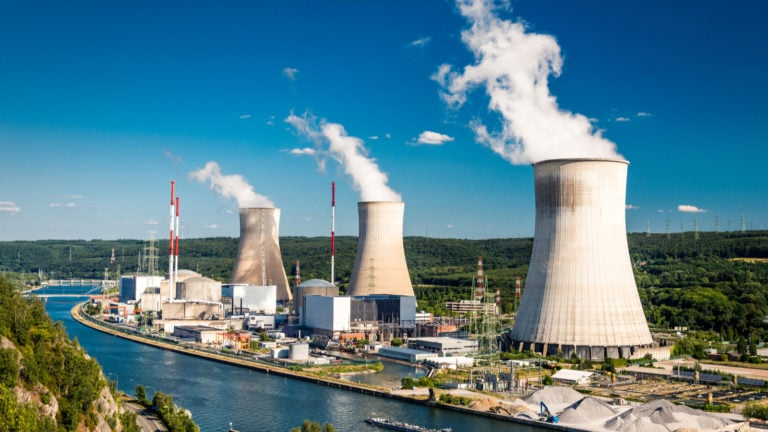
Nuclear fusion stocks have attracted growing attention as investors search for the next major breakthrough in clean energy. Fusion is often described as the process that powers the sun. If scientists and companies can commercialise it, fusion could provide large amounts of low-carbon electricity with less long-lived radioactive waste than traditional nuclear fission.
The idea is powerful. Instead of burning fossil fuels, fusion combines light atomic nuclei to release energy. In theory, this could create a reliable energy source that does not depend on sunlight, wind, rainfall, or fossil fuel supply chains.
However, investors need to be careful. Nuclear fusion remains an early-stage, highly technical industry. Many leading fusion companies are still private. Commercial power plants are not yet widely operating. Timelines are uncertain, costs are high, and the engineering challenges remain significant.
That means nuclear fusion stocks are not simple “get rich quick” investments. They are long-term, speculative clean-energy exposure. Investors can gain indirect exposure through large public companies that invest in fusion, supply materials, build engineering infrastructure, or may one day buy fusion-generated electricity.
This guide explains what nuclear fusion is, how the industry works, which companies are involved, how investors can gain exposure, and what risks matter before buying any fusion-related stock.
What Are Nuclear Fusion Stocks?
Nuclear fusion stocks are publicly traded shares of companies connected to the development, financing, supply chain, or future use of fusion energy.
The challenge is that most pure-play nuclear fusion companies are private. Their shares do not trade openly on major stock exchanges. This means ordinary investors usually cannot buy direct shares in companies such as Commonwealth Fusion Systems, Helion Energy, TAE Technologies, General Fusion, Tokamak Energy, or Zap Energy.
Instead, public-market exposure usually comes through indirect routes.
These include:
- Large energy companies investing in fusion start-ups
- Technology companies signing fusion power agreements
- Engineering companies involved in nuclear infrastructure
- Lithium and materials companies
- Power equipment suppliers
- Nuclear services companies
- Utilities and energy buyers
- Clean-energy funds with related exposure
This makes nuclear fusion investing different from buying shares in a mature public company. Many listed names connected to fusion have only small exposure to the sector. Their share prices are usually driven by their main businesses, not fusion progress alone.
What Is Nuclear Fusion?
Nuclear fusion is a reaction where two light atomic nuclei combine to form a heavier nucleus. This process releases energy.
Fusion is different from nuclear fission. Fission splits heavy atoms, such as uranium, into smaller atoms. Fusion combines light atoms, usually hydrogen isotopes, to release energy.
The sun produces energy through fusion. On Earth, scientists are trying to reproduce controlled fusion in a way that can generate useful electricity.
Why Nuclear Fusion Matters
Fusion matters because it could solve several energy problems at once.
A successful commercial fusion power plant could potentially offer:
- Large-scale electricity generation
- Low carbon emissions
- Reliable baseload power
- Less dependence on weather than solar or wind
- Reduced fossil fuel use
- High energy density
- Long-term fuel availability
- Lower long-lived waste than fission
These qualities explain why governments, scientists, energy companies, technology firms, and venture investors are interested.
Fusion also matters because electricity demand is rising. Artificial intelligence, cloud computing, data centres, electric vehicles, industrial electrification, and population growth are increasing the need for reliable power.
If fusion becomes commercial, it could become an important part of the future energy mix.
Why Nuclear Fusion Is Not Yet Commercial
Fusion has been studied for decades, but commercial power remains difficult.
The scientific challenge is not just creating fusion. Scientists have already created fusion reactions. The harder challenge is creating a system that can produce more usable energy than it consumes, sustain that process, convert the energy into electricity, operate safely, and do so at a competitive cost.
In December 2022, the U.S. Department of Energy announced that Lawrence Livermore National Laboratory had achieved fusion ignition at the National Ignition Facility. The experiment delivered 2.05 megajoules of energy to the target and produced 3.15 megajoules of fusion energy output. That was a major scientific milestone.
However, this did not mean a commercial fusion power plant was ready. The experiment measured energy delivered to the target, not total electricity consumed by the entire facility. Many engineering steps are still needed before fusion can power homes, factories, or data centres at scale.
How Nuclear Fusion Companies Work
Nuclear fusion companies are trying to build systems that can produce useful fusion energy.
Different companies use different approaches. There is no single winning design yet.
Common fusion approaches include:
| Fusion Approach | Simple Explanation |
|---|---|
| Magnetic confinement | Uses magnetic fields to control extremely hot plasma |
| Tokamak design | A doughnut-shaped magnetic confinement device |
| Stellarator design | A complex magnetic device designed for steady operation |
| Inertial confinement | Uses lasers or other forces to compress fuel rapidly |
| Magneto-inertial fusion | Combines magnetic and compression methods |
| Field-reversed configuration | Uses a compact plasma configuration |
| Z-pinch | Uses electric current to compress plasma |
Each approach has strengths and weaknesses. Some may be easier to scale. Some may be cheaper. Some may be more technically difficult but more powerful if successful.
Why Investors Are Watching Nuclear Fusion Stocks
Investors are watching nuclear fusion stocks because fusion sits at the intersection of clean energy, deep technology, AI power demand, national energy security, and climate policy.
Fusion has attracted more capital as investors look beyond wind, solar, batteries, hydrogen, and traditional nuclear fission.
The Fusion Industry Association said the fusion industry raised $2.64 billion in private and public funding in the 12 months leading to July 2025, the second-highest yearly figure since its report began.
Reuters also reported that total private funding for surveyed fusion companies had reached nearly $9.77 billion, reflecting a major rise in investor interest even though commercialisation challenges remain.
This growing investment does not guarantee success. But it shows that fusion is moving from purely government-funded research toward a more active private-sector industry.
Main Ways to Invest in Nuclear Fusion Stocks
Because most pure-play fusion companies are private, investors usually use indirect routes.
1. Public Companies Investing in Fusion Start-Ups
Some large public companies have invested in private fusion developers.
These public companies may benefit if their fusion investments become valuable. However, fusion is usually only a small part of their total business.
Examples include:
| Public Company | Fusion Connection |
| Chevron | Has invested in fusion-related start-ups through venture arms |
| Alphabet | Has supported fusion research and invested in related technology |
| Eni | Has backed Commonwealth Fusion Systems |
| Siemens Energy | Has been connected to fusion-sector investment and energy infrastructure |
| Nucor | Has been linked to industrial energy demand and fusion interest |
Investors should remember that buying a large public company for fusion exposure may give only limited direct exposure.
For example, Chevron’s share price is still mainly driven by oil, gas, refining, cash flow, dividends, and energy prices. Alphabet is mainly driven by advertising, cloud computing, AI, search, YouTube, and technology investment.
2. Companies Signing Fusion Power Deals
Some technology companies and industrial buyers are interested in future fusion power because they need reliable clean electricity.
Helion Energy announced a power purchase agreement with Microsoft for electricity from its first fusion power plant, scheduled for deployment in 2028.
Commonwealth Fusion Systems and Google also announced a partnership in 2025, including a power purchase agreement for 200 megawatts of electricity from CFS’ planned ARC power plant in Virginia, expected in the early 2030s.
These deals are important because they show that large power buyers are willing to engage with fusion developers before commercial plants are fully mature.
However, investors should treat timelines carefully. Power purchase agreements do not guarantee that fusion electricity will be delivered on schedule.
3. Engineering and Nuclear Services Companies
Fusion power plants will require engineering, construction, maintenance, materials, safety systems, control systems, and specialised components.
Public companies involved in nuclear engineering, power infrastructure, industrial systems, or defence-related nuclear services may benefit if fusion moves toward commercial deployment.
Examples of potential exposure areas include:
- Reactor construction
- Advanced magnets
- Vacuum systems
- Heat exchangers
- Turbines
- Power conversion systems
- Nuclear safety services
- Control systems
- Grid connection
- Maintenance and inspection
These companies may not be pure fusion plays, but they could participate in the supply chain.
4. Materials and Mining Companies
Fusion systems may require specialised materials.
Depending on the design, important inputs may include:
- Lithium
- Deuterium
- Tritium breeding materials
- High-temperature superconductors
- Tungsten
- Special steels
- Rare earth materials
- Advanced ceramics
Lithium is especially discussed because some fusion concepts involve breeding tritium from lithium. However, fusion demand for lithium remains a future possibility, not a current major driver of lithium prices.
Investors should not buy lithium stocks only because of fusion. Lithium markets are currently driven much more by batteries, electric vehicles, energy storage, and chemical demand.
5. Utilities and Power Buyers
If fusion becomes commercial, utilities and large power buyers may benefit by accessing reliable clean electricity.
Potential beneficiaries could include:
- Electric utilities
- Data centre operators
- Cloud companies
- Heavy industry
- Semiconductor manufacturers
- Hydrogen producers
- Desalination plants
- Industrial heat users
However, this is a long-term theme. Most of these companies are not currently valued based on fusion adoption.
Best Nuclear Fusion Stocks to Watch
There are very few pure-play public nuclear fusion stocks. Most exposure is indirect.
The following companies are worth watching because of investments, supply-chain relevance, future energy demand, or nuclear infrastructure exposure.
Chevron
Chevron is one of the world’s largest energy companies. Its main business is oil, gas, refining, chemicals, and energy production.
Chevron has explored lower-carbon technologies through its venture and innovation efforts. It has been linked to investments in fusion-related companies such as TAE Technologies and Zap Energy.
Why Chevron Matters
Chevron has technical knowledge in large-scale energy projects. It also has capital, engineering experience, and energy-market expertise.
If fusion becomes commercially viable, large energy companies may play a role in financing, operating, or scaling energy infrastructure.
Key Risk
Chevron is not a pure fusion stock. Its share price is mainly driven by oil and gas prices, production, refining margins, dividends, capital spending, and energy policy.
Alphabet
Alphabet, Google’s parent company, is one of the world’s largest technology companies.
Alphabet has been linked to fusion through investment and machine-learning collaboration. Google has also signed a partnership with Commonwealth Fusion Systems for future fusion electricity from the planned ARC plant.
Why Alphabet Matters
Alphabet has two important fusion angles.
First, it has deep AI and machine-learning expertise that can help complex scientific research.
Second, Google’s data centres require huge amounts of electricity. Clean, reliable power is strategically important for cloud computing and AI.
Key Risk
Alphabet’s stock is not mainly a fusion investment. Its share price is driven by advertising, Google Search, YouTube, Google Cloud, AI competition, regulation, margins, and capital expenditure.
Microsoft
Microsoft is important because it signed a power purchase agreement with Helion Energy for future fusion electricity.
Why Microsoft Matters
Microsoft needs large amounts of electricity for Azure, AI infrastructure, data centres, and enterprise cloud services.
If fusion becomes commercially available, hyperscale cloud companies could be early customers because they need reliable clean power.
Key Risk
Microsoft is not a nuclear fusion stock in the pure sense. Its valuation depends mainly on cloud computing, enterprise software, AI, Windows, Office, gaming, cybersecurity, and data-centre investment.
Eni
Eni is an Italian energy company with exposure to oil, gas, renewables, and energy transition investments.
Eni has been a major backer of Commonwealth Fusion Systems, one of the most prominent private fusion companies.
Why Eni Matters
Large energy companies may support fusion because they understand long-term energy infrastructure and have capital to invest in future technologies.
Key Risk
Eni’s stock remains tied mainly to oil, gas, refining, dividends, geopolitics, and European energy markets.
Albemarle
Albemarle is one of the world’s major lithium producers.
Lithium could be relevant to some fusion fuel cycles because lithium can be used to breed tritium, a hydrogen isotope used in many fusion designs.
Why Albemarle Matters
If fusion eventually scales and uses lithium-linked fuel systems, lithium producers may gain a new demand source.
Key Risk
Fusion is not a current major lithium demand driver. Albemarle is far more exposed to electric vehicles, batteries, lithium pricing, mining costs, and chemical markets.
Babcock International
Babcock International is a defence, engineering, and nuclear services company.
It has experience in complex engineering environments, including nuclear-related services.
Why Babcock Matters
Fusion power plants would require advanced engineering, safety systems, maintenance, and technical services. Companies with nuclear engineering experience may become part of the future supply chain.
Key Risk
Babcock’s stock is not driven mainly by fusion. Defence contracts, government spending, margins, and operational execution matter more today.
Siemens Energy
Siemens Energy is a major energy technology company involved in power generation, grid infrastructure, turbines, and industrial energy systems.
Why Siemens Energy Matters
If fusion power plants become commercial, they will need power conversion systems, grid integration, and large-scale energy infrastructure. Companies with power engineering expertise could benefit.
Key Risk
Siemens Energy is affected by wind power challenges, gas services, grid orders, margins, debt, and energy infrastructure cycles. Fusion remains a long-term possibility.
Nucor
Nucor is a large U.S. steel producer.
Industrial companies such as steelmakers need enormous amounts of energy. If fusion becomes commercially viable, heavy industry could benefit from clean, reliable power.
Why Nucor Matters
Nucor has been named among industrial companies connected to fusion investment interest. More broadly, heavy industry could become a major customer for clean baseload power.
Key Risk
Nucor’s share price is mainly driven by steel prices, construction demand, manufacturing activity, input costs, and U.S. industrial cycles.
Amazon
Amazon is not a fusion developer, but it is a major electricity user because of Amazon Web Services.
Data centres require reliable power. As AI workloads grow, Amazon and other cloud companies may look for long-term clean energy solutions.
Why Amazon Matters
If fusion becomes commercial, data centres could be early buyers of clean baseload power. Amazon’s cloud business could benefit from cheaper or more reliable clean electricity over time.
Key Risk
Amazon’s stock is driven by e-commerce, cloud computing, advertising, logistics, AI competition, margins, and capital expenditure. Fusion is only a future energy theme.
Private Nuclear Fusion Companies to Watch
Most leading fusion developers are private.
Important private fusion companies include:
| Company | Main Focus |
| Commonwealth Fusion Systems | Tokamak fusion using high-temperature superconducting magnets |
| Helion Energy | Pulsed fusion system targeting direct electricity generation |
| TAE Technologies | Advanced fusion approach and related technologies |
| General Fusion | Magnetised target fusion |
| Tokamak Energy | Compact spherical tokamak and HTS magnets |
| Zap Energy | Z-pinch fusion approach |
| Type One Energy | Stellarator-based fusion approach |
| Xcimer Energy | Inertial fusion energy approach |
Commonwealth Fusion Systems raised $863 million in 2025 to complete SPARC and advance work on its ARC power plant, bringing total capital raised close to $3 billion.
These private companies are important to watch because their progress can affect investor sentiment toward the wider fusion theme.
Nuclear Fusion Stocks vs Nuclear Fission Stocks
Investors should not confuse nuclear fusion stocks with nuclear fission stocks.
Nuclear fission is the technology used in today’s nuclear power plants. It splits heavy atoms to release energy.
Nuclear fusion combines light atoms to release energy. It is still not commercially deployed at scale.
| Feature | Nuclear Fission | Nuclear Fusion |
| Current commercial use | Widely used | Not yet commercial at scale |
| Process | Splits atoms | Combines atoms |
| Fuel | Uranium or plutonium | Hydrogen isotopes and related materials |
| Waste profile | Produces long-lived radioactive waste | Expected to produce less long-lived waste |
| Investment maturity | More mature | More speculative |
| Public stock exposure | Easier to find | Mostly indirect |
Fission stocks may include uranium miners, reactor operators, utilities, nuclear engineering companies, and fuel-cycle firms. Fusion stocks are more speculative because the industry is still developing.
Advantages of Investing in Nuclear Fusion Stocks
Long-Term Clean Energy Potential
Fusion could become a major clean-energy source if commercialised successfully.
Rising Power Demand
AI, cloud computing, electric vehicles, and industrial electrification are increasing demand for reliable electricity.
Government and Private Support
Fusion has attracted government research support and rising private investment.
Strategic Importance
Countries want secure, domestic, low-carbon energy sources. Fusion could become strategically important if it works.
Multiple Investment Routes
Investors can access the theme through energy companies, technology companies, materials suppliers, engineering firms, and future utilities.
Risks of Investing in Nuclear Fusion Stocks
Commercialisation Risk
Fusion may take longer than expected to become commercially viable.
Technology Risk
Some designs may fail. Others may work scientifically but prove too expensive.
Funding Risk
Fusion companies need large amounts of capital. Reuters reported that fusion companies still estimate large future funding needs, with a median need of about $700 million per company among survey respondents.
Valuation Risk
Investors may overpay for companies with limited direct fusion exposure.
Indirect Exposure Risk
Many public “fusion stocks” are not driven mainly by fusion. Their core businesses may dominate share price performance.
Timeline Risk
Even optimistic timelines often point to the late 2020s or 2030s for early commercial power. Investors may need patience.
Regulatory Risk
Fusion regulation is still developing. Rules may differ by country and technology.
Competition Risk
If one fusion approach wins, other approaches may lose funding or relevance.
How Beginners Can Evaluate Nuclear Fusion Stocks
Beginners should avoid buying any stock just because it is mentioned in a fusion article.
Instead, ask these questions:
- Is the company directly or indirectly exposed to fusion?
- How much of its revenue depends on fusion today?
- Is fusion material to its valuation?
- What is the company’s main business?
- Is the company profitable?
- Does it have strong cash flow?
- How much debt does it carry?
- What are the key risks?
- Does the stock already price in too much optimism?
- What is the realistic time horizon?
For large companies such as Alphabet, Microsoft, Chevron, Amazon, or Eni, fusion exposure is usually small compared with the core business.
That does not make them bad investments. It simply means investors should analyse them primarily by their main business fundamentals.
Example Nuclear Fusion Investment Approaches
Conservative Approach
A conservative investor may avoid private or speculative fusion exposure and focus on profitable public companies with strong balance sheets.
Examples include large technology, energy, or engineering companies with limited fusion exposure.
Thematic Approach
A thematic investor may build a basket of companies connected to future clean energy, AI power demand, lithium, grid infrastructure, and nuclear engineering.
This reduces dependence on one company.
Speculative Approach
A speculative investor may look for higher-risk exposure through companies closely linked to fusion start-ups or future supply chains.
This approach can produce higher potential upside but also higher risk.
Wait-and-See Approach
Some investors may wait until pure-play fusion companies go public.
This may reduce early-stage uncertainty but could mean buying at a higher valuation later.
What to Watch Before Buying Nuclear Fusion Stocks
Investors should monitor:
- Fusion ignition milestones
- Net energy gain progress
- Plant construction updates
- Power purchase agreements
- Government funding
- Private funding rounds
- Regulatory decisions
- Materials breakthroughs
- Tritium supply solutions
- Cost estimates
- Grid connection plans
- Commercial delivery timelines
- Customer contracts
- IPO announcements from private fusion companies
Progress in the sector is real, but investors should separate scientific milestones from commercial readiness.
Common Mistakes Investors Make
Confusing Scientific Success With Commercial Success
A laboratory breakthrough does not automatically mean profitable power plants.
Buying Large Companies for Tiny Fusion Exposure
A company may invest in fusion, but fusion may represent a tiny part of its business.
Ignoring Time Horizon
Fusion investing may require patience measured in years or decades.
Overlooking Core Business Risk
Chevron is still mainly an oil and gas company. Alphabet is still mainly a technology and advertising company. Albemarle is mainly tied to lithium markets.
Assuming Every Fusion Company Will Win
Many start-ups may fail or be acquired. Some technologies may not scale.
Chasing Hype
Clean energy themes can become overhyped. Investors should focus on fundamentals, not headlines.
Key Takeaways
- Nuclear fusion stocks offer exposure to a promising but speculative clean-energy theme.
- Most pure-play fusion companies are still private.
- Public-market exposure is usually indirect.
- Fusion combines light atomic nuclei to release energy.
- Fusion could offer reliable low-carbon power if commercialised.
- The 2022 ignition breakthrough was important but did not create a commercial power plant.
- Fusion investment has grown strongly, but large funding needs remain.
- Microsoft and Google have signed future fusion power agreements with private fusion developers.
- Public companies linked to fusion include energy, technology, engineering, materials, and power-infrastructure firms.
- Many so-called nuclear fusion stocks are driven mainly by their core businesses.
- Investors should be cautious about hype and long timelines.
- Risk management and diversification are essential.
Frequently Asked Questions
What are nuclear fusion stocks?
Nuclear fusion stocks are publicly traded companies connected to fusion energy through investment, technology, materials, engineering, power demand, or future supply chains.
Can I buy shares in pure nuclear fusion companies?
Most leading pure-play fusion companies are private, so ordinary retail investors usually cannot buy their shares on public exchanges.
Which companies are leading nuclear fusion development?
Important private fusion companies include Commonwealth Fusion Systems, Helion Energy, TAE Technologies, General Fusion, Tokamak Energy, Zap Energy, Type One Energy, and Xcimer Energy.
Is nuclear fusion already commercial?
No. Fusion has achieved major scientific milestones, but commercial grid-scale fusion power is not yet widely available.
Why are investors interested in fusion energy?
Investors are interested because fusion could provide reliable, low-carbon power and help meet rising electricity demand from AI, data centres, industry, and electrification.
What is the difference between nuclear fusion and nuclear fission?
Fission splits heavy atoms to release energy. Fusion combines light atoms to release energy. Current nuclear power plants use fission, while fusion is still being commercialised.
Is Chevron a nuclear fusion stock?
Chevron is not a pure fusion stock, but it has been linked to fusion investments through its energy technology activities.
Is Alphabet a nuclear fusion stock?
Alphabet is not a pure fusion stock, but Google has supported fusion-related technology and signed a future power partnership with Commonwealth Fusion Systems.
Is Microsoft connected to nuclear fusion?
Yes. Microsoft signed a power purchase agreement with Helion Energy for future fusion electricity.
Are nuclear fusion stocks risky?
Yes. Fusion investing is speculative because commercialisation timelines are uncertain, capital needs are large, and most pure-play companies remain private.
Will nuclear fusion replace fossil fuels?
Fusion could become part of the future energy mix if commercialised, but it is too early to say how quickly or widely it could replace fossil fuels.
Should beginners invest in nuclear fusion stocks?
Beginners should be cautious. Fusion is a long-term theme with high uncertainty. It may be better to study the sector first and focus on diversified, financially strong companies.
Conclusion
Nuclear fusion stocks represent one of the most exciting long-term themes in clean energy. Fusion could one day provide reliable, low-carbon power for homes, factories, data centres, and heavy industry.
However, investors must separate promise from reality. Fusion has achieved major scientific progress, including ignition milestones, but commercial power remains difficult. The industry still needs major advances in engineering, cost reduction, fuel supply, materials, regulation, and grid deployment.
Most leading fusion companies are private, so public investors usually gain exposure indirectly through large energy companies, technology companies, engineering firms, materials suppliers, and future power buyers.
That indirect exposure can be useful, but it also means investors must analyse the whole company, not just the fusion story. Chevron is still mainly an energy company. Alphabet and Microsoft are still mainly technology companies. Albemarle is still mainly linked to lithium markets. Babcock and Siemens Energy depend on broader engineering and infrastructure cycles.
Nuclear fusion stocks may reward patient investors if the technology advances, but the sector remains speculative. The best approach is to research carefully, diversify, avoid hype, and use a long-term mindset.
Investing in stocks involves risk. Share prices can fall as well as rise. Early-stage clean-energy themes can be highly volatile. Past performance does not guarantee future results. Always conduct your own research and consider seeking independent financial advice.
Read Also: Stock Beta: How to Measure Volatility