


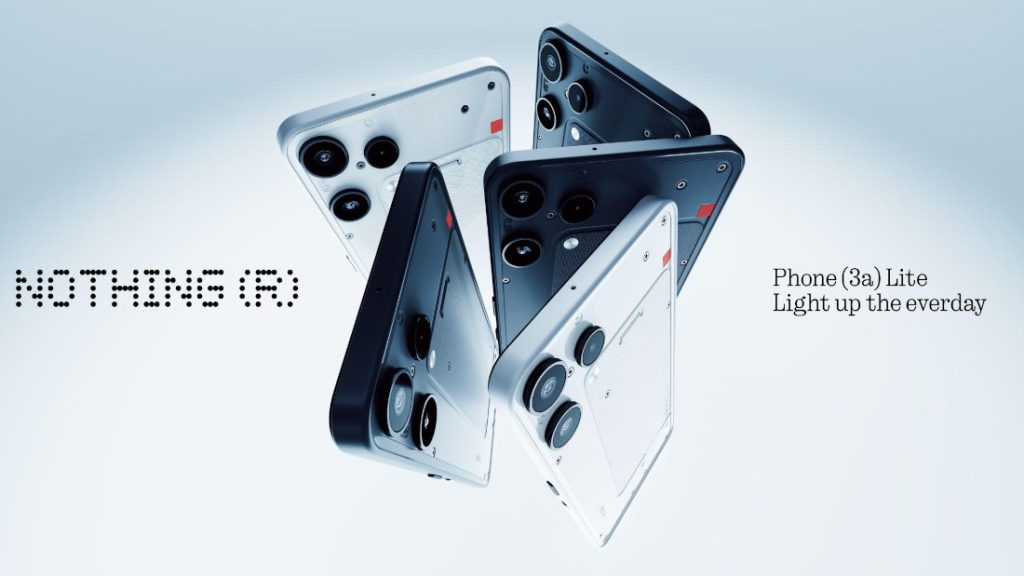
The Nothing Phone (3a) Lite review shows a phone that gets a lot right in style, software, and everyday usability, but it also reveals a few compromises that are hard to ignore. Nothing has created a device that looks different from nearly everything else in the mid-range market, thanks to its transparent glass back and simplified Glyph lighting. That alone gives it a strong identity. It also brings a bright AMOLED display, good battery life, clean software, and dependable performance for daily use.
At the same time, the phone feels a bit caught between the CMF Phone 2 Pro and the regular Phone (3a). Its camera setup is less practical than the CMF sibling, the speaker setup is weaker than many rivals, and the IP54 rating feels basic in a market where competitors often offer stronger protection. So while the Nothing Phone (3a) Lite review is mostly positive, this is not a phone that wins every category.
Nothing Phone (3a) Lite at a glance
| Feature | Nothing Phone (3a) Lite |
|---|---|
| Display | 6.77-inch AMOLED, 1080 x 2392, 120Hz, HDR |
| Chipset | MediaTek Dimensity 7300 Pro |
| RAM and storage | 8GB RAM, 128GB/256GB, microSD support |
| Rear cameras | 50MP main with OIS, 8MP ultrawide, 2MP macro |
| Front camera | 16MP |
| Battery | 5000mAh |
| Charging | 33W wired, 5W reverse wired |
| Software | Android 15, Nothing OS 3.5 |
| Protection | IP54 |
| Extras | Basic Glyph interface, Essential Key, Always-on display |
Design and build quality
The design is the biggest reason many people will notice this phone. Nothing sticks to its now familiar transparent aesthetic, with visible internal styling cues and a single Glyph light at the back. It is less elaborate than the Glyph setup on more expensive Nothing phones, but it still gives the device personality. The body uses Panda Glass on the front and back with a plastic frame, and the overall result feels premium for the price.
That said, the glossy finish is a fingerprint magnet. The phone also feels slippery in the hand, though Nothing includes a silicone case in the box to help with grip. The IP54 rating is only modest, offering splash resistance rather than proper waterproofing. That is one area where the phone falls behind several rivals.
Display quality
The 6.77-inch AMOLED display is one of the better parts of the package. It offers a 120Hz refresh rate, good contrast, 10-bit color, and solid brightness. Testing shows around 721 nits manual brightness and up to 1228 nits in auto mode, which is enough for comfortable outdoor use. HDR playback works on YouTube, though Netflix does not currently serve HDR on the device.
Refresh rate handling is also sensible. Dynamic and High modes switch between 60Hz and 120Hz depending on content, with High keeping supported apps at 120Hz more consistently. The panel may only be 1080p, but it still looks sharp enough for everyday viewing and fits the phone’s price bracket well.
Battery life and charging
Battery life is good rather than class-leading. The 5000mAh battery delivers an Active Use Score of just over 15 hours, which is a strong result for this category. The phone performs especially well in calling, browsing, video streaming, and gaming, so most users should comfortably get through a full day and often more.
Charging is handled at 33W. In testing, the phone reached 30 percent in 15 minutes, 57 percent in 30 minutes, and a full charge in 67 minutes. That is respectable, though clearly not among the fastest in the segment. Nothing does include useful battery health features such as charging limits and smart charging.
Speaker quality
One of the weaker parts of this phone is the audio hardware. The Nothing Phone (3a) Lite uses a single bottom-firing speaker and it earns only an average loudness score. Sound quality is decent enough, with okay vocals and some bass, but there is no escaping the fact that many similarly priced phones now offer stereo speakers and fuller sound.
This does not ruin the experience, but it is a clear compromise that buyers should note, especially if media playback matters to them.
Software experience
Software is where Nothing continues to stand out. Nothing OS 3.5 remains one of the cleanest and most distinctive Android skins around. It feels close to stock Android while still having its own identity through fonts, widgets, monochrome modes, Glyph controls, and a minimalist design language.
The phone also includes Essential Intelligence, which revolves around the Essential Key. You can use it for screenshots, voice memos, reminders, and AI-assisted organization. This will appeal to some users more than others, but it does help the phone feel different from the crowd. ChatGPT integration, wallpaper generation, and curated news summaries add to that modern feel.
Nothing promises three major Android upgrades, which is acceptable, though not leading for the segment.
Performance
The Dimensity 7300 Pro is a capable mid-range chip, and in actual use it performs well enough for almost everything people expect at this price. Benchmarks place it in line with direct competitors, and it handles daily apps, streaming, multitasking, and casual gaming without major trouble.
Thermals are also a strong point. CPU performance retention is high, GPU throttling is almost non-existent, and while the phone warms up under load, it does not become uncomfortably hot. That helps the phone feel stable and well-balanced.
Main camera performance
The 50MP main camera with OIS is the best camera here, but it is not exceptional in daylight. Photos are generally average for the class, with acceptable colors, high contrast, and no major noise issues in good light. The main weakness is detail, since processing often relies too much on sharpening to make up for limited natural detail.
Where the main camera does better is with people. Skin tones are pleasing, faces are not overly sharpened, and portrait mode works reasonably well, though subject separation can struggle with busy backgrounds or complex hair. That gives the camera some strengths even if general daylight scenes are only average.
Zoom and portrait photography
There is a 2x zoom option, but it is entirely digital. That means 2x images are cropped and upscaled rather than optically magnified. Results are soft, and while there are hints that Nothing’s algorithm tries to enhance faces or fine detail, the end result still lacks clarity. Portraits at 2x also suffer from the same softness.
This makes the camera package less versatile than the CMF Phone 2 Pro, which offers a proper 50MP telephoto instead of a 2MP macro sensor.
Ultrawide and macro cameras
The 8MP ultrawide is underwhelming. Photos often lack detail, colors can look muted or washed out, and the whole output feels merely serviceable rather than enjoyable. It is one of the weakest parts of the imaging setup.
The 2MP macro camera is usable in a basic way, with decent color and contrast, but it adds little real value. It feels more like a spec-sheet filler than a genuinely useful tool. That is especially clear when you compare it to phones in the same range that offer telephoto or stronger ultrawide cameras.
Selfie camera
The 16MP selfie camera produces images with decent color, acceptable dynamic range, and good exposure, but detail is weak. That is because it effectively upscales from a lower native output. The result is selfies that look fine on social media but are not especially sharp when viewed closely.
For casual users this may be enough, but it is not a standout front camera by any means.
Low-light photos
Night performance from the main camera is actually one of the pleasant surprises. The phone captures low-light photos with solid detail, low noise, good color saturation, and balanced exposure. These nighttime shots are clearly stronger than the daylight results in terms of overall impression.
The ultrawide in low light is only okay. It keeps colors and dynamic range reasonably well, but detail remains poor and much of the scene gets smoothed by aggressive noise reduction. The 2x zoom at night is very weak, since it depends on crop and upscaling from the main camera.
Video quality
Video is another mixed area. The main camera records very good 4K footage in daylight with pleasing colors, good sharpness, and wide dynamic range. Low-light 4K video is also surprisingly strong, with solid exposure and controlled noise. That gives the phone a respectable video story from its main sensor.
The ultrawide video is much weaker. Daylight clips are only average, and low-light footage is dark, soft, and noisy. The selfie camera is limited as well. So while the main camera can produce good video, the supporting cameras do not keep up.
Competition and value
This is where the Nothing Phone (3a) Lite faces its toughest challenge. Its launch price is reasonable on paper, but strong rivals already exist. The CMF Phone 2 Pro is cheaper and arguably more practical because it swaps the macro for a telephoto. The Redmi Note 14 Pro 5G offers a sharper screen, stereo speakers, faster charging, and stronger water resistance. Motorola’s Edge 60 Fusion and Samsung’s Galaxy A36 also make compelling alternatives.
That means the Nothing Phone (3a) Lite is not automatically the best value in its class. Its appeal depends heavily on whether you prioritize Nothing’s unique design language and software over more practical hardware advantages elsewhere.
Final verdict
The Nothing Phone (3a) Lite is a likable phone with clear character. Its design is fresh, Nothing OS is among the cleanest Android experiences around, the display is good, battery life is solid, and performance is dependable. Those are meaningful strengths.
The problem is that some compromises feel too obvious. IP54 protection is basic, the single speaker is disappointing, and the camera setup is only average outside the main sensor. Because of that, the phone feels more interesting than unbeatable.
The best reason to buy it is simple: you want a Nothing phone at a lower price and you care about design and software as much as raw specs. If that sounds like you, it makes sense. If not, several rivals may give you more for the same money.
The Review
Nothing Phone (3a) Lite
Obviously, the launch price of the Nothing Phone (3a) Lite is alright, but the phones released earlier this year have become cheaper and more attractive. And this happens quite often, which means if you like the Nothing Phone (3a) Lite, you could wait a couple of months to get it for less.
PROS
- Unique transparent design with basic Glyph interface
- Bright 120Hz AMOLED display
- Good battery life
- Smooth everyday performance with very little throttling
- Clean, stylish Nothing OS
- Good 4K video from the main camera
- microSD support
CONS
- Only IP54 splash resistance
- Single speaker
- Daylight photo quality is average
- Ultrawide camera is weak
- 2x zoom is just cropped digital zoom
- CMF Phone 2 Pro offers a more practical camera setup for less
 Nothing


