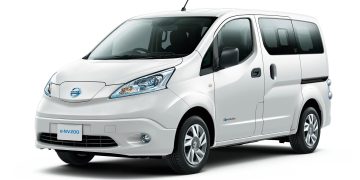
The Nissan Leaf with a 39.0 kWh usable battery was available from March 2022 to December 2024, offering an affordable, entry-level electric vehicle option for eco-conscious urban commuters. With a real-world range of 235 km, solid torque, and comfortable features, it remained one of the most recognized EVs on the market.
Though now discontinued and with no direct successor, the Leaf continues to serve as a reliable second-hand EV known for its practicality, moderate pricing, and user-friendly interface.
⚙️ Full Specifications: Nissan Leaf (39 kWh)
| Category | Specification |
|---|---|
| Battery & Platform | |
| Usable Battery Capacity | 39.0 kWh |
| Nominal Battery Capacity | 40.0 kWh |
| Architecture | 400 V |
| Battery Type | Lithium-ion (NCM523) |
| Pack Configuration | 96s2p |
| Number of Cells | 192 |
| Nominal Voltage | 350 V |
| Warranty | 8 years / 160,000 km |
| Platform | Not EV-dedicated |
| Performance | |
| Total Power Output | 110 kW (150 PS) |
| Torque | 320 Nm |
| Acceleration (0–100 km/h) | 7.9 seconds |
| Top Speed | 144 km/h |
| Drive Type | Front-Wheel Drive (FWD) |
| Range & Efficiency | |
| Real Range (Combined) | 235 km |
| Real Range (Cold/Mild) | 165–355 km |
| Efficiency (EVDB) | 166 Wh/km |
| WLTP Range | 270–285 km (TEL/TEH) |
| WLTP Consumption | 166–171 Wh/km rated |
| Real Consumption | 110–236 Wh/km |
| Charging (AC/DC) | |
| AC Charging Power | 3.6 kW (standard), 6.6 kW (optional) |
| AC Charging Time (0–100%) | 12h 45m (3.6 kW) |
| DC Fast Charging Power | Max 46 kW (CHAdeMO, front center) |
| Avg DC Power (10–80%) | 40 kW |
| DC Charge Time (23–188 km) | 43 minutes |
| Plug & Charge | No |
| Autocharge Supported | No |
| Battery Preconditioning | Not Supported |
| Charging Speeds Overview | |
| Wall Plug (2.3 kW) | 20h (12 km/h) |
| Optional 6.6 kW AC | 7h (34 km/h) |
| CHAdeMO 50 kW DC | 43 min (230 km/h) |
| Dimensions & Weight | |
| Length | 4490 mm |
| Width | 1788 mm (2030 mm w/ mirrors) |
| Height | 1530 mm |
| Wheelbase | 2700 mm |
| Unladen Weight | 1580 kg |
| Gross Vehicle Weight | 1995 kg |
| Max Payload | 490 kg |
| Cargo Volume (Rear) | 435 L |
| Max Cargo Volume | 1176 L |
| Roof Load | 35 kg |
| Towing Capacity | Not Supported |
| Miscellaneous | |
| Seats | 5 people |
| ISOFIX | Yes, 2 seats |
| Turning Circle | 10.8 m |
| Car Body Type | Hatchback |
| Segment | C – Medium |
| Heat Pump | Optional |
| Roof Rails | No |
| Safety (Euro NCAP) | |
| Overall Rating (2018) | 5 Stars |
| Adult Occupant Score | 93% |
| Child Occupant Score | 86% |
| Vulnerable Road Users | 71% |
| Safety Assist | 71% |
⚡ Key Highlights of the Nissan Leaf (2022–2024)
- City-Efficient: Offers up to 355 km in mild city driving; efficient 166 Wh/km real usage.
- CHAdeMO Charging: DC fast charging up to 46 kW with wide compatibility in Asia and older stations.
- Comfortable Performance: Smooth 0–100 km/h in 7.9 seconds, ideal for daily acceleration needs.
- Family Ready: Spacious cabin with 435 L boot capacity and solid Euro NCAP safety rating.
- V2G Capable: Supports Vehicle-to-Grid and Vehicle-to-Home via DC up to 7.0 kW.
With its trusted brand heritage, solid build, and practical electric performance, the Nissan Leaf remains a valuable second-hand EV choice. While newer models surpass it in range and speed, its urban usability, charging simplicity, and overall affordability still make it a relevant option in the electric mobility landscape.