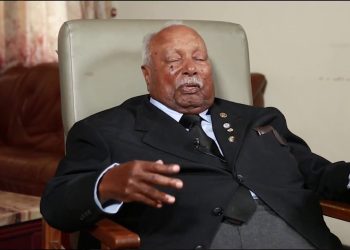
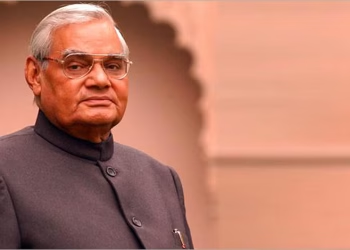
Mwai Kibaki was a Kenyan politician who had a net worth of $50 million dollars at the time of his death. He was best known for being the third President of Kenya from 2002 to 2013.
Mwai Kibaki Net Worth: $50 Million
Category: Richest Politicians › Presidents
Profession: Politician, Economist
Nationality: Kenya
Birthdate: November 15, 1931 – April 21, 2022
Birthplace: Gatuyaini, Kenya Colony
Sources of Wealth
Although Mwai Kibaki led a relatively modest personal life, his net worth of $50 million is believed to have come from:
- Decades of government salary and pensions
- Strategic land investments across Kenya, particularly in Nyeri, Nairobi, and Laikipia
- Family-held businesses in agriculture, real estate, and financial services
- Long-term accumulation of politically adjacent wealth typical of Kenya’s post-independence elite
Unlike many of his contemporaries, Kibaki maintained a reputation for personal integrity, with limited direct links to corruption scandals.
Who Was Mwai Kibaki?
Born on November 15, 1931, in Gatuyaini, Nyeri District, Kibaki was raised in a humble family background. He attended Mang’u High School, later joining Makerere University in Uganda, where he earned a first-class honors degree in economics. He went on to study at the London School of Economics, cementing a solid academic foundation in fiscal policy and governance.
His scholarly disposition would shape his approach to national planning and macroeconomic policy throughout his career.
Mwai Kibaki was a renowned Kenyan economist and statesman who served as the third President of Kenya from 2002 to 2013. At the time of his death in 2022, his net worth was estimated at $50 million. He was widely credited for reviving Kenya’s economy and laying the foundation for infrastructural growth and political reforms in the 21st century.
Early Career and Academic Background
In 1955, Kibaki began working as an Assistant Sales Manager at Shell Company of East Africa. By 1958, he returned to academia as an assistant economics lecturer at Makerere University. These roles reflected his commitment to both economic theory and practice.
In 1960, he entered active politics by joining the Kenya African National Union (KANU), where he served as Executive Officer until 1963. That same year, Kibaki was elected as Member of Parliament for Donholm Constituency, marking the beginning of a political career that spanned five decades.
- Studied at Makerere University and later the London School of Economics.
- Taught economics at Makerere before joining politics.
- Began his political career in 1963 as a member of parliament for Donholm (later Othaya).
- Worked briefly with Shell East Africa and then became Executive Officer of KANU.
Government and Political Roles
Kibaki held various high-ranking positions across decades:
- Minister of Finance and Economic Planning (1970–1983)
- Vice President of Kenya under Daniel arap Moi (1978–1988)
- Minister of Health, Home Affairs, and Commerce and Industry
- Leader of Official Opposition (1998–2002)
- President of Kenya (2002–2013), elected under the National Rainbow Coalition (NARC)
He won the 2002 election by defeating Uhuru Kenyatta. His 2007 re-election was marred by allegations of electoral fraud, which triggered nationwide unrest. A power-sharing deal with Raila Odinga eventually stabilized the country.
These positions allowed him to drive significant economic planning, infrastructure investment, and health reform during the formative years of Kenya’s independence.
Leader of Opposition and Presidential Career
Following a fallout with President Moi in the 1980s, Kibaki founded the Democratic Party of Kenya (DP) and served as the Leader of the Official Opposition between 1998 and 2002. During this period, he built a reputation as a moderate reformist with a firm grasp of economic realities.
In 2002, he ran for president under the National Rainbow Coalition (NARC) and defeated Uhuru Kenyatta in a historic landslide. His victory marked the end of KANU’s four-decade rule and ushered in a new era of multiparty governance.
Presidency (2002–2013): Reform, Growth, and Controversy
As President from 2002 to 2013, Mwai Kibaki presided over one of Kenya’s most transformative decades. His administration focused on:
- Reviving the economy through fiscal discipline and infrastructure spending
- Free primary education, which dramatically increased school enrollment
- Creation of the Vision 2030 policy, a long-term economic blueprint
- Expansion of telecommunications and roads, leading to a digital economy boom
- Oversight of Kenya’s 2007–2010 constitutional reform process
However, his second term was marred by the 2007 post-election violence, triggered by a disputed re-election that was condemned by observers but upheld domestically. A power-sharing government with opposition leader Raila Odinga followed, restoring a degree of stability.
Legacy and Economic Influence
Kibaki is remembered for:
- Spearheading Vision 2030, Kenya’s development blueprint.
- Major infrastructure projects, including roads, energy, and education.
- Achieving GDP growth and reducing Kenya’s dependence on foreign aid.
- Expanding free primary education nationwide.
- Enabling the promulgation of the 2010 Constitution, which decentralized governance.
Personal Life and Wealth
Mwai Kibaki was married to Lucy Muthoni Kibaki, Kenya’s First Lady from 2002 until her death in 2016. The couple had four children and three grandchildren. Kibaki was known for his reserved personality, sharp wit, and analytical mind. He rarely engaged in populist theatrics, preferring policy and substance over politics.
He passed away on April 21, 2022, at the age of 90, and was buried with full state honors. His death prompted widespread tributes recognizing his pivotal role in modernizing Kenya’s economy and public sector institutions.
Mwai Kibaki maintained a low profile about his personal wealth, but his net worth was estimated at $50 million. His assets included:
- Large tracts of land
- Real estate investments
- Business interests, though less publicly known than those of some contemporaries
He was married to Lucy Kibaki, Kenya’s First Lady until her death in 2016. They had four children and several grandchildren.
Conclusion
Mwai Kibaki’s net worth of $50 million represents not just personal earnings, but a reflection of his stature in Kenya’s political and economic history. As a leader, economist, and statesman, he helped steer Kenya toward stability, growth, and progressive policy. His enduring legacy is built not on wealth alone, but on the transformative milestones achieved during his lifetime of public service.