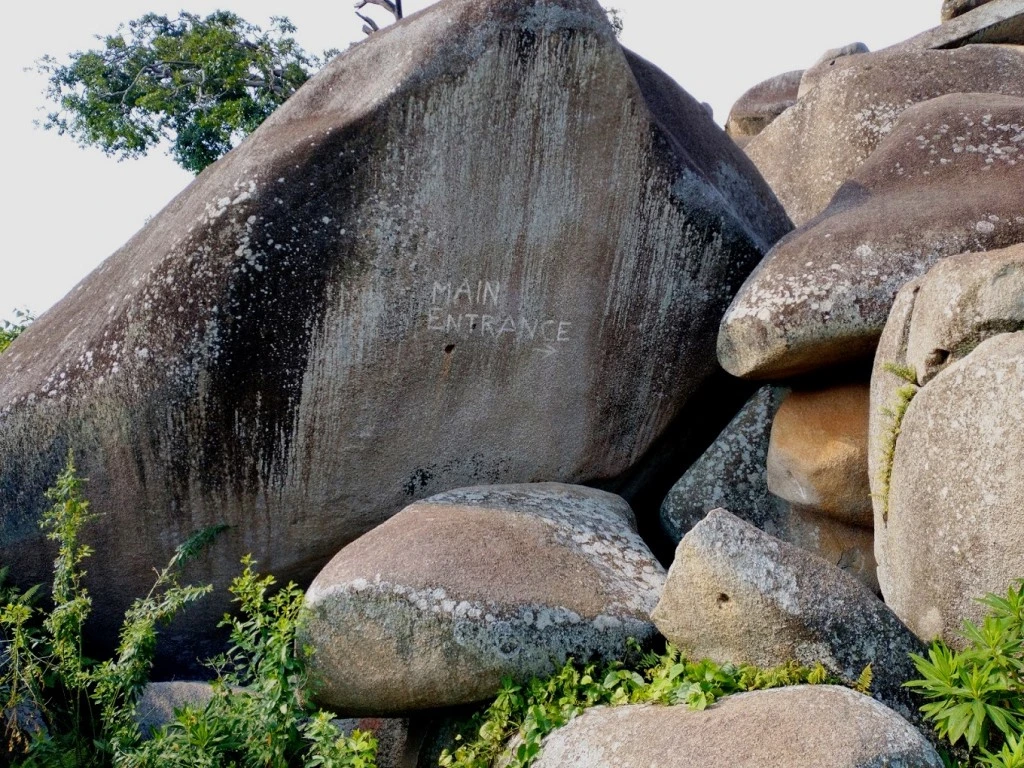
Hidden within the Maragoli Hills in Vihiga County, the Mungoma Caves—also known as Hango Humulogoli—stand as one of Kenya’s most sacred cultural and geological landmarks. Composed of enormous boulders naturally fused together, these caves form hollow, labyrinthine chambers that have, for centuries, served as the ancestral shrine of the Maragoli people. Their significance transcends mere physical wonder; they are revered as the birthplace of the Maragoli community, deeply intertwined with myth, identity, and spirituality.
According to legend, Mulogoli, the heroic founder of the Maragoli people, once lived in these caves, making them the eternal symbol of the tribe’s origin. For generations, the Mungoma Caves have remained a focal point of cultural rituals, storytelling, and ancestral veneration. Two traditional huts near the caves serve as sacred symbols of continuity and respect for this enduring heritage. Each December, the Maragoli Cultural Festival is held at the site, bringing together locals and visitors to celebrate their shared ancestry, folklore, and music, reinforcing the spiritual and historical bond with the land.
For visitors, the Mungoma Caves promise not just cultural insight but also an adventurous caving experience. The natural passageways—dark, winding, and echoing with mystery—can be explored over the course of about an hour. Travelers are advised to carry a spotlight or flashlight, as the caves’ interior is pitch-dark and can be disorienting for the faint-hearted. Nearby, the Givavei Caves offer an additional stop for those wishing to extend their exploration of Vihiga’s unique cave systems.
Surrounded by the rolling Maragoli Hills, the Mungoma Caves remain a place where myth meets geology, and where ancient oral traditions continue to live through ritual and remembrance. Their enduring reverence among the locals speaks not only to the spiritual depth of the Maragoli people but also to the profound relationship between nature, history, and human identity in Western Kenya.