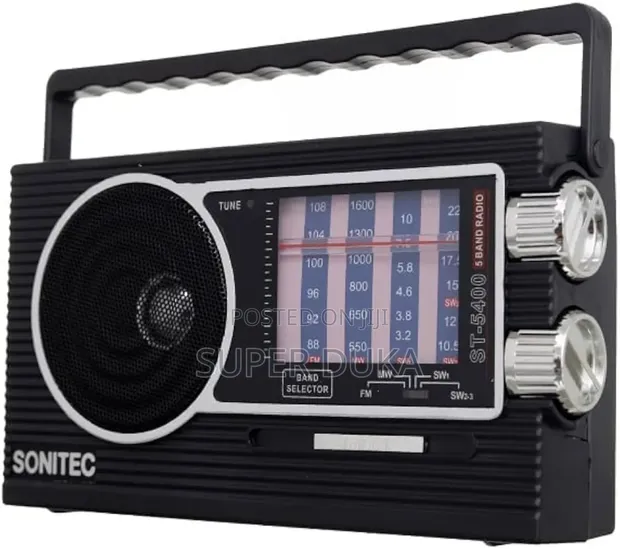
Radio continues to be the dominant form of media in Kenya, with an impressive 33 million people tuning in regularly, according to the latest Kenya Audience Tracker by Ipsos. Despite the rapid growth of digital media, radio remains at the forefront of communication in the country. The Ipsos survey, published on Thursday, revealed that while traditional radio stations such as Radio Citizen and Radio Jambo have historically led the industry, newer players like Radio 47 have begun to disrupt the airwaves, challenging the established dominance.
The survey highlighted the growing competition in Kenya’s radio sector, as both old and new stations compete for the attention of a rapidly evolving audience. Digital radio platforms, which combine both audio and visual content, have expanded the ways in which listeners engage with their favorite shows. The rise of platforms like Radio 47, known for its live streaming capabilities, has shifted the dynamics of the radio industry, as the younger generation embraces these tech-forward stations.
Radio Reach and Audience Share: The Power Struggles
In terms of listener reach, Radio Citizen, owned by Royal Media Services, took the top spot with a 9.1% market share. Radio Jambo followed closely with 3.8%, while the relatively new Radio 47 secured 3.7%. Despite being a vernacular station, Kameme Radio, targeting the Mt. Kenya region, also maintained a strong presence with a 2.6% reach. Other stations, including Inooro FM, Milele FM, Radio Maisha, and Ramogi FM, reported a more modest reach of around 2.1%.
When it comes to total listening time, measured by audience share, Radio Citizen continued to lead the pack with a 17.0% share of all radio listening time in the country. However, Radio 47 made a strong debut with 9.0%, highlighting its rapid growth since its inception. Radio Jambo, another industry stalwart, stood at 7.2%, showcasing its ongoing influence in the competitive radio landscape.
Kameme Radio, another popular station, posted a 5.7% share, followed by Milele FM and Ramogi FM, which each recorded a 4.7% share. Other notable stations like Chamgei FM and Radio Maisha held shares of 4.1% and 3.9%, respectively.
Rising Stars: The Impact of Newcomers Like Radio 47
The rise of Radio 47 has sparked much conversation in the industry, thanks to its innovative approach to content delivery. Known for integrating live streaming with audio-visual content, Radio 47 is a pioneer in the digital age of radio broadcasting in Kenya. Its appeal to younger audiences, combined with a strong lineup of shows and talent, has enabled it to challenge older, more established stations for market dominance.
The station has garnered attention not just for its innovative content but also for its aggressive talent hunt. By attracting top presenters and producing trendy shows, Radio 47 has gained momentum quickly, making it one of the most talked-about stations in the Kenyan radio scene.
Radio Listening Trends: Audience Habits and Regional Distribution
The survey also showed interesting insights into listening habits across different times of the day. Radio consumption peaks during breakfast and drive-time programming, with audiences tuning in during the early morning and evening hours. As the day progresses, listenership sharply declines, especially late at night.
Interestingly, the gender distribution of radio listeners in Kenya is nearly balanced, with women comprising 50.1% of the audience, just slightly ahead of the 49.9% of male listeners. However, there is a notable difference in the regional distribution of radio audiences. Rural areas remain the dominant zone for radio consumption, accounting for 65.4% of the total audience, compared to urban areas, which make up 34.6%.
The survey also provided a regional breakdown of listenership, revealing that Central Kenya leads with 18.4% of the total radio audience. Rift Valley follows with 14.9%, while Western Kenya recorded 13.5%. Nairobi, as the capital, accounted for 9.6%, and the Coast and Nyanza regions had shares of 8.9% and 3.9%, respectively.
Changing Radio Landscape: The Future of Radio in Kenya
As digital platforms continue to make waves in the media industry, the future of radio in Kenya seems to lie in the blend of traditional broadcasting with digital content. New stations like Radio 47 are embracing these innovations, offering content that is not only heard but also seen, attracting a younger, more tech-savvy audience. Meanwhile, established stations like Radio Citizen and Radio Jambo are having to evolve and compete with these newcomers while maintaining their loyal listeners.
The continued growth of radio listenership, especially in rural areas, highlights the enduring importance of radio as a tool for communication and entertainment in Kenya. It also underscores the need for both traditional and digital radio stations to adapt to changing audience preferences if they want to remain relevant in an increasingly digital world.