


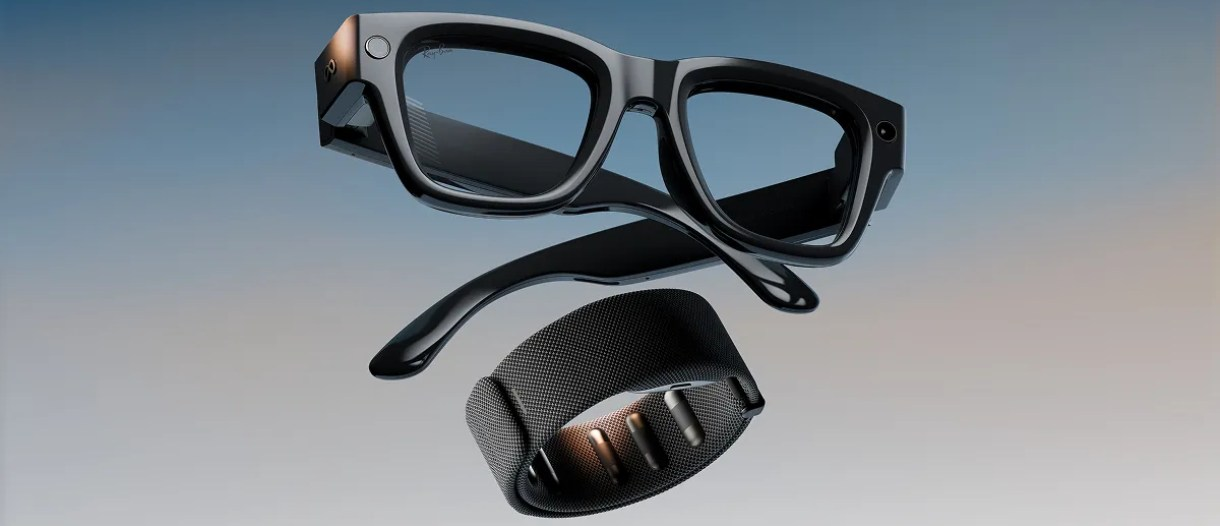
Meta has released one of the biggest software updates yet for its Ray-Ban Display smart glasses, introducing air gesture typing, expanded navigation tools and new developer access features that could significantly broaden the wearable platform’s capabilities.
The latest software rollout, known as Update 125, adds several major features to Meta’s flagship display-equipped Ray-Ban glasses, further positioning the device as one of the company’s most ambitious wearable computing projects.
Among the most notable additions is Neural Handwriting, a system that allows users to type messages through finger gestures on almost any surface using Meta’s Neural Band accessory.
Read Also: Apple Developing Smart Glasses to Rival Meta’s Ray-Ban
The update also introduces:
- Display recording
- Expanded Maps functionality
- Group video call support
- Improved messaging controls
- Third-party developer access
The release reflects Meta’s increasingly aggressive push into wearable computing and augmented reality ecosystems.
Neural Handwriting Expands Beyond Beta
One of the headline features in the Meta Ray-Ban Display update is the public rollout of Neural Handwriting.
The feature had previously been limited to beta testing inside:
- Messenger
It is now becoming available more broadly across:
- Messenger
- Smartphone notification interactions
How Neural Handwriting Works
The feature relies on the Neural Band accessory included with the $800 Ray-Ban Display glasses.
Using surface electromyography technology, commonly known as sEMG, the Neural Band can reportedly interpret subtle finger and muscle movements as users “write” letters across surfaces such as:
- Desks
- Palms
- Legs
- Tabletops
The system translates these movements into digital text input.
This effectively allows users to type messages without physically touching a keyboard or screen.
Meta Pushes Toward Hands-Free Computing
The Neural Handwriting system highlights Meta’s broader vision for wearable computing and human-device interaction.
Rather than relying entirely on traditional touchscreens or voice commands, Meta appears focused on creating more natural and discreet interaction systems.
The approach aligns closely with the company’s long-term augmented reality ambitions.
Potential Use Cases Include
- Silent messaging
- Notification replies
- Contact searches
- Wearable navigation
- Future AR productivity tools
If refined successfully, air gesture typing could become one of the most important user-interface developments in wearable technology.
Display Recording Feature Added
Update 125 also introduces display recording for the Meta Ray-Ban Display glasses.
The feature captures multiple data layers simultaneously, including:
- In-display visuals
- Camera point-of-view footage
- Surrounding environmental audio
This functionality could appeal strongly to:
- Content creators
- Travelers
- Streamers
- AR developers
- Lifestyle vloggers
The ability to record combined augmented-reality experiences may become increasingly important as wearable computing expands.
Read Also: Samsung’s First Smart Glasses Set to Launch Next Year
Maps and Navigation Receive Major Improvements
Meta also expanded navigation functionality within the Ray-Ban Display ecosystem.
New Features Include
Expanded Walking Directions
Navigation now reportedly supports the entire United States alongside major international cities including:
- London
- Paris
- Rome
Voice Navigation
Users can receive spoken directions directly through the wearable system.
Saved Locations
The glasses now support stored:
- Home locations
- Work locations
The improvements suggest Meta increasingly sees smart glasses as practical everyday navigation tools rather than experimental gadgets.
Messaging and Communication Upgrades
The update also expands communication functionality across Meta’s ecosystem.
WhatsApp Enhancements
WhatsApp now reportedly supports:
- Group video calls
- Phone call captions
Instagram Improvements
Instagram received upgraded:
- Reels navigation
- Direct message interaction
Facebook Widgets
Facebook integration now includes widgets for:
- Birthdays
- Sports updates
The additions reinforce Meta’s strategy of deeply integrating its social platforms into wearable experiences.
Third-Party Developer Access Opens New Possibilities
Perhaps the most strategically important announcement involves Meta officially opening the Ray-Ban Display ecosystem to third-party developers.
This move could dramatically expand what the glasses are capable of over time.
New Developer Tools
Meta introduced the Device Access Toolkit SDK for both:
- iOS
- Android
Developers can reportedly:
- Integrate glasses functionality into existing apps
- Build dedicated wearable applications
- Create WebApps optimized for smart glasses
The move mirrors strategies previously used by companies including:
- Apple
Opening the platform may prove essential for long-term ecosystem growth.
Early Community Experiments Already Emerging
According to reports, developers and enthusiasts have already started experimenting heavily with the Ray-Ban Display platform.
Early community projects reportedly include:
- YouTube playback
- Aviation tools
- Grocery list applications
- Transit navigation
- Wearable gaming experiences
These experiments hint at how quickly smart-glasses ecosystems could evolve once developer communities gain broader access.
Meta’s Wearable Ambitions Continue Expanding
The Meta Ray-Ban Display update reflects the company’s broader ambition to dominate the next generation of computing interfaces.
Meta has invested billions of dollars into:
- Augmented reality
- Virtual reality
- Wearable AI systems
- Spatial computing
Smart glasses increasingly appear central to that long-term strategy.
Unlike bulkier VR headsets, wearable glasses offer a more socially acceptable and mobile-friendly approach to everyday digital interaction.
Competition in the Smart Glasses Market Intensifies
Meta’s aggressive feature expansion comes as competition in wearable computing continues intensifying.
Major technology companies are increasingly investing in smart eyewear and AR systems.
Key Industry Competitors Include
- Apple
- Samsung
- Snap
The race centers on building practical, lightweight wearable interfaces capable of replacing or supplementing smartphones in the future.
Challenges Facing Smart Wearables
Despite rapid innovation, smart glasses still face several challenges.
Battery Life
Wearable devices remain constrained by power limitations.
Privacy Concerns
Camera-equipped glasses continue generating debate regarding surveillance and public privacy.
User Adoption
Many consumers still view smart glasses as niche or experimental products.
Cost
At approximately $800, the Meta Ray-Ban Display remains relatively expensive for mainstream consumers.
Meta’s challenge will be balancing innovation with affordability and practicality.
Why This Update Matters
The Meta Ray-Ban Display update matters because it represents a shift from simple wearable accessories toward more advanced ambient computing systems.
The addition of:
- Gesture typing
- Developer ecosystems
- Navigation systems
- Integrated communication
suggests Meta increasingly views smart glasses as future productivity and communication platforms rather than novelty devices.
If adoption grows, wearable computing could eventually reshape how users interact with digital information throughout daily life.
Final Thoughts
The latest Meta Ray-Ban Display update marks one of the most ambitious expansions yet for Meta’s smart glasses ecosystem.
The rollout of Neural Handwriting alone represents a significant leap toward hands-free and screen-free digital interaction, while expanded navigation, messaging and developer tools suggest Meta is building a much broader wearable computing platform.
By opening the ecosystem to third-party developers and enabling new forms of interaction, Meta appears determined to accelerate smart glasses beyond experimental hardware into practical everyday technology.
As wearable computing competition intensifies, updates like these could play a major role in determining which platforms shape the future of augmented reality and personal technology.


