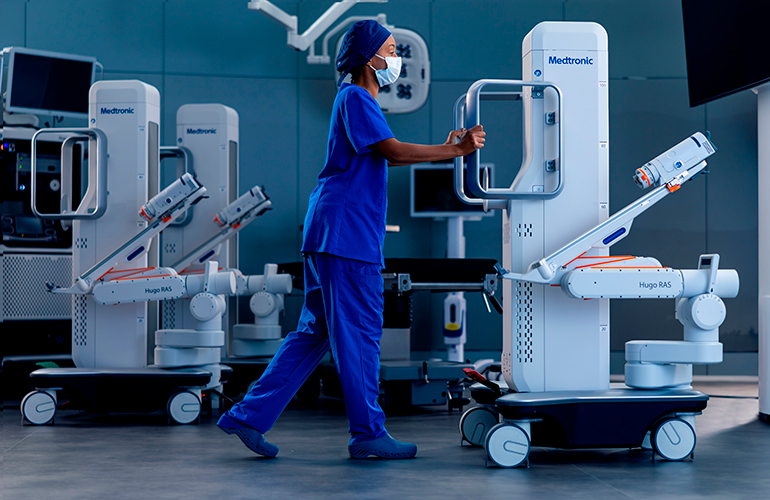
Medtronic acquisitions show how a global healthcare technology company used mergers and acquisitions to expand across medical devices, surgical tools, cardiac care, neuroscience, biotechnology, imaging, robotics, diagnostics, and minimally invasive treatment.
From 1998 to 2022, Medtronic completed 44 acquisitions with a total disclosed deal value of about $64.1 billion and an average disclosed deal size of roughly $1.5 billion. The company’s M&A activity has been heavily concentrated in health care, medical technology, and medical devices.
Health care accounts for 35 deals. Medical businesses account for 23. Medical device companies account for 18. Manufacturing and biotechnology also appear frequently, with 11 and 9 acquisitions respectively.
The largest acquisition in the record is Covidien, announced in 2014 for $42.9 billion. That deal transformed Medtronic’s scale and broadened its surgical, hospital, and medical products portfolio. In the 1998–2022 acquisition record, the latest listed acquisition is Affera, acquired in 2022 for $925.0 million, adding technology for cardiac arrhythmia treatment.
What Is Medtronic?
Medtronic is a healthcare technology company that designs and develops medical products and solutions for the healthcare industry. Its business spans medical devices, surgical technologies, cardiac care, neuromodulation, imaging, diagnostics, robotics, and other treatment platforms.
The company is best known for its role in medical technology rather than traditional pharmaceuticals. Its products and acquired technologies are used by physicians, hospitals, specialists, surgeons, and patients across many areas of care.
Medtronic’s acquisition record reflects the complexity of modern healthcare. The company has not focused on one narrow device category. Instead, it has acquired companies in cardiac rhythm management, structural heart, spine surgery, brain stimulation, surgical imaging, ENT therapy, catheter-based interventions, oncology-related technology, and minimally invasive procedures.
That strategy makes sense in medtech. Innovation often begins inside smaller specialist companies. A large healthcare technology group can acquire those companies, scale their products, support regulatory work, expand distribution, and integrate technologies into broader clinical platforms.
Why Medtronic Acquisitions Matter
Medtronic acquisitions matter because they show how medical technology companies stay competitive in a fast-changing healthcare market.
Medical device innovation is difficult. Products must be clinically useful, safe, reliable, regulated, and accepted by physicians. Building every new technology internally can take years. Acquisitions allow Medtronic to bring in specialist platforms, engineering teams, patents, clinical knowledge, and product pipelines faster.
The company’s M&A history also reveals where medtech value has been shifting. Cardiac care, surgical robotics, minimally invasive surgery, ENT therapy, neurostimulation, vascular intervention, and imaging all appear in the acquisition record. These are areas where technology can improve procedures, shorten recovery, support physicians, and create new treatment options.
Medtronic acquisitions also matter because of scale. The Covidien deal alone was valued at $42.9 billion, making it one of the most important transactions in medical device history. Other major deals, including Mazor Robotics, Intersect ENT, HeartWare, and Affera, show how Medtronic used M&A to expand into high-value clinical categories.
Full List of Medtronic Acquisitions
The table below summarizes key Medtronic acquisitions from the available 1998–2022 record.
| Acquiree | Announced Date | Price | Main Category | Strategic Value |
|---|---|---|---|---|
| Affera, Inc. | Jan 10, 2022 | $925.0M | Biotechnology / Cardiac Care | Adds technology for treating cardiac arrhythmia. |
| Intersect ENT | Aug 6, 2021 | $1.1B | Health Care / ENT | Expands therapy solutions for ear, nose, and throat physicians. |
| AV Medical | Oct 11, 2019 | $30.0M | Medical Device | Adds catheter-based intervention technology. |
| Mazor Robotics | Sep 20, 2018 | $1.7B | Surgical Robotics | Strengthens robotic-assisted spine surgery capabilities. |
| VisionSense | Apr 9, 2018 | $75.0M | 3D Visualization | Adds stereoscopic visualization for minimally invasive surgery. |
| HeartWare International | Jun 27, 2016 | $1.1B | Medical Device | Adds implantable heart pumps for advanced heart failure. |
| Smith & Nephew’s Gynecology Business | May 18, 2016 | $350.0M | Medical / Gynecology | Adds technology for removing abnormal uterine tissue. |
| Aircraft Medical | Nov 18, 2015 | $110.0M | Medical Device | Adds anaesthesia technology and specialist medical devices. |
| Lazarus Effect | Oct 1, 2015 | $100.0M | Medical Device | Adds interventional devices. |
| Medina | Aug 31, 2015 | $150.0M | Diagnostics | Adds laboratory analysis and diagnostics capability. |
| Twelve | Aug 25, 2015 | $458.0M | Medical Device | Adds medical device development capability. |
| RF Surgical Systems | Jul 13, 2015 | $235.0M | Surgical Safety | Adds retained surgical sponge detection and prevention solutions. |
| CardioInsight Technologies | Jun 20, 2015 | $93.0M | Cardiac Mapping | Adds non-invasive electrocardiographic mapping technology. |
| Aptus Endosystems | Jun 19, 2015 | $110.0M | Vascular Device | Adds EVAR technology for abdominal aortic aneurysm treatment. |
| NGC Medical SpA | Aug 27, 2014 | $350.0M | Medical Manufacturing | Adds medical and surgical device planning, manufacturing, and marketing capability. |
| Sapiens Steering Brain Stimulation | Aug 26, 2014 | $200.0M | Neuromodulation | Adds deep brain stimulation technology. |
| Visualase | Jul 28, 2014 | $105.0M | Biotechnology / Medical Device | Adds laser and MRI-guided technologies. |
| Covidien | Jun 15, 2014 | $42.9B | Health Care / Medical Products | Adds a global healthcare products platform. |
| Corventis | May 20, 2014 | $150.0M | Cardiac Monitoring | Adds technology for early cardiovascular detection. |
| TyRx | Jan 6, 2014 | $160.0M | Medical-Pharmaceutical Devices | Adds site-specific therapy and combination device capability. |
Medtronic Acquisitions Timeline
2014: A Transformational Year Led by Covidien
The year 2014 was the defining period in Medtronic’s acquisition history. The company announced the $42.9 billion acquisition of Covidien, a global healthcare products leader. That transaction changed the size, scope, and strategic profile of Medtronic.
Covidien expanded Medtronic’s presence in surgical products, hospital supplies, and broader healthcare technologies. It also gave the company a much larger global platform.
But Covidien was not the only important acquisition that year. Medtronic also acquired TyRx, Corventis, Visualase, Sapiens Steering Brain Stimulation, and NGC Medical SpA. These deals added technologies in surgical infection prevention, cardiovascular detection, MRI-guided laser therapy, deep brain stimulation, and medical device manufacturing.
Together, the 2014 acquisitions show Medtronic combining one transformational megadeal with several targeted technology acquisitions.
2015: Expanding Surgery, Cardiac Mapping, Vascular Care, and Diagnostics
In 2015, Medtronic completed several acquisitions across surgical safety, cardiac care, vascular treatment, diagnostics, anaesthesia, and interventional devices.
CardioInsight Technologies added non-invasive mapping of the heart’s electrical activity. Aptus Endosystems added EVAR technology for abdominal aortic aneurysm treatment. RF Surgical Systems added technology to detect and prevent retained surgical sponges. Twelve, Medina, Lazarus Effect, and Aircraft Medical added further medical device and diagnostic capabilities.
This year shows Medtronic’s preference for technology that supports procedural medicine. Many of these targets offered tools that could improve surgery, imaging, diagnosis, or catheter-based treatment.
2016: Heart Failure and Gynecology Expansion
In 2016, Medtronic acquired HeartWare International for $1.1 billion and Smith & Nephew’s gynecology business for $350.0 million.
HeartWare developed and manufactured small implantable heart pumps used for advanced heart failure. This deal gave Medtronic more exposure to mechanical circulatory support, a serious and complex area of cardiac care.
The Smith & Nephew gynecology business added Truclear, a product used to remove polyps, fibroids, and other abnormal tissue from the uterus. This acquisition expanded Medtronic’s presence in women’s health and gynecological procedures.
2018: Surgical Robotics and Visualization
In 2018, Medtronic acquired Mazor Robotics for $1.7 billion and VisionSense for $75.0 million.
Mazor Robotics was a major acquisition in spine surgery robotics. It gave Medtronic stronger positioning in robotic-assisted surgery and navigation. The deal reflected a broader medtech trend: surgeons increasingly use robotics, imaging, planning, and navigation systems to improve precision.
VisionSense added stereoscopic visualization technology for minimally invasive surgery. This complemented the surgical technology theme by improving how physicians see and operate during procedures.
2019: Catheter-Based Intervention
In 2019, Medtronic acquired AV Medical for $30.0 million. AV Medical developed catheter-based interventions.
Although smaller than Medtronic’s largest deals, AV Medical fit the company’s strategy in minimally invasive care. Catheter-based procedures are important because they can reduce the need for open surgery and support faster recovery.
2021: ENT Therapy With Intersect ENT
In 2021, Medtronic acquired Intersect ENT for $1.1 billion. Intersect ENT provided therapy solutions that help ear, nose, and throat physicians improve patient quality of life.
This acquisition expanded Medtronic’s presence in ENT care. It also showed how the company continued to target specialist therapy areas where medical devices can support procedural treatment and long-term patient outcomes.
2022: Cardiac Arrhythmia Technology With Affera
In 2022, Medtronic acquired Affera for $925.0 million. Affera developed innovative solutions for the treatment of cardiac arrhythmia.
The acquisition strengthened Medtronic’s cardiac ablation and electrophysiology strategy. Arrhythmia treatment is a major area of cardiac innovation because irregular heart rhythms can require advanced mapping, ablation, and device-based care.
Affera fits Medtronic’s long-running focus on cardiovascular technology and procedure-based treatment.
Biggest Medtronic Acquisitions by Deal Value
Medtronic’s largest acquisitions show where the company made its most significant strategic commitments.
| Rank | Acquiree | Announced Date | Deal Value | Strategic Area |
| 1 | Covidien | Jun 15, 2014 | $42.9B | Global healthcare products and surgical technologies |
| 2 | Mazor Robotics | Sep 20, 2018 | $1.7B | Spine surgery robotics |
| 3 | Intersect ENT | Aug 6, 2021 | $1.1B | ENT therapy solutions |
| 4 | HeartWare International | Jun 27, 2016 | $1.1B | Implantable heart pumps |
| 5 | Affera, Inc. | Jan 10, 2022 | $925.0M | Cardiac arrhythmia treatment |
| 6 | Twelve | Aug 25, 2015 | $458.0M | Medical devices |
| 7 | Smith & Nephew’s Gynecology Business | May 18, 2016 | $350.0M | Gynecology surgical technology |
| 8 | NGC Medical SpA | Aug 27, 2014 | $350.0M | Medical and surgical device manufacturing |
| 9 | RF Surgical Systems | Jul 13, 2015 | $235.0M | Surgical safety technology |
| 10 | Sapiens Steering Brain Stimulation | Aug 26, 2014 | $200.0M | Deep brain stimulation |
The ranking shows how much Covidien dominates Medtronic’s disclosed acquisition value. Still, the other large transactions matter because they show Medtronic’s targeted strategy in robotics, cardiac care, ENT therapy, heart failure, gynecology, and surgical safety.
Most Common Acquisition Categories
Medtronic acquisitions are heavily concentrated in healthcare, medical technology, medical devices, manufacturing, and biotechnology.
| Category | Number of Deals | Strategic Meaning |
| Health Care | 35 | Core operating market across clinical treatment, surgery, diagnostics, and patient care. |
| Medical | 23 | Reflects broad exposure to medical products, procedures, and healthcare tools. |
| Medical Device | 18 | Shows Medtronic’s central role as a medical device and medtech company. |
| Manufacturing | 11 | Adds production, device manufacturing, and engineering capability. |
| Biotechnology | 9 | Adds innovation in therapy, diagnostics, and advanced medical platforms. |
This category mix shows a disciplined medtech strategy. Medtronic has stayed close to its core while expanding into adjacent clinical specialties and advanced procedure technologies.
Strategic Lessons From Medtronic Acquisitions
Megadeals Can Transform Scale
The Covidien acquisition shows how one transaction can reshape a company. At $42.9 billion, it gave Medtronic much broader exposure to global healthcare products and surgical technologies.
Megadeals can create scale, but they also bring integration risk. They require careful execution, cultural alignment, supply chain management, and portfolio discipline.
Smaller Technology Deals Can Build Innovation
Many Medtronic acquisitions were much smaller than Covidien but still strategically important. CardioInsight, Visualase, TyRx, RF Surgical Systems, AV Medical, and VisionSense all added specific technologies.
These deals show how targeted acquisitions can fill innovation gaps and strengthen product pipelines.
Cardiac Care Remains Central
Affera, HeartWare, CardioInsight, Corventis, and several other deals point to the importance of cardiovascular care in Medtronic’s acquisition strategy.
Cardiac medicine is a high-value area because it combines large patient need, advanced devices, specialist physicians, and continuous innovation.
How Medtronic Acquisitions Fit Its Business Model
Medtronic’s business model depends on healthcare technology innovation, medical device development, clinical adoption, regulatory execution, and global distribution. Acquisitions fit this model because they allow the company to add technologies that can be scaled across its commercial infrastructure.
A smaller medical technology company may have a promising product but limited distribution. Medtronic can potentially bring that product to more hospitals, physicians, and markets. It can also support regulatory work, manufacturing, physician training, and clinical integration.
The company’s acquisition record shows several strategic pathways. Some deals added entire platforms, such as Covidien. Others expanded therapeutic areas, such as Intersect ENT and Smith & Nephew’s gynecology business. Others added specific technologies, such as VisionSense, CardioInsight, and RF Surgical Systems.
Together, these acquisitions helped Medtronic build a broad healthcare technology portfolio across many medical specialties.
Financial and Ownership Context
Medtronic completed 44 acquisitions from 1998 to 2022. Total disclosed deal value was about $64.1 billion, with an average disclosed deal size of approximately $1.5 billion.
That average is heavily influenced by Covidien. Without the $42.9 billion Covidien transaction, the rest of the acquisition record would look far more like a series of targeted medical technology deals.
This distinction matters. Medtronic’s acquisition strategy includes both megadeals and tuck-in acquisitions. Megadeals can transform the company’s structure. Tuck-in acquisitions can strengthen specific clinical categories.
The company’s deal history also shows a willingness to pay meaningful prices for companies that fit strategic growth areas. Mazor Robotics, Intersect ENT, HeartWare, and Affera were all large transactions that expanded Medtronic in important medtech markets.
Competitive Impact of Medtronic Acquisitions
Medtronic acquisitions strengthened the company’s competitive position by expanding its product portfolio and deepening its presence in high-value medical specialties.
The Covidien deal expanded Medtronic’s global scale and surgical products footprint. Mazor Robotics strengthened its position in robotic-assisted spine surgery. Affera expanded cardiac arrhythmia treatment capabilities. Intersect ENT added ENT therapy solutions. HeartWare added heart failure technology.
These acquisitions also helped Medtronic compete with other global medical device companies. In medtech, competition often depends on technology, clinical evidence, physician relationships, regulatory approvals, and product breadth.
By acquiring specialist technologies, Medtronic can compete across more procedure categories. It can also offer more integrated solutions to hospitals and physicians.
However, competition remains intense. Medical device companies face pricing pressure, regulatory scrutiny, reimbursement challenges, and constant innovation cycles.
Advantages of the Acquisition Strategy
Broader Clinical Portfolio
Medtronic acquisitions expanded the company across surgery, cardiac care, ENT, gynecology, neuroscience, imaging, diagnostics, robotics, and vascular intervention.
Faster Access to Innovation
Acquisitions help Medtronic access technologies developed by smaller specialist companies without waiting for internal development alone.
Stronger Physician Relationships
A broader product portfolio can deepen relationships with surgeons, cardiologists, ENT specialists, neurologists, and other physicians.
Global Scale
Large acquisitions such as Covidien strengthened Medtronic’s global presence and product reach.
Better Positioning in Procedure-Based Medicine
Many deals support minimally invasive, robotic, catheter-based, or imaging-guided procedures. These areas are central to modern medtech growth.
Disadvantages of the Acquisition Strategy
Integration Risk
Medical technology acquisitions require integration of teams, factories, product lines, regulatory systems, sales channels, and clinical education.
Regulatory Risk
Medical devices face regulatory review. Delays, safety concerns, or clinical issues can reduce the value of an acquisition.
High Valuation Risk
Medtech companies with strong technology can be expensive. If adoption disappoints, returns may fall short.
Portfolio Complexity
A large and diverse medical device portfolio can become difficult to manage. Medtronic must balance investment across many clinical areas.
Reimbursement Pressure
Even good medical technologies can struggle if reimbursement is limited or if hospitals face cost pressure.
Case Studies of Major Medtronic Acquisitions
Covidien
Covidien was Medtronic’s largest acquisition, valued at $42.9 billion. It was a global healthcare products leader and gave Medtronic a much broader medical products and surgical technology platform.
This deal changed the scale of Medtronic’s business. It expanded the company’s reach in hospitals and surgical settings and remains the central transaction in Medtronic’s acquisition history.
Mazor Robotics
Mazor Robotics was acquired for $1.7 billion in 2018. The company was a spine surgery innovator focused on creating safer surgical environments for patients, surgeons, and operating room staff.
The acquisition strengthened Medtronic’s position in robotic-assisted surgery. It also showed the growing importance of navigation, planning, and robotics in medtech.
Affera
Affera was acquired for $925.0 million in 2022. The company developed technology for treating cardiac arrhythmia.
This acquisition strengthened Medtronic’s electrophysiology and cardiac ablation strategy. It fits the company’s long-term focus on cardiovascular care and advanced procedure technologies.
Intersect ENT
Intersect ENT was acquired for $1.1 billion in 2021. The company provided therapy solutions for ENT physicians.
This acquisition expanded Medtronic’s ENT portfolio and gave it access to products designed to improve quality of life for patients with ear, nose, and throat conditions.
HeartWare International
HeartWare International was acquired for $1.1 billion in 2016. The company developed and manufactured small implantable heart pumps for advanced heart failure.
This acquisition expanded Medtronic’s presence in mechanical circulatory support and advanced cardiac care.
Common Mistakes When Analyzing Medtronic Acquisitions
Looking Only at Covidien
Covidien was the largest deal, but it does not explain the entire strategy. Medtronic’s acquisition record also includes robotics, cardiac mapping, ENT therapy, gynecology, surgical safety, and neuromodulation.
Treating Every Deal as Equal
Some acquisitions were transformational. Others were technology tuck-ins. Analysts should separate platform deals from smaller capability-building transactions.
Ignoring Clinical Fit
A medtech acquisition should be judged by clinical relevance, physician adoption, regulatory path, and patient impact, not only deal value.
Underestimating Integration Challenges
Medical technology integration is complex. Sales teams, manufacturing, training, regulatory systems, and clinical evidence must all align.
Confusing Innovation With Commercial Success
A promising device is not automatically a successful product. It must be adopted by physicians, reimbursed, manufactured reliably, and accepted by health systems.
Lessons for Business Owners and Investors
Medtronic’s acquisition history offers several lessons.
First, focused M&A can strengthen an innovation pipeline. Medtronic repeatedly acquired companies that added specific medical technologies.
Second, megadeals can transform scale, but they require disciplined integration. Covidien gave Medtronic broader reach, but large transactions always carry execution risk.
Third, specialist clinical categories matter. Cardiac care, surgery, robotics, ENT, neuromodulation, and imaging all require deep expertise.
Fourth, medtech value depends on evidence and adoption. A device must solve real clinical problems and fit physician workflows.
Finally, the best acquisition strategies combine scale with precision. Medtronic used both large platform deals and smaller targeted acquisitions to build its healthcare technology portfolio.
Key Takeaways
- Medtronic completed 44 acquisitions from 1998 to 2022.
- Total disclosed deal value was about $64.1 billion.
- The average disclosed acquisition size was approximately $1.5 billion.
- Health care was the leading category, with 35 deals.
- Medical businesses accounted for 23 acquisitions.
- Medical device companies accounted for 18 acquisitions.
- The largest listed acquisition was Covidien at $42.9 billion.
- In the 1998–2022 acquisition record, the latest listed acquisition was Affera in 2022 for $925.0 million.
- Medtronic’s acquisition strategy focuses on medical devices, surgery, cardiac care, robotics, biotechnology, neuroscience, imaging, and minimally invasive treatment.
- Major deals include Covidien, Mazor Robotics, Intersect ENT, HeartWare, and Affera.
- Key risks include integration complexity, regulation, valuation, reimbursement pressure, and clinical adoption.
- Medtronic acquisitions show how medtech companies use M&A to access innovation and expand clinical platforms.
Frequently Asked Questions
What are Medtronic acquisitions?
Medtronic acquisitions are companies or business units acquired by Medtronic to expand its healthcare technology, medical device, surgical, cardiac, biotechnology, and medical product portfolio.
How many acquisitions has Medtronic made?
Medtronic has made 44 acquisitions across the 1998–2022 acquisition record.
What is the total value of Medtronic acquisitions?
The total disclosed value of Medtronic acquisitions is about $64.1 billion.
What is Medtronic’s average acquisition size?
Medtronic’s average disclosed acquisition size is approximately $1.5 billion.
What was Medtronic’s largest acquisition?
Medtronic’s largest listed acquisition was Covidien, announced in 2014 for $42.9 billion.
What was the latest listed acquisition in the 1998–2022 record?
The latest listed acquisition in the 1998–2022 record was Affera, acquired in 2022 for $925.0 million.
Why did Medtronic acquire Covidien?
Medtronic acquired Covidien to expand its global healthcare products platform, strengthen its surgical technologies, and increase its scale in hospitals and medical products.
Why did Medtronic acquire Mazor Robotics?
Medtronic acquired Mazor Robotics to strengthen its position in robotic-assisted spine surgery and surgical navigation.
Which sectors dominate Medtronic acquisitions?
Medtronic acquisitions are dominated by health care, medical products, medical devices, manufacturing, and biotechnology.
What are the risks of Medtronic’s acquisition strategy?
The main risks include integration challenges, regulatory delays, reimbursement pressure, high valuations, product adoption uncertainty, and portfolio complexity.
Conclusion
Medtronic acquisitions show how a global healthcare technology company can use M&A to build scale, access innovation, and expand across medical specialties. From 1998 to 2022, Medtronic completed 44 acquisitions with total disclosed deal value of about $64.1 billion. Its acquisition strategy focused heavily on health care, medical technology, medical devices, manufacturing, biotechnology, cardiac care, surgery, robotics, and minimally invasive treatment.
The Covidien acquisition transformed Medtronic’s size and global reach. Mazor Robotics strengthened surgical robotics. HeartWare expanded advanced heart failure technology. Intersect ENT added ENT therapy solutions. Affera strengthened cardiac arrhythmia treatment.
For business owners, investors, and healthcare analysts, Medtronic acquisitions offer a clear lesson: medical technology growth depends on both innovation and execution. Acquiring a promising device company is only the start. The real value comes from regulatory success, physician adoption, manufacturing quality, clinical evidence, and the ability to bring better treatment options to more patients.
Disclaimer: This article is for informational and educational purposes only. It is not investment advice, financial advice, or a recommendation to buy or sell any security. Always conduct your own research and consider speaking with a qualified financial adviser before making investment decisions.
Read Also: McKesson Acquisitions: How McKesson Built Its Business Through M&A