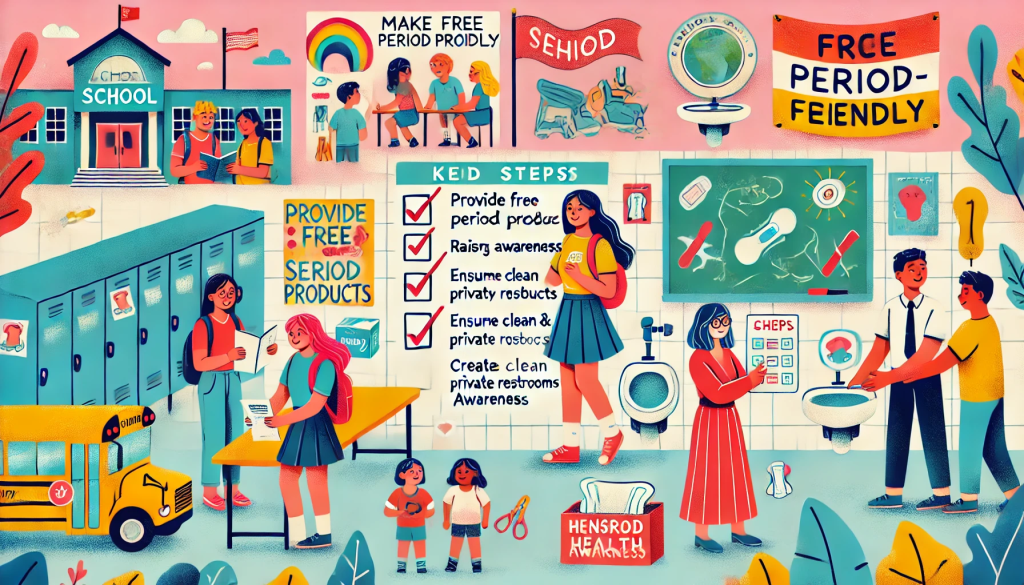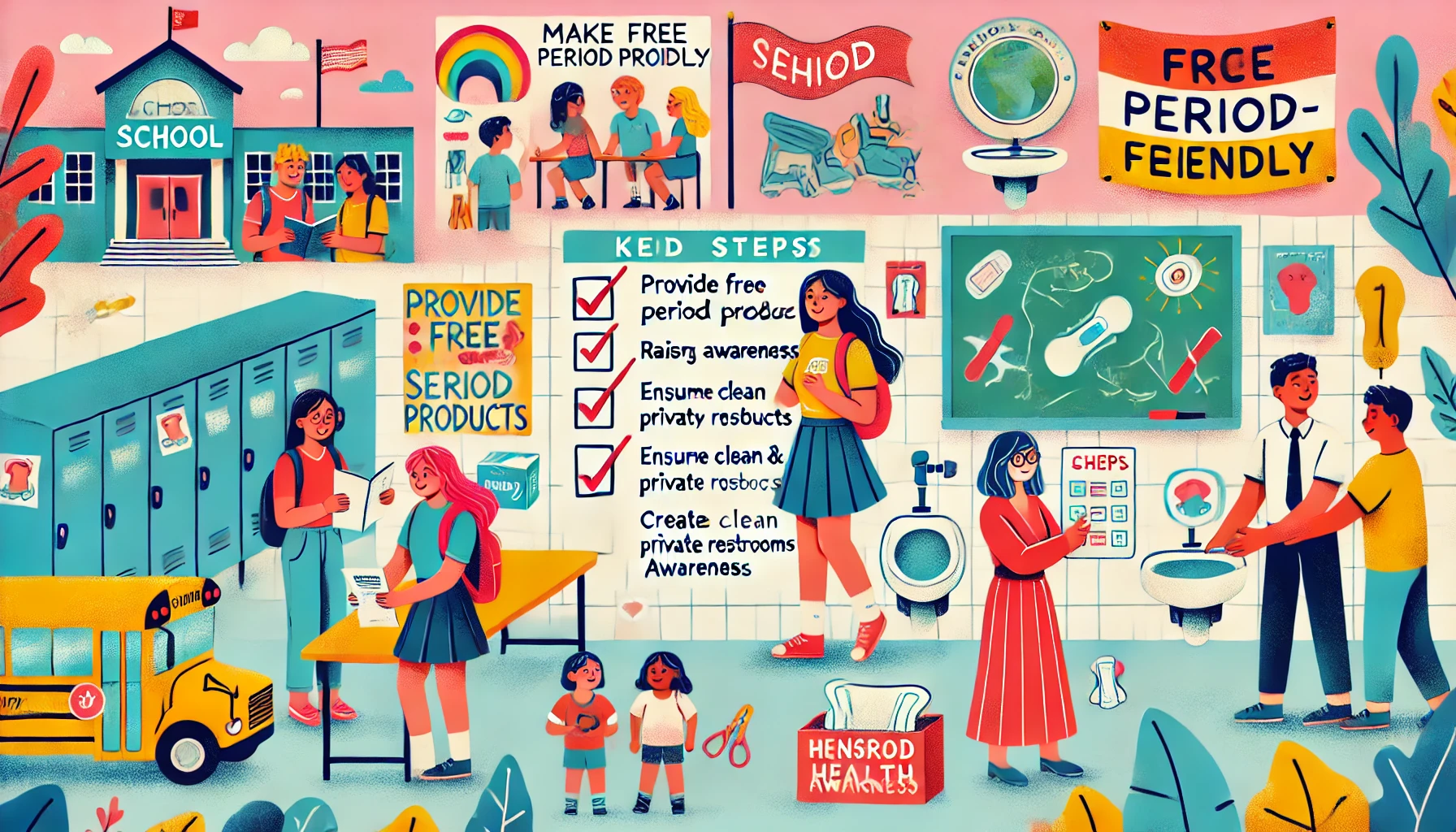
Help make your school a better place for students who menstruate! Learn how to implement period-friendly policies, improve restroom access, provide free period products, and advocate for better menstrual education.
🔴 Introduction: Why Schools Must Be Period-Friendly
Dealing with periods in school can be challenging due to restricted restroom access, lack of period products, and stigma. However, by implementing period-friendly policies, students, teachers, and parents can create a supportive environment where menstruation is not a barrier to education.
This guide provides practical steps for making schools more inclusive and supportive for students who menstruate.
📜 Part 1: Implementing Period-Friendly Policies
✔ 1. Provide Free Period Products
📌 Not everyone can afford period products. Having free supplies in restrooms helps prevent period poverty and ensures no student is held back due to lack of access.
📌 Where to place period products:
✅ All student restrooms, including boys’ restrooms (for trans students who menstruate)
✅ Staff and disabled restrooms
✅ School office, nurse’s office, and guidance counselor’s office
📌 Include a variety of products, such as:
- Pads
- Tampons
- Menstrual cups
- Reusable cloth pads
📌 Ensure that restrooms have sanitary bins to properly dispose of used products.
✔ 2. Improve Restroom Access
📌 Students must be allowed to use the restroom when needed. Preventing restroom use can cause leakage, discomfort, and health risks such as toxic shock syndrome (TSS) from prolonged tampon use.
📌 What to advocate for:
✅ Open restrooms at all times
✅ A bathroom pass system that allows students to leave class when needed
✅ More restrooms if your school has too few
✔ 3. Educate Everyone About Menstruation
📌 Many students start their periods without proper education, which can be stressful and confusing.
📌 What to advocate for:
✅ Teaching everyone, not just menstruating students, about periods
✅ Using correct terms (avoid phrases like “Aunt Flo” and “that time of the month”)
✅ Allowing students to ask anonymous questions about menstruation
📌 Why education matters:
- Reduces stigma by normalizing conversations about periods
- Helps students support their peers
- Ensures that menstruating students understand their bodies and available period care options
✔ 4. Train Teachers & Staff on Menstruation
📌 Many teachers lack knowledge about periods and don’t know how to support students who are struggling with cramps, period-related fatigue, or menstrual disorders.
📌 Staff training should include:
✅ Understanding period symptoms (cramps, nausea, fatigue, mood swings)
✅ Learning about menstrual disorders like endometriosis and PMDD
✅ Offering deadline extensions when students are struggling with severe symptoms
✔ 5. Make Physical Education (PE) Period-Friendly
📌 PE can be difficult for menstruating students, especially those who experience severe cramps or fatigue.
📌 What to advocate for:
✅ Let students sit out of PE if they’re feeling unwell
✅ Avoid shaming students who don’t want to participate in swimming
✅ Educate PE teachers about how periods affect exercise performance
📌 Why it’s important:
Some teachers belittle students who sit out, saying it’s “just an excuse.” Educating them will help create a more supportive and understanding school environment.
✔ 6. Publish Clear Menstrual Policies
📌 Schools should have written policies so that:
✅ Students know their rights (e.g., restroom access, free products, teacher support)
✅ The school can be held accountable if they fail to meet these policies
📌 These policies should be open to updates and improvements based on student feedback.
📣 Part 2: Getting Your School to Listen
✔ 1. Speak to Your Head Teacher
📌 Request a meeting with the principal, deputy head, or school administrators to present the need for period-friendly policies.
📌 What to bring:
✅ Statistics on period poverty (e.g., 1 in 4 students struggles to afford period products)
✅ A list of reasonable changes (free products, better restroom access, staff training)
✅ Testimonials from students about their struggles with periods in school
📌 Alternative: If the head teacher is too busy, email or write a letter.
✔ 2. Start a Petition
📌 Petitions show that many students support period-friendly policies.
📌 How to create a strong petition:
✅ Clearly state what you are demanding
✅ Collect signatures from students, parents, and staff
✅ Use an online petition site (like Change.org) or a paper petition
📌 Why it works: Schools pay attention when a large number of students demand change.
✔ 3. Raise Awareness with Posters & Flyers
📌 Posters and flyers help educate students and staff about why period-friendly policies are important.
📌 Tips for effective posters:
✅ Use clear, bold text with important facts
✅ Keep it positive! Focus on solutions rather than just problems
✅ Hang them in high-traffic areas (hallways, restrooms, bulletin boards)
📌 Alternative: Use chalk messages to spread awareness on school grounds.
✔ 4. Join the Student Council
📌 If your school has a student council, join it to propose period-friendly policies.
📌 Not on the student council?
✅ You can still share your ideas with student representatives
✅ Ask them to bring up the issue in school meetings
📌 Why it works: Student councils have influence over school rules and policies.
✔ 5. Organize a Protest
📌 If your school ignores requests for change, a peaceful protest can bring attention to the issue.
📌 How to organize a protest:
✅ Plan ahead: Choose a time, place, and reason for the protest
✅ Make signs with clear messages
✅ Encourage students to walk out of class (if safe to do so)
📌 Important:
🚨 Protesting may get you in trouble—but the more people involved, the stronger the impact.
🚨 Stay peaceful! No violence or vandalism—focus on spreading awareness.
✔ 6. Get Teachers & Parents Involved
📌 Many teachers and parents support period-friendly policies.
📌 How they can help:
✅ Teachers can pressure the school administration to take action
✅ Parents can call or email the principal and school board to demand change
✅ Parent councils can bring up the issue at school meetings
📌 Why it works: Schools listen to parents and staff more than students alone.
✔ 7. Push for a Legal Change
📌 Want to make ALL schools period-friendly? Advocate for laws requiring schools to:
✅ Provide free period products
✅ Allow restroom access during class
✅ Teach comprehensive menstrual education
📌 Ways to push for legal change:
✅ Contact local politicians (council members, state representatives)
✅ Organize community events and protests
✅ Start an online campaign
🎯 Conclusion: Take Action Today!
Schools should support all students—and that includes those who menstruate.
✅ Provide free period products
✅ Ensure restroom access
✅ Teach menstruation in schools
✅ Get teachers and parents involved
✅ Advocate for legal change
Even small steps can lead to big improvements. Start today and help make your school period-friendly for everyone! 🔴💪