


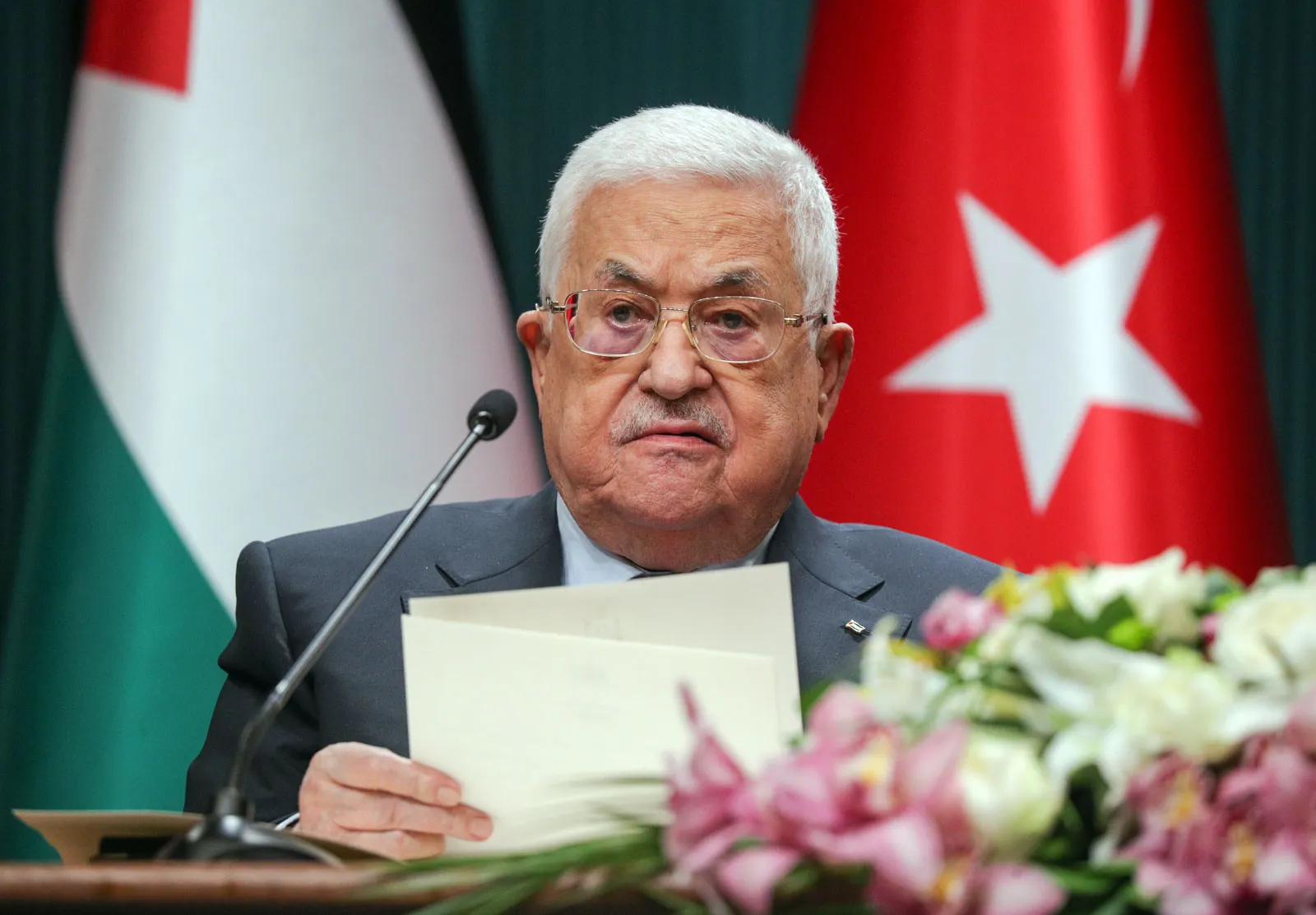
Mahmoud Abbas, also known as Abu Mazen, was born in 1935 in Safed, Palestine, then under British mandate. His family fled to Syria during the 1948 Arab-Israeli War, joining the wave of Palestinian refugees displaced by the conflict. Despite his refugee background, Abbas pursued higher education, earning a law degree from the University of Damascus.
During the 1950s, he worked in Qatar’s civil service, where he began building networks among Palestinian exiles. His organizational skill and political awareness drew the attention of Yasser Arafat, who recruited him into Fatah in 1961.
Abbas continued his intellectual pursuits, earning a doctorate in history from the Institute of Oriental Studies in Moscow in 1982. His dissertation, which explored links between Nazism and Zionism, later sparked controversy for alleged Holocaust revisionism.
Rise in the Palestinian National Movement
As one of the founding members of Fatah, Abbas played a critical role in shaping the Palestine Liberation Organization (PLO). By the late 1970s, he headed the PLO’s international relations department, forging connections with Israeli peace groups and international actors.
His diplomatic skills became vital during the Madrid Conference (1991) and the Oslo negotiations (1993), where he was a key architect of the Oslo Accords. This agreement established limited Palestinian self-rule in parts of the West Bank and Gaza Strip and laid the foundation for the two-state solution framework.
Abbas was also part of the Camp David talks in 2000, where he emphasized diplomacy over violence. He opposed the Second Intifada (2000–2005), calling instead for non-violent resistance and institution-building.
Role as Prime Minister
In 2003, amid international pressure to reform Palestinian governance, Abbas was appointed prime minister of the Palestinian Authority (PA), with the goal of balancing Arafat’s leadership. As prime minister, he denounced terrorism, advocated for ending the intifada, and sought to unify Palestinian security forces.
However, his tenure was brief. Facing resistance from Arafat and criticism from both Israel and the United States, Abbas resigned after just a few months, citing a lack of authority to enact meaningful change.
Presidency of the Palestinian Authority
Following Yasser Arafat’s death in 2004, Abbas was chosen as chairman of the PLO and in January 2005 won the Palestinian Authority presidency with more than 60% of the vote. His term was constitutionally four years, but repeated election delays extended his presidency well beyond its mandate.
Abbas initially sought to advance the peace process, engaging in direct talks with Israeli leaders, including Ehud Olmert and Benjamin Netanyahu. He also cultivated relations with U.S. presidents George W. Bush, Barack Obama, and later Donald Trump and Joe Biden, though progress remained limited.
Divisions with Hamas
Abbas faced one of his greatest challenges in 2006, when Hamas won a majority in Palestinian legislative elections. Tensions between Hamas and Fatah escalated into violent clashes, culminating in Hamas seizing control of Gaza in 2007. Abbas dismissed the Hamas-led government and consolidated his authority in the West Bank, ruling primarily by presidential decree.
While Abbas pursued reconciliation efforts, repeated agreements with Hamas collapsed, leaving Palestine politically fragmented between Hamas in Gaza and Fatah in the West Bank. His policies toward Gaza, including sanctions and cooperation with Israeli and Egyptian blockades, drew criticism from Palestinians who accused him of deepening divisions.
International Strategy and UN Recognition
With peace talks faltering, Abbas turned to international diplomacy to advance Palestinian statehood. In 2011, he formally requested UN membership for Palestine. Although blocked at the Security Council, he achieved success in 2012, when the UN General Assembly recognized Palestine as a “nonmember observer state.”
This symbolic victory gave Palestine access to international institutions, including the International Criminal Court (2015), allowing Palestinians to pursue legal action against Israeli policies.
In 2015, Abbas declared that Israel’s actions had voided the Oslo framework, though he stopped short of dissolving the PA. His relations with the United States soured further under the Trump administration, especially after the U.S. recognized Jerusalem as Israel’s capital in 2017. Abbas cut ties with Washington and rejected Trump’s proposed “deal of the century.”
Under Joe Biden, Abbas sought to restore ties, benefiting from renewed U.S. aid and promises to reopen the PLO’s Washington office. However, elections planned for 2021 were indefinitely postponed, fueling public discontent.
Leadership Style and Criticism
Abbas has often been criticized as authoritarian, particularly after 2009, when his presidential term formally expired. He continued ruling by decree, citing constitutional provisions and repeated election delays. His government has faced accusations of suppressing dissent, restricting journalists, and curtailing freedoms in the West Bank.
Despite criticism, Abbas remained committed to the two-state solution, opposing violence while advocating diplomacy. His pragmatic, moderate approach earned him international recognition, though it also alienated some Palestinians who saw him as ineffective against Israel and detached from grassroots struggles.
Legacy
As of 2025, Abbas remains the president of the Palestinian Authority and head of Fatah and the PLO, making him one of the longest-serving Palestinian leaders. At 90 years old, his career reflects the trajectory of modern Palestinian politics: exile, armed struggle, diplomacy, and state-building.
Supporters hail him as a statesman of peace, who kept alive the vision of a Palestinian state despite setbacks. Critics argue he has presided over political stagnation, authoritarian governance, and divisions that weakened Palestinian unity.
Abbas’s legacy will likely be defined by his dual role as an architect of Oslo and as a leader unable to achieve final peace or independence. His long tenure symbolizes both the persistence of the Palestinian cause and the unresolved challenges of Middle Eastern diplomacy.


