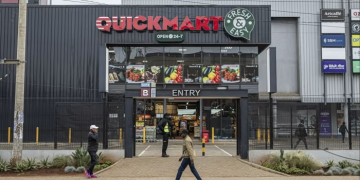
Magunas Supermarket has grown from a small retail operation in Murang’a into one of Kenya’s best-known homegrown regional supermarket chains.
The privately owned business serves customers across central Kenya and has expanded into major urban markets, including Nairobi, Nakuru, Kitui and Meru. Its development reflects the continued role of locally controlled retailers in a market increasingly dominated by larger national and international chains.
The company’s official website also operates an online store offering groceries and other household products to Kenyan consumers.
Magunas Supermarket Grew From a Small Murang’a Shop
The supermarket chain traces its roots to businessman Simon Wachira, who began trading as a hawker in Murang’a before opening a retail shop around 1990.
Wachira later developed the operation into Maguna Andu Wholesalers, which supplied consumer goods across the Mt. Kenya region. The wholesale business helped establish relationships with retailers and manufacturers before the company expanded further into supermarkets.
Kenyan media accounts describe the first shop as having opened in Mukuyu, also commonly written as Makuyu, in Murang’a County. The business then moved into wholesale distribution and eventually established multiple supermarket locations.
The name “Maguna Andu” is associated with the idea of benefiting or serving people. That identity has supported the company’s positioning as an accessible neighborhood retailer rather than a premium grocery chain.
Regional Expansion Created a Strong Mt. Kenya Base
Magunas Supermarket built its strongest presence in towns across the Mt. Kenya region before expanding into Nairobi and other markets.
The supplied company profile lists more than 24 branches, although a complete and independently verified current branch count was not available on the public pages reviewed. The retailer’s network has included stores in Murang’a, Thika, Kahawa Wendani, Utawala, Ngong, Nakuru, Kitui and Meru.
Its Utawala location has been listed as operating around the clock, while the Kahawa Wendani store generally operates from 8 a.m. to 9 p.m. Branch hours can differ by location, making it advisable for customers to confirm operating times before visiting.
The expansion strategy has allowed Magunas to compete in communities where convenience, pricing and proximity can matter more than the scale of a retailer’s national footprint.
Unlike supermarket chains that focus primarily on large shopping malls, regional retailers can establish stores in town centers, residential districts and transport hubs where customers make frequent household purchases.
Retail and Wholesale Operations Support the Business
Magunas sells groceries, fresh produce, dry foods, cleaning supplies, household products and selected electronics.
The company also accepts common payment methods used in Kenya, including cash, cards and mobile payments. Its website provides an additional digital shopping channel, although product availability and delivery coverage may depend on location.
The business’s roots in wholesale distribution remain important. Maguna Andu Wholesalers reportedly developed into a major regional distributor for established consumer brands, giving the wider group experience in procurement, inventory management and merchant relationships.
That combination of wholesale and retail operations can help a supermarket group manage product supply while serving both individual shoppers and smaller businesses.
However, regional retailers still face intense pressure from larger competitors with more capital, broader supplier networks and stronger digital infrastructure.
Magunas Competes in a Crowded Retail Market
Kenya’s formal grocery market includes large chains such as Naivas, Quickmart and Carrefour, alongside regional businesses and thousands of independent shops.
Magunas Supermarket competes by focusing on affordability, accessibility and strong recognition in central Kenya. Its local ownership may also strengthen customer loyalty in towns where the brand has operated for years.
Still, supermarket operations remain capital-intensive. Retailers must manage rent, electricity, staffing, inventory losses, supplier payments and rapidly changing consumer demand.
Expansion can also create operational risks. A larger branch network requires tighter inventory controls, consistent customer service and reliable supply systems across multiple counties.
For Magunas, the challenge is to preserve its regional identity while adopting the technology and operational standards needed to compete with national chains.
Meru Store Was Destroyed During 2025 Protests
The company suffered a major setback on July 7, 2025, when its supermarket in Makutano, Meru County, was looted and set on fire during the Saba Saba demonstrations.
Reports said groups broke into businesses after overwhelming police officers deployed in the area. Magunas was among the commercial properties damaged during the unrest.
The supplied business profile says the store supported about 300 jobs and that reconstruction was expected to cost more than KSh25 million. Those figures could not be independently confirmed from an official company statement in the sources reviewed.
Reports published in the weeks after the fire showed that renovation work had started and that the business intended to resume operations. Images later circulated showing a rebuilt or renovated outlet, although customers should confirm the branch’s current operating status directly with the company before visiting.
The incident illustrated the wider economic effect of civil unrest on retailers, workers, suppliers and surrounding businesses. When a large store closes, the disruption extends beyond lost merchandise to employment, local distribution and access to essential goods.
Simon Wachira Expanded Beyond Supermarkets
Wachira has also invested in hospitality and real estate.
Media reports identify him as the owner of Nokras Riverine Hotel and Kilele Mall in Kenol. These investments indicate a broader diversification strategy beyond food retail and wholesale distribution.
Diversification can help a business owner spread risk across different industries. However, hotels, malls and supermarkets each require substantial operating capital and careful management, particularly during periods of weaker consumer spending.
What to Watch Next
The next phase for Magunas Supermarket will depend on how effectively it strengthens its digital services, manages its branch network and responds to competition from larger retailers.
Customers will also be watching for clear information about store locations, delivery coverage and the operating status of the rebuilt Meru outlet. As Kenya’s retail market evolves, Magunas will need to balance expansion with cost control while maintaining the affordability and regional familiarity that helped build its brand.
Read Also: Business Registration Service Kenya: Company Registration Guide