Lakes in Kenya are among the country’s most beautiful and important natural treasures. They shape landscapes, support wildlife, feed communities, attract birds, sustain fisheries, create wetlands, inspire legends, and provide some of Kenya’s most memorable travel experiences. From the flamingo lakes of the Great Rift Valley to the immense waters of Lake Victoria, from the desert mystery of Lake Turkana to the quiet crater lakes, highland tarns, soda lakes, swamps, and hidden county lakes, Kenya’s lake system is diverse, dramatic, and deeply valuable.
Kenya’s lakes vary widely. Some are freshwater. Others are alkaline, saline, seasonal, volcanic, crater-fed, river-linked, desert-bound, or highland-based. Some are famous tourist destinations. Others remain little-known local resources used for fishing, irrigation, water supply, grazing, birding, culture, or quiet rural recreation.
Why Lakes in Kenya Matter
Lakes in Kenya matter because they are more than scenic water bodies. They are ecosystems, livelihoods, cultural landscapes, scientific records, tourism assets, and climate indicators.
A lake may support fish, hippos, crocodiles, flamingos, pelicans, ducks, herons, storks, kingfishers, waterbuck, buffaloes, and many other species. It may also supply water for farms, towns, livestock, tourism facilities, and local households.
In dry regions, lakes can become lifelines. In highland areas, they support rivers and wetlands. Along the Rift Valley, they reveal volcanic and tectonic history. Along Lake Victoria, they support one of Africa’s largest freshwater economies.
Lakes as Tourism Destinations
Kenya’s lakes attract travelers for many reasons:
Birdwatching
Fishing
Boating
Photography
Hot springs
Wildlife viewing
Hiking
Camping
Island visits
Cultural tourism
Geology trips
Wellness retreats
Lakeside dining
Nature walks
For visitors who already know Kenya for safaris and beaches, lake travel adds a softer and often more reflective experience.
Lakes as Ecological Systems
Each lake has a character of its own. Saline and alkaline lakes often attract flamingos because they support algae and invertebrates. Freshwater lakes support fish, hippos, reeds, papyrus, birds, and local fishing communities. Crater lakes create enclosed scenic ecosystems. Highland tarns and mountain lakes provide rare alpine water habitats.
Understanding Kenya’s lakes means understanding water, climate, geology, wildlife, and people together.
The Great Rift Valley Lakes
The Great Rift Valley is the heart of Kenya’s lake country. It cuts across the country and holds many of its most famous lakes, including Turkana, Baringo, Bogoria, Nakuru, Elementaita, Naivasha, Oloiden, Magadi, Logipi, and others.
These lakes sit in basins shaped by tectonic movement, volcanic activity, faulting, and climate cycles. Some are alkaline. Others are freshwater. Some have hot springs and geysers. Others are known for fish, hippos, islands, birds, or desert landscapes.
Kenya Lake System in the Great Rift Valley
Lake Bogoria, Lake Nakuru, and Lake Elementaita form the Kenya Lake System in the Great Rift Valley, a UNESCO World Heritage Site inscribed in 2011. UNESCO describes the three shallow interlinked lakes as a natural property of outstanding beauty, surrounded by hot springs, geysers, steep escarpments, volcanic outcrops, and exceptional birdlife.
The property covers Lake Elementaita, Lake Nakuru, and Lake Bogoria. UNESCO’s tentative listing describes their areas as 6,300 hectares for Elementaita, 18,800 hectares for Nakuru, and 10,700 hectares for Bogoria.
Why the Kenya Lake System Is Globally Important
The Kenya Lake System is globally important because it supports one of the world’s greatest flamingo spectacles. UNESCO says that for much of the year, up to 4 million lesser flamingos move between the three lakes.
These movements show why protecting one lake is not enough. Flamingos depend on a network of wetlands. They shift depending on water levels, food availability, salinity, breeding conditions, and disturbance.
Lake Turkana: The Jade Sea
Lake Turkana is one of Kenya’s most extraordinary natural landmarks. It lies in northern Kenya, stretching toward Ethiopia, and is often called the Jade Sea because of its greenish-blue color. It is remote, vast, windy, rugged, and surrounded by volcanic and desert landscapes.
UNESCO describes Lake Turkana as the most saline lake in East Africa and the largest desert lake in the world. The Lake Turkana National Parks World Heritage property includes Sibiloi National Park, Central Island National Park, and South Island National Park.
Why Lake Turkana Is Unique
Lake Turkana is unlike any other lake in Kenya. Its landscape feels ancient and almost otherworldly. Lava fields, volcanic cones, desert plains, islands, crocodile habitats, fishing communities, and archaeological sites all surround or depend on it.
The lake is also important for human origins research. The wider Turkana Basin has produced major fossil discoveries that contribute to understanding early human history.
Fishing and Livelihoods
Lake Turkana supports fishing communities and has significant fisheries potential. UNESCO reported in 2025 that Lake Turkana is Africa’s fourth-largest lake and the largest permanent desert and alkaline lake in the world, with seasonal flooding from the Omo River providing more than 90% of inflow.
This dependence on the Omo River makes the lake sensitive to changes in rainfall, upstream water use, and climate conditions.
Travel to Lake Turkana
Traveling to Lake Turkana requires planning. Distances are long, roads can be rough, weather can be harsh, and services are limited in some areas. However, for adventurous travelers, the reward is one of Kenya’s most powerful landscapes.
Visitors should travel with experienced local guides or operators, carry water, check routes, and respect local communities.
Lake Victoria: Kenya’s Great Freshwater Lake
Lake Victoria is Kenya’s largest freshwater lake connection and one of Africa’s most important water bodies. It is shared by Kenya, Uganda, and Tanzania and supports fishing, transport, agriculture, tourism, islands, wetlands, and lakeside cities such as Kisumu.
Britannica describes Lake Victoria as Africa’s largest lake, the chief reservoir of the Nile, and the world’s second-largest freshwater lake by surface area after Lake Superior.
Kenya’s Lake Victoria Region
Kenya’s section of Lake Victoria includes Kisumu, Homa Bay, Siaya, Migori, and surrounding lake-basin counties. The lake supports fishing communities, boat transport, birding, islands, wetlands, beaches, and cultural landscapes.
Important associated lake-region sites include Lake Simbi Nyaima, Lake Sare, Lake Kanyaboli, Lake Namboyo, Lake Bob, and other smaller lakes and wetlands.
Fishing and Food Culture
Lake Victoria is central to western Kenya’s fish culture. Fish such as tilapia and Nile perch are important for local diets, restaurants, trade, and livelihoods.
A lakeside meal of fish with ugali, vegetables, and kachumbari is one of the most memorable food experiences in western Kenya.
Wetlands and Biodiversity
The Lake Victoria basin includes papyrus wetlands, swamp systems, islands, waterbirds, fish breeding areas, and important habitats for local biodiversity.
Wetlands such as those near Dunga, Yala, and other lake-region sites help support birds, fisheries, water regulation, and community livelihoods.
Flamingo Lakes in Kenya
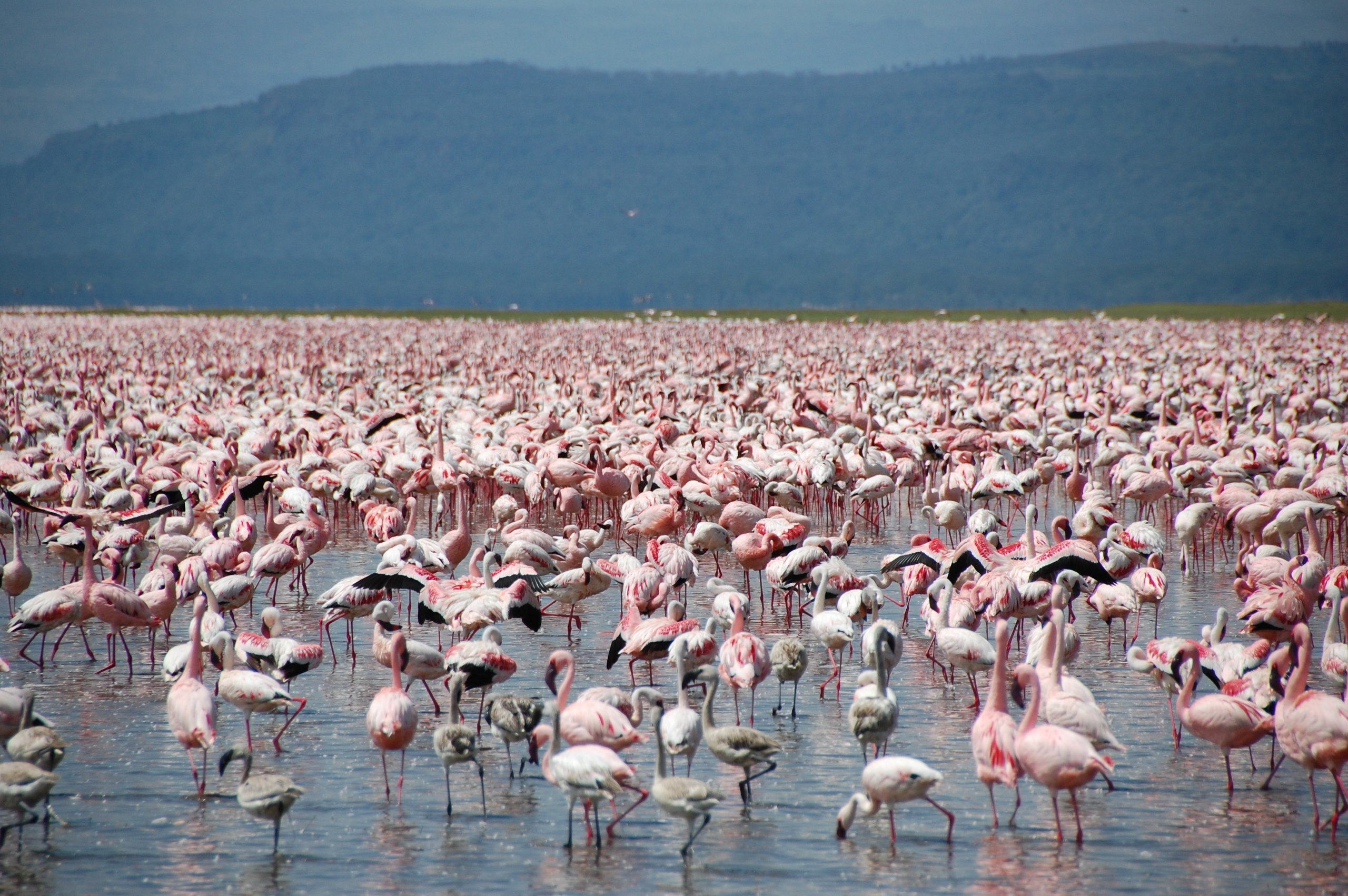
Flamingos are among the most iconic images of Kenya’s lakes. Their pink flocks have made lakes such as Nakuru, Bogoria, Elementaita, Magadi, and Logipi famous among birdwatchers and photographers.
Lake Bogoria
Lake Bogoria is one of Kenya’s top flamingo lakes. It is an alkaline Rift Valley lake known for flamingos, hot springs, geysers, escarpments, and dramatic scenery.
Its alkaline waters support the algae that attract lesser flamingos. When conditions are right, the lake can host enormous flocks, creating a pink band along the shoreline.
Lake Nakuru
Lake Nakuru is one of Kenya’s most famous lakes and the centerpiece of Lake Nakuru National Park. It became globally known for flamingos, although flamingo numbers rise and fall depending on water levels, salinity, algae, and wider lake conditions.
Even when flamingo numbers shift, Lake Nakuru remains important for rhinos, birds, buffaloes, giraffes, waterbucks, baboons, and scenic viewpoints such as Baboon Cliff.
Lake Elementaita
Lake Elementaita is part of the UNESCO Kenya Lake System and is important for flamingos, pelicans, waterbirds, and lakeside landscapes.
Its quieter atmosphere makes it attractive for travelers seeking birding, photography, and relaxed Rift Valley scenery.
Lake Magadi
Lake Magadi is a soda lake in Kajiado County, south of Nairobi. It is known for salt flats, hot springs, arid landscapes, flamingos, and unusual colors.
The lake is often compared with Lake Natron because both are alkaline lakes associated with flamingos and dramatic dryland scenery.
Lake Logipi
Lake Logipi in Turkana County is another important northern Kenya flamingo site. It lies in a remote Rift Valley setting and attracts birds when conditions are suitable.
Its isolation makes it less visited than Nakuru, Bogoria, or Magadi, but it is part of Kenya’s wider flamingo landscape.
Freshwater Lakes in Kenya
Freshwater lakes support fish, birds, hippos, papyrus, reeds, local livelihoods, boating, and tourism.
Lake Naivasha
Lake Naivasha is one of Kenya’s most popular freshwater lakes. It is close to Nairobi and is known for boat rides, hippos, fish eagles, Crescent Island, nearby Hell’s Gate National Park, flower farms, lodges, and weekend travel.
Its accessibility makes it one of the easiest lake destinations for families, couples, birders, photographers, and short-stay travelers.
Lake Baringo
Lake Baringo is a freshwater Rift Valley lake known for birding, fishing, islands, boat trips, hot dry scenery, and community life.
It is especially popular with birdwatchers because of its rich species diversity, including fish eagles, herons, kingfishers, weavers, hornbills, and many others.
Lake Jipe
Lake Jipe lies along the Kenya-Tanzania border in Taita Taveta County. It is associated with wetlands, birds, fishing, local communities, and views of surrounding landscapes.
It is less famous than the Rift Valley lakes but important for biodiversity and local livelihoods.
Lake Kenyatta
Lake Kenyatta in Lamu County is a freshwater lake near the coast. It supports local communities, birds, fisheries, and rural coastal landscapes.
Lake Olbolosat
Lake Olbolosat in Nyandarua County is one of central Kenya’s important highland lakes and wetlands. It supports birds, livestock, local communities, and ecological functions in a highland setting.
Crater Lakes, Highland Lakes, and Mountain Tarns
Kenya also has smaller lakes formed in craters, mountain basins, volcanic depressions, or highland landscapes.
Crater Lake
Crater Lake near Naivasha is one of Kenya’s scenic volcanic crater lakes. It is small, atmospheric, and often visited for walks, photography, birding, and lodge experiences.
Lake Oloiden
Lake Oloiden lies near Lake Naivasha and is often treated as part of the wider Naivasha lake landscape. It is known for birdlife, camping, boating, and relaxed lakeside scenery.
Mount Kenya Lakes
Mount Kenya has several high-altitude lakes and tarns, including Lake Ellis, Lake Michaelson, Lake Rutundu, Lake Alice, and Magado Lake.
These lakes are important for hiking, trout fishing, alpine scenery, photography, and mountain ecology.
Lake Michaelson, in particular, is one of the most beautiful high-altitude lakes in Kenya, associated with the scenic Chogoria route.
Lake Chala
Lake Chala lies on the Kenya-Tanzania border near the southeastern region, associated with the volcanic landscapes around Kilimanjaro. It is a crater lake known for clear water, steep crater walls, and scenic beauty.
Lesser-Known Lakes in Kenya
Some of Kenya’s smaller lakes are not major tourist destinations but remain important for local communities, ecology, agriculture, fishing, and cultural identity.
Lake Simbi Nyaima
Lake Simbi Nyaima in Homa Bay County is a small volcanic crater lake with strong cultural and legendary associations. It is also known for birds and striking scenery.
Lake Ishaqbini
Lake Ishaqbini in Garissa County is linked to the wider Ishaqbini landscape, known for hirola conservation and dryland ecosystems.
Lake Okari
Lake Okari in Kisii County is one of Kenya’s lesser-known county lakes and forms part of the local landscape.
Lake Thai and Lake Nkunga
Lake Thai and Lake Nkunga in Meru County add to the county’s network of highland and foothill water bodies.
Lake Sare, Lake Namboyo, Lake Bob, and Lake Kanyaboli
These lakes in Siaya County are linked to the Lake Victoria basin and wetland systems. Lake Kanyaboli is especially important as part of the Yala Swamp ecosystem and is known for biodiversity and local fisheries.
Lake Shakababo
Lake Shakababo in Tana River County is one of the lesser-known lakes in Kenya’s coastal and riverine landscapes.
Lake Yahud
Lake Yahud in Wajir County reflects the dryland lake and water-resource geography of northeastern Kenya.
County-by-County Index of Lakes in Kenya
The following index organizes the lakes from the supplied source by county.
Baringo County
Lake Bogoria
Lake Baringo
Lake Kamnarok
Garissa County
Lake Ishaqbini
Homa Bay County
Lake Simbi Nyaima
Kajiado County
Lake Magadi
Lake Amboseli
Lake Natron
Kisii County
Lake Okari
Lamu County
Lake Kenyatta
Lake Moa
Kisumu County
Lake Victoria
Meru County
Lake Thai
Lake Nkunga
Lake Ellis
Lake Michaelson
Lake Rutundu
Lake Alice
Magado Lake
Nakuru County
Lake Solai
Lake Nakuru
Lake Naivasha
Lake Oloiden
Crater Lake
Lake Elementaita
Nyandarua County
Lake Olbolosat
Siaya County
Lake Sare
Lake Namboyo
Lake Bob
Lake Kanyaboli
Taita Taveta County
Lake Jipe
Lake Chala
Tana River County
Lake Shakababo
Turkana County
Lake Logipi
Lake Turkana
Lake Alablab
Wajir County
Lake Yahud
Best Lakes in Kenya by Experience
Different lakes suit different kinds of travelers.
Best Lakes for Flamingos
Lake Bogoria
Lake Nakuru
Lake Elementaita
Lake Magadi
Lake Logipi
Flamingo numbers change with water levels, salinity, algae, and seasonal movement, so visitors should check recent sightings before planning a flamingo-focused trip.
Best Lakes for Birdwatching
Lake Baringo
Lake Bogoria
Lake Nakuru
Lake Elementaita
Lake Naivasha
Lake Victoria wetlands
Lake Kanyaboli
Lake Olbolosat
Lake Jipe
Best Lakes for Boating
Lake Naivasha
Lake Baringo
Lake Victoria
Lake Turkana
Lake Kenyatta
Lake Jipe
Visitors should use reputable local boat operators and follow safety rules.
Best Lakes for Fishing
Lake Victoria
Lake Turkana
Lake Baringo
Lake Naivasha
Lake Jipe
Lake Kanyaboli
Highland lakes such as Lake Rutundu and Lake Ellis
Fishing rules, permits, and local restrictions should always be checked before fishing.
Best Lakes for Photography
Lake Turkana
Lake Bogoria
Lake Nakuru
Lake Elementaita
Lake Magadi
Lake Naivasha
Lake Chala
Lake Michaelson
Crater Lake
Lake Simbi Nyaima
Best Lakes for Adventure Travel
Lake Turkana
Lake Logipi
Lake Magadi
Lake Chala
Lake Michaelson
Lake Rutundu
Lake Jipe
These lakes reward travelers who enjoy remote landscapes, hiking, camping, photography, and less crowded destinations.
Activities Around Lakes in Kenya
Kenya’s lakes support many activities, depending on location, regulations, safety, and access.
Birdwatching
Birdwatching is one of the strongest lake activities in Kenya. Flamingos, pelicans, fish eagles, herons, kingfishers, storks, ducks, cormorants, jacanas, bee-eaters, weavers, and many migratory birds can be found around different lakes.
Boat Trips
Boat trips are popular at Lake Naivasha, Lake Baringo, Lake Victoria, Lake Turkana, and other accessible lakes.
They allow visitors to see birds, hippos, islands, fishing activity, and shorelines from the water.
Fishing
Fishing is important for livelihoods and tourism. Lake Victoria, Lake Turkana, Lake Baringo, Lake Naivasha, and several smaller lakes support fishing activity.
Travelers should respect local fishers and follow licensing rules.
Photography
Lakes are excellent for sunrise, sunset, reflections, birds, boats, wildlife, people, reeds, hot springs, salt flats, and desert scenery.
Hiking and Nature Walks
Some lakes combine well with hiking. Examples include Crater Lake, Lake Michaelson, Lake Ellis, Lake Rutundu, Lake Chala, Lake Magadi landscapes, and Lake Elementaita viewpoints.
Hot Springs and Geology
Lake Bogoria and Lake Magadi are especially associated with hot springs and unusual geological features.
Visitors should be careful around hot springs because water temperatures can be dangerous.
Conservation Challenges Facing Lakes in Kenya
Kenya’s lakes face growing pressure from climate change, rising water levels, pollution, overfishing, invasive species, deforestation, settlement, agriculture, and infrastructure development.
Rising Water Levels
Several Rift Valley lakes have experienced rising water levels in recent years, affecting homes, schools, roads, tourism facilities, farms, wildlife habitats, and park infrastructure. Recent reporting has described serious impacts around lakes such as Turkana, Nakuru, Naivasha, and Baringo, including displacement and increased human-wildlife risk in some areas.
This issue shows how lakes are sensitive to climate, rainfall, land use, and geological processes.
Pollution
Pollution from towns, farms, plastics, sewage, chemicals, and runoff can damage lake ecosystems. Freshwater lakes are especially vulnerable because they support fish, drinking water, wetlands, and local livelihoods.
Overfishing
Overfishing can reduce fish populations and harm local economies. Sustainable fishing rules, community management, and enforcement are important.
Invasive Species
Some lakes face invasive plants or fish species that change ecosystems. Lake Victoria’s history with invasive species shows how quickly lake ecology can shift.
Habitat Loss
Wetlands, papyrus beds, forests, and shoreline vegetation are often cleared for farming, settlement, grazing, or development. This reduces breeding areas for birds and fish.
Responsible Travel to Lakes in Kenya
Visitors can help protect Kenya’s lakes by traveling responsibly.
Useful practices include:
Use licensed guides and boat operators
Wear life jackets on boats
Avoid littering
Do not disturb birds or nests
Keep distance from hippos and crocodiles
Respect local fishing communities
Avoid entering unsafe hot springs
Do not drive on fragile shorelines
Support community-run tourism
Follow park, reserve, and conservancy rules
Avoid loud noise near wildlife
Pay official fees where required
A lake is a living ecosystem, not just a viewpoint.
Frequently Asked Questions About Lakes in Kenya
What are the most famous lakes in Kenya?
The most famous lakes in Kenya include Lake Victoria, Lake Turkana, Lake Nakuru, Lake Bogoria, Lake Naivasha, Lake Elementaita, Lake Baringo, Lake Magadi, Lake Chala, and Lake Jipe.
Which lakes in Kenya are UNESCO World Heritage Sites?
Lake Bogoria, Lake Nakuru, and Lake Elementaita form the Kenya Lake System in the Great Rift Valley, a UNESCO World Heritage Site. Lake Turkana National Parks are also a UNESCO World Heritage Site.
What is the largest lake in Kenya?
Lake Turkana is the largest lake located mainly within Kenya. Lake Victoria is much larger, but Kenya shares it with Uganda and Tanzania.
What is the largest desert lake in the world?
Lake Turkana is recognized by UNESCO as the largest desert lake in the world and the most saline lake in East Africa.
Which lake in Kenya is famous for flamingos?
Lake Bogoria, Lake Nakuru, Lake Elementaita, Lake Magadi, and Lake Logipi are associated with flamingos. Flamingo numbers shift depending on water and feeding conditions.
Which lakes in Kenya are freshwater?
Freshwater lakes in Kenya include Lake Victoria, Lake Naivasha, Lake Baringo, Lake Jipe, Lake Kenyatta, Lake Kanyaboli, and several smaller lakes and highland water bodies.
Can visitors take boat rides on lakes in Kenya?
Yes. Boat rides are common on lakes such as Naivasha, Baringo, Victoria, Turkana, and others. Visitors should use reputable operators and wear life jackets.
Why are lakes in Kenya important?
Lakes in Kenya support wildlife, birds, fish, tourism, water supply, agriculture, culture, fishing communities, wetlands, and climate resilience.
Key Takeaways
Lakes in Kenya range from freshwater and alkaline lakes to crater lakes, highland tarns, desert lakes, and wetlands.
The Kenya Lake System of Bogoria, Nakuru, and Elementaita is a UNESCO World Heritage Site and a globally important flamingo habitat.
Lake Turkana is the world’s largest desert lake and one of Kenya’s most dramatic landscapes.
Lake Victoria is Africa’s largest lake and supports major fisheries, wetlands, and lakeside communities.
Lake Naivasha, Lake Baringo, Lake Magadi, Lake Jipe, Lake Chala, and Lake Olbolosat each offer unique travel and ecological value.
Kenya’s lakes face conservation challenges including rising water levels, pollution, overfishing, habitat loss, and climate pressure.
Responsible tourism can help protect lakes while supporting local communities.
Conclusion
Lakes in Kenya are nature’s water wonders. They shimmer across desert plains, sit quietly in volcanic craters, spread across the Rift Valley floor, feed fishers in the west, shelter flamingos in alkaline shallows, and mirror mountains in the highlands.
Each lake tells a different story.
Lake Turkana tells a story of desert, wind, fossils, fish, and ancient landscapes. Lake Victoria tells a story of freshwater, trade, food, islands, and western Kenya’s lake culture. Lake Bogoria, Nakuru, and Elementaita tell a story of flamingos, hot springs, volcanic basins, and global conservation value. Lake Naivasha tells a story of weekend travel, boating, hippos, and Rift Valley leisure. Lake Magadi tells a story of salt, heat, pink water, and dryland beauty. Smaller lakes such as Simbi Nyaima, Kanyaboli, Olbolosat, Chala, Jipe, Rutundu, and Michaelson tell quieter but equally important stories.
Together, Kenya’s lakes form a living map of water, wildlife, geology, culture, and travel.
They are beautiful, but they are also vulnerable. Protecting them means protecting birds, fish, communities, wetlands, tourism, and future generations.
For travelers, Kenya’s lakes offer reflection in every sense: reflections of sky on water, and reflections on the deep relationship between land, life, and water.
Read Also: Outdoor Adventure in Kenya: Complete Guide