Lake Nakuru is one of Kenya’s most celebrated natural landmarks, known worldwide for its dramatic landscapes, rich biodiversity, and deep conservation significance. Nestled within the Great Rift Valley, Lake Nakuru occupies a unique position where geology, wildlife, and human history converge. The lake lies just south of Nakuru town and is fully protected within Lake Nakuru National Park, making it both accessible and carefully preserved. For many travelers, Lake Nakuru represents the ideal introduction to Kenya’s wildlife and scenic beauty.
What sets Lake Nakuru apart is not just its wildlife density but its constant transformation. Over centuries, the lake has shifted in size, depth, and ecology, reflecting broader environmental changes across the Rift Valley. These natural fluctuations have shaped a dynamic ecosystem that continues to adapt to climatic and human influences. As a result, Lake Nakuru offers visitors an ever-changing experience rather than a static postcard view.
Beyond its ecological value, Lake Nakuru holds strong cultural and conservation symbolism. It has played a central role in Kenya’s environmental movement and stands today as a protected wetland of international importance. Visitors encounter not only iconic wildlife but also a living example of how conservation, tourism, and environmental challenges intersect in modern Africa.
Lake Nakuru Location and Geographic Setting
Lake Nakuru lies at an elevation of approximately 1,754 meters above sea level within Kenya’s Rift Valley system. The surrounding landscape features rolling hills, escarpments, and volcanic formations that define this section of the Great Rift Valley. The lake itself is shallow and alkaline, with no surface outflow, meaning water levels depend largely on rainfall and underground seepage.
Historically, Lake Nakuru formed part of a much larger freshwater body that also included Lakes Elementaita and Bogoria. Over time, geological shifts and climate changes caused this ancient lake to fragment, leaving behind the three distinct lakes seen today. These remnants were later recognized collectively as the Kenya Lake System of the Great Rift Valley, earning global recognition for their natural value.
The lake’s proximity to urban development creates a striking contrast. While Nakuru town continues to grow nearby, the national park boundary provides a clear transition from city life to wilderness, allowing visitors to experience nature within minutes of arrival.
Lake Nakuru National Park and Protected Status
Lake Nakuru National Park was established in the early 1960s to safeguard the lake and its surrounding habitats. Initially known primarily as a bird sanctuary, the park has since expanded in scope to protect a wide range of wildlife and ecosystems. Today, it covers nearly 190 square kilometers and is fully fenced to enhance security and prevent human-wildlife conflict.
The park holds multiple international designations. Lake Nakuru is protected under the Ramsar Convention as a wetland of global importance. In addition, the lake forms part of a UNESCO World Heritage Site recognized for outstanding natural value. These protections reflect the lake’s ecological importance and its role in supporting migratory birds and threatened species.
Strict conservation policies guide park management, balancing tourism with ecosystem preservation. This approach has allowed Lake Nakuru to remain one of Kenya’s most reliable wildlife-viewing destinations.
Lake Nakuru Wildlife and Birdlife Experience
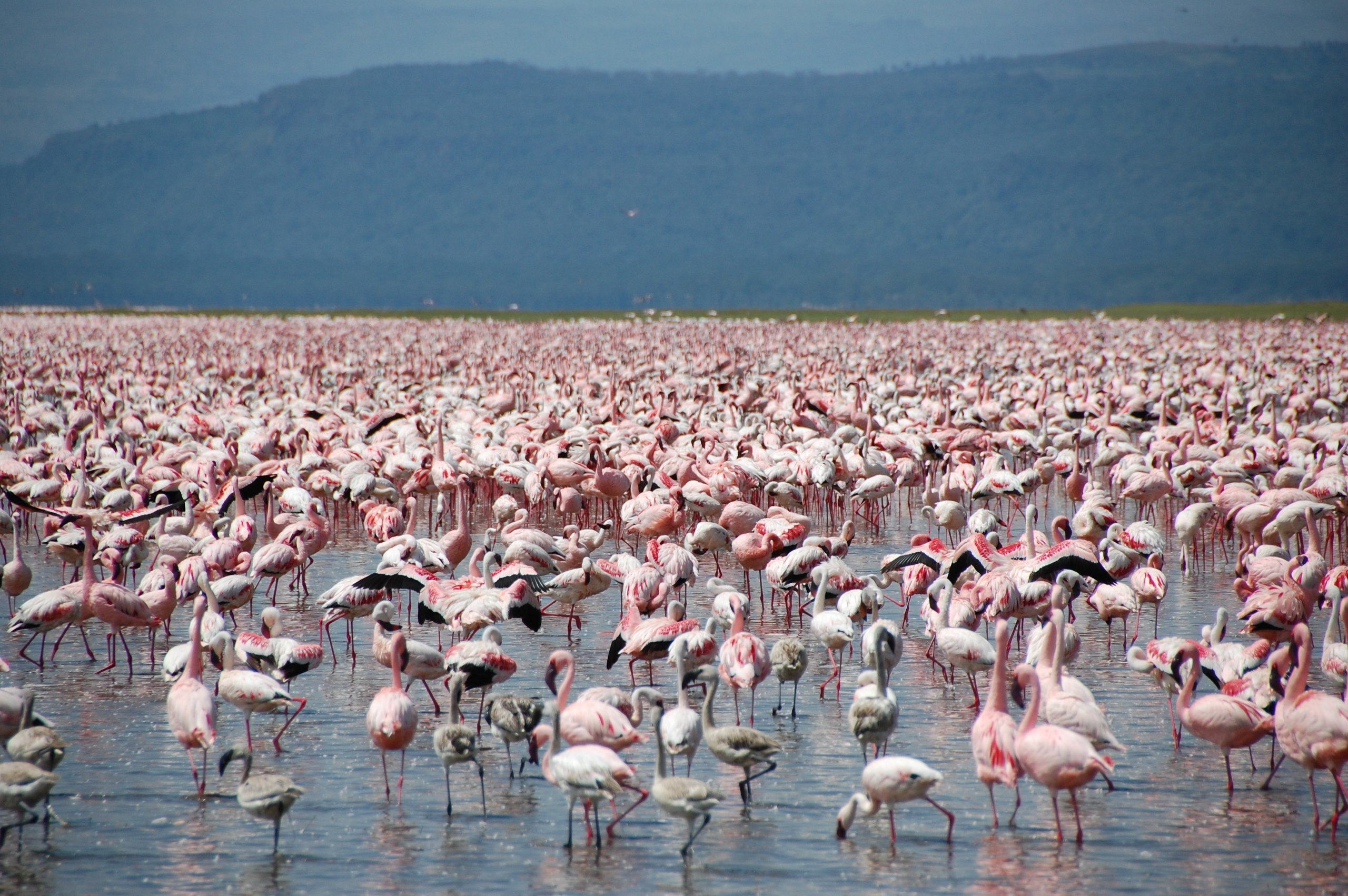
Lake Nakuru is globally famous for its birdlife, particularly its flamingos. For decades, images of pink shores created by thousands of flamingos feeding along the lake’s edge defined the park’s identity. These birds are drawn to the lake’s algae-rich waters, which provide an abundant food source under suitable conditions.
Flamingo numbers at Lake Nakuru fluctuate significantly depending on water chemistry and lake depth. During periods of high water levels, algae concentrations may decrease, prompting some flamingos to migrate to nearby Rift Valley lakes such as Bogoria or Elementaita. Even so, Lake Nakuru continues to host large numbers of flamingos alongside pelicans, cormorants, herons, and fish eagles.
Beyond birds, Lake Nakuru National Park is a critical sanctuary for mammals. The park is renowned as one of Kenya’s leading rhino conservation areas, hosting both black and white rhinos within a protected enclosure. Other wildlife includes lions, leopards, buffalo, zebras, waterbuck, and the rare Rothschild’s giraffe. Notably, elephants are absent from the park, which allows vegetation to regenerate and supports rhino conservation.
Lake Nakuru Landscape and Scenic Highlights
The scenery around Lake Nakuru is as compelling as its wildlife. Several elevated viewpoints provide sweeping panoramas of the lake and surrounding plains. Baboon Cliff stands out as the most famous vantage point, offering a wide-angle view that captures the lake’s changing colors and shifting shorelines.
Makalia Falls, located at the southern end of the park, adds a dramatic contrast to the alkaline lake environment. During wetter months, the waterfall becomes particularly impressive and serves as a peaceful picnic spot. Other viewpoints, including Out of Africa Hill, provide quieter settings for photography and reflection.
The park’s varied habitats include open grasslands, acacia woodlands, euphorbia forests, and marshy wetlands. This diversity supports a wide range of species and enhances the visual appeal of game drives.
Lake Nakuru Climate and Environmental Changes
Lake Nakuru has experienced notable environmental changes over recent decades. Water levels have risen and fallen dramatically, sometimes expanding the lake’s surface area to flood roads, buildings, and sections of the park. These fluctuations are linked to broader climate patterns, increased rainfall, land-use changes in the surrounding catchment, and reduced soil absorption capacity.
Rising water levels have altered habitats, temporarily displacing wildlife and affecting tourism infrastructure. However, these changes also highlight the resilience of natural systems and the importance of adaptive park management. Conservation authorities continue to monitor lake levels and adjust visitor access accordingly.
Efforts to address pollution and protect inflowing rivers remain ongoing, as water quality directly influences bird populations and overall ecosystem health.
Lake Nakuru Entry Fees and Visitor Charges
Lake Nakuru National Park operates under a structured entry fee system that supports conservation and park management. Entry fees are charged on a 24-hour basis and vary by visitor category. East African citizens pay a lower rate, while residents and non-residents are charged higher fees in line with national park regulations.
Children and students benefit from reduced rates, encouraging educational visits and family tourism. Additional charges may apply for activities such as camping or specialized guided tours. All fees collected contribute directly to wildlife protection, infrastructure maintenance, and community engagement programs.
Visitors are advised to confirm current rates before arrival, as fees are periodically reviewed to reflect conservation needs and economic conditions.
Lake Nakuru Activities and Things to Do
Game drives are the primary activity within Lake Nakuru National Park. Early morning and late afternoon drives offer the best opportunities to observe predators and active wildlife. The park’s compact size allows visitors to see a wide variety of species within a short time.
Birdwatching remains a major draw, with over 400 recorded bird species. Seasonal migrations add further diversity, making Lake Nakuru a year-round destination for bird enthusiasts. Photography also thrives here, thanks to open landscapes and reliable wildlife sightings.
Picnicking at designated sites such as Makalia Falls provides a relaxed way to enjoy the park. Educational tours and guided nature walks may be arranged through authorized operators, enhancing understanding of the park’s ecology.
Lake Nakuru Accommodation Options
A range of accommodation options surrounds Lake Nakuru, catering to different budgets and travel styles. Luxury lodges offer elevated views and premium services, while mid-range lodges provide comfortable stays close to wildlife areas. Budget travelers and campers can choose from designated campsites managed by conservation authorities.
Staying inside or near the park allows for early access to game drives and quieter wildlife encounters. Many lodges emphasize sustainability, aligning with the park’s conservation ethos.
Lake Nakuru Best Time to Visit
Lake Nakuru can be visited throughout the year, though experiences vary by season. The drier months generally offer better wildlife visibility, as animals gather near water sources and vegetation is less dense. Birdlife remains abundant year-round, though migratory species increase during wetter periods.
Rainy seasons may bring muddy roads and higher water levels, yet they also transform the landscape with lush greenery. Travelers interested in photography and birdwatching often prefer these months despite the occasional logistical challenges.
Lake Nakuru Conservation and Community Impact
Conservation efforts at Lake Nakuru extend beyond wildlife protection. Community engagement programs support education, employment, and sustainable land use in surrounding areas. By involving local communities, park management fosters long-term stewardship and reduces pressure on natural resources.
Legal protections, environmental monitoring, and international partnerships continue to strengthen the lake’s resilience. These combined efforts ensure that Lake Nakuru remains a symbol of successful conservation within a rapidly changing environment.
Lake Nakuru as a Signature Kenyan Destination
Lake Nakuru stands as one of Kenya’s most iconic safari destinations, offering a concentrated wildlife experience within a striking Rift Valley setting. Its blend of accessibility, biodiversity, and conservation significance makes it a cornerstone of Kenyan tourism.
For visitors seeking flamingos, rhinos, dramatic landscapes, and meaningful conservation stories, Lake Nakuru delivers a rich and educational experience. The lake’s ongoing transformation reminds travelers that nature is dynamic, and that protected areas play a vital role in preserving this balance for future generations.
Lake Nakuru National Park is one of Kenya’s most iconic wildlife destinations, famous for its massive flocks of flamingos, its status as a premier rhino sanctuary, and its location within the Great Rift Valley.
Visitor Logistics (2026)
The park’s entry fees were updated in late 2025. Prices listed below are for a 24-hour visit.
| Category | East African Citizen | Kenyan Resident | Non-Resident (Foreign) |
|---|---|---|---|
| Adult | KES 1,500 | KES 2,025 | USD 90 |
| Child / Student | KES 750 | KES 1,050 | USD 45 |
Wildlife & Environment Updates
- Rising Water Levels: As of early 2026, experts have noted that Lake Nakuru has significantly expanded, nearly doubling in surface area since 2010 due to climate-driven flooding. This has submerged some historical roads and buildings near the shore.
- Flamingos & Birds: While the lake is famous for “pink shores,” flamingo populations fluctuate with the lake’s alkalinity. In high-water years, some flocks move to Lake Bogoria, but significant numbers remain alongside over 450 other bird species including pelicans and African fish eagles.
- The Big Five (Minus One): The park is a stronghold for both Black and White Rhinos. You can also see lions (known for tree-climbing here), leopards, and Rothschild’s giraffes. Note that there are no elephants in Lake Nakuru National Park.
Key Activities & Viewpoints
- Game Drives: Best conducted in the early morning or late afternoon for predator sightings.
- Baboon Cliff: Offers the most famous panoramic view of the entire lake and the rift valley.
- Makalia Falls: A scenic waterfall at the southern end of the park, ideal for picnics. It is most active between April and August.
- Out of Africa Hill: A popular vantage point and picnic spot providing sweeping vistas of the landscape.
Recommended Lodging
For those staying overnight, there are several high-end and mid-range options within or just outside the park gates:
- Luxury: The Cliff Nakuru (boutique camp perched on a cliffside) and Sarova Lion Hill Game Lodge.
- Mid-Range: Lake Nakuru Lodge (inside the park with views of a watering hole) and Flamingo Hill Tented Camp.
- Budget/Camping: KWS-managed sites like Makalia Campsite or Naishi Guest House.
Best Time to Visit
- Dry Season (June – February): The best time for general wildlife viewing as animals gather around water sources and vegetation is thinner.
- Wet Season (March – May): Ideal for birdwatchers as migratory species arrive, though some roads can become muddy.