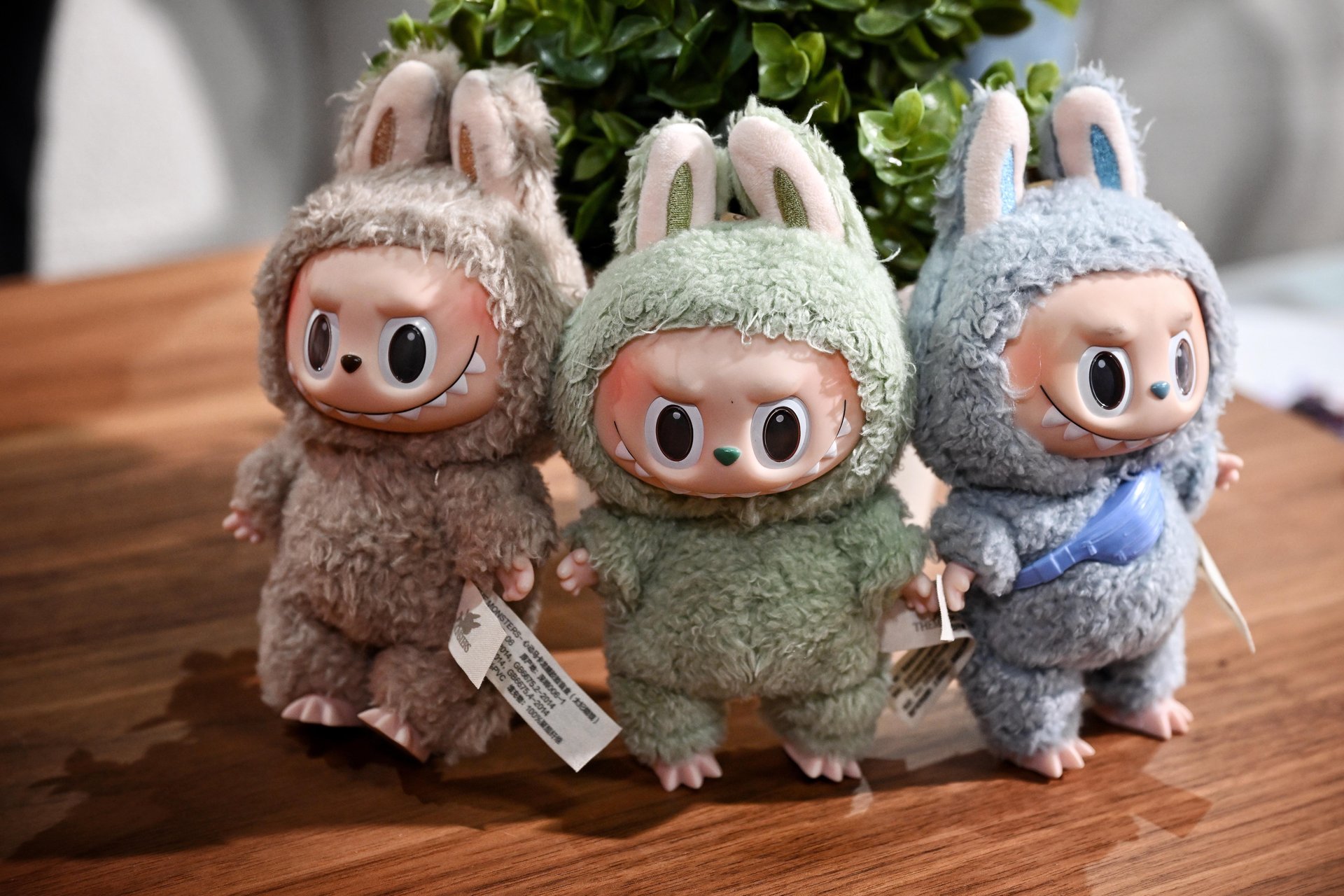
Labubu (Chinese: 拉布布; pinyin: Lā bù bù) is a line of collectible plush and vinyl toys created by Hong Kong illustrator Kasing Lung. Produced by the Chinese company Pop Mart since 2019, the character belongs to The Monsters series and is recognized for its scruffy fur, pointed ears, and sharp-toothed grin.
Labubu has become one of Pop Mart’s flagship brands, fueling the global blind box toy craze. The line has expanded to include themed collections, limited editions, museum collaborations, and crossovers with global franchises. By 2025, more than 300 figurines had been released.
History
Labubu originated from Kasing Lung’s storybook series The Monsters, inspired by Nordic folklore and mythology. Lung, born in Hong Kong in 1972 and raised in Utrecht, later settled in Antwerp, Belgium. The first Labubu figurines were released in 2015 through the company How2Work.
The brand achieved a breakthrough in 2019 with Pop Mart’s blind box retail model, which conceals each toy’s identity until opened. This method, combined with limited-run designs, turned Labubu into a collecting phenomenon across Asia.
By mid-2025, Labubu toys ranged from $15 standard figures to “mega” editions priced at $960. A 1.2-metre mint-green Labubu sold for $170,000 at auction in Beijing. An anime adaptation of 156 short episodes is scheduled for release in 2025.
Design
Labubu is depicted as a mischievous elf-like creature with:
- Wide eyes and exaggerated expressions
- Pointed ears
- Nine visible sharp teeth
- Shaggy fur and a playful grin
Labubu belongs to The Monsters “tribe,” which includes characters such as Mokoko, Pato, Spooky, Tycoco (Labubu’s skeleton-like companion), and Zimomo, the group’s leader.
Major Collections
- Exciting Macaron (2023) – key-ring series
- Fall in Wild and Have a Seat – themed figurine sets
- Massive into Energy – dynamic action-styled figures
- Collaborations with Coca-Cola (2024) and One Piece (2025)
- Labubu’s Artistic Quest – exclusive museum editions, including at the Louvre Pop Mart store
Popularity
Labubu gained global attention after Blackpink’s Lisa was photographed with a Labubu keychain in 2024. The toy’s popularity surged across Thailand, Korea, and China, later spreading worldwide. Celebrities such as Rihanna, Cher, and Javier Bardem have also endorsed or appeared with Labubu in promotional events.
Sales data reflects the boom: in 2024, Pop Mart reported 6.3 billion yuan ($870 million) in revenue from Labubu products in just six months. Demand was so high that Pop Mart’s website occasionally crashed during major releases.
Cultural Impact
- Amulets in Thailand: Labubu’s popularity inspired its image to be used on amulets and tattoos, believed to bring wealth and good fortune.
- Political promotion: In Singapore, the People’s Action Party featured a Labubu plush at a 2024 community event.
- Religious festivals: Singapore’s Ling Lian Bao Dian Temple included Labubu figurines in the Nine Emperor Gods Festival to appeal to younger generations.
Controversies and Criticism
Safety Concerns and Bans
- Russia: Officials proposed banning Labubu in 2025, citing its “frightening appearance” and lack of proper labeling.
- Iraq’s Kurdistan Region: Over 4,000 dolls were seized amid claims of “demonic spirits” influencing children’s behavior.
Conspiracy Theories
Social media fueled claims linking Labubu to Mesopotamian demon Pazuzu, leading to viral videos of owners destroying the dolls. Experts dismissed the theories as baseless, attributing the design to Lung’s European folklore inspirations.
Marketing and Overconsumption
Critics argue Pop Mart’s blind box model encourages overconsumption and gambling-like behavior, as fans buy multiple boxes to obtain rare “secret” figures.
Counterfeits
High demand has led to widespread counterfeiting, with knock-offs nicknamed “Lafufu”. Pop Mart has filed lawsuits, including against 7-Eleven California, for distributing fake figures.