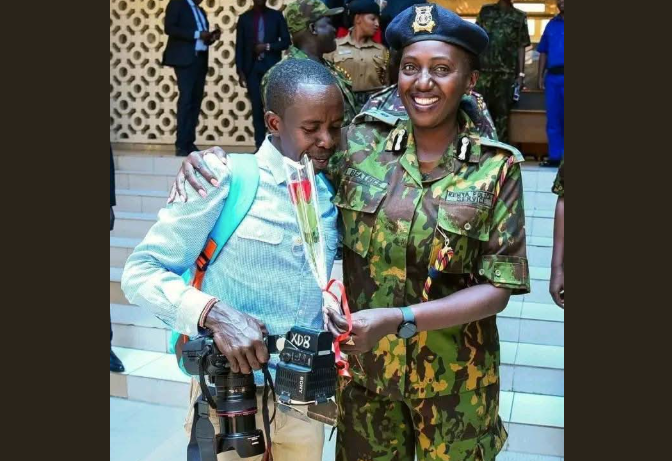
A video that went viral earlier today captured KTN cameraman Nicholas Biwott, popularly known as “Legsus,” overtaking a Lexus vehicle near the Jomo Kenyatta International Airport (JKIA) while attempting to record a high-profile event. The clip quickly spread across social media, sparking mixed reactions among Kenyans and drawing attention to the demanding nature of field journalism.
Who Is Nicholas Biwott?
Nicholas Biwott, nicknamed “Legsus,” is a field cameraman with KTN News, one of Kenya’s leading television networks. Known among colleagues for his energy and quick reflexes during assignments, Biwott has built a reputation for capturing critical moments under tight deadlines. His nickname, a playful spin on “Lexus,” has now taken on a new life following the viral incident.
While much of his background remains private, his work often involves documenting fast-moving events and high-security situations — a role that requires both agility and precision.
The JKIA Incident
The viral clip shows Biwott overtaking a Lexus, believed to be part of a VIP convoy, as he tried to get closer to the motorcade for better coverage. The incident occurred during media coverage of a state event, drawing immediate online attention.
Witnesses say Biwott was part of a convoy of media vehicles covering the event at JKIA. His vehicle maneuvered swiftly past the Lexus, a move many interpreted as a risky yet determined attempt to capture an exclusive angle. Others criticized the action as reckless and unprofessional, especially given the heightened security and protocol during such high-level occasions.
Divided Reactions
Public opinion remains split. Some praised Biwott for his dedication to the craft, describing him as a hardworking cameraman committed to ensuring Kenyans never miss historic moments. Others condemned the act, arguing that safety and professionalism should never be compromised, no matter the urgency of the story.
Several journalists came to his defense online, explaining that field crews often work under extreme pressure in crowded, high-security environments. One media veteran commented that such risks are sometimes unavoidable when documenting national events.
Reflections on Media Culture
The incident highlights the broader pressures faced by Kenyan journalists and cameramen, who often operate in fast-paced, unpredictable settings. The pursuit of exclusive footage or unique perspectives sometimes pushes field teams to their limits — physically and ethically.
While Biwott’s overtake may have been impulsive, it underscores the dedication and risk-taking culture that defines many in the field of broadcast journalism. The episode has reignited conversations about safety protocols for media crews covering major events, particularly those involving state security.
As the viral clip continues to circulate, Nicholas Biwott — once an unsung figure behind the camera — has become the story himself, symbolizing both the passion and pressure that drive Kenya’s broadcast journalists in pursuit of the perfect shot.